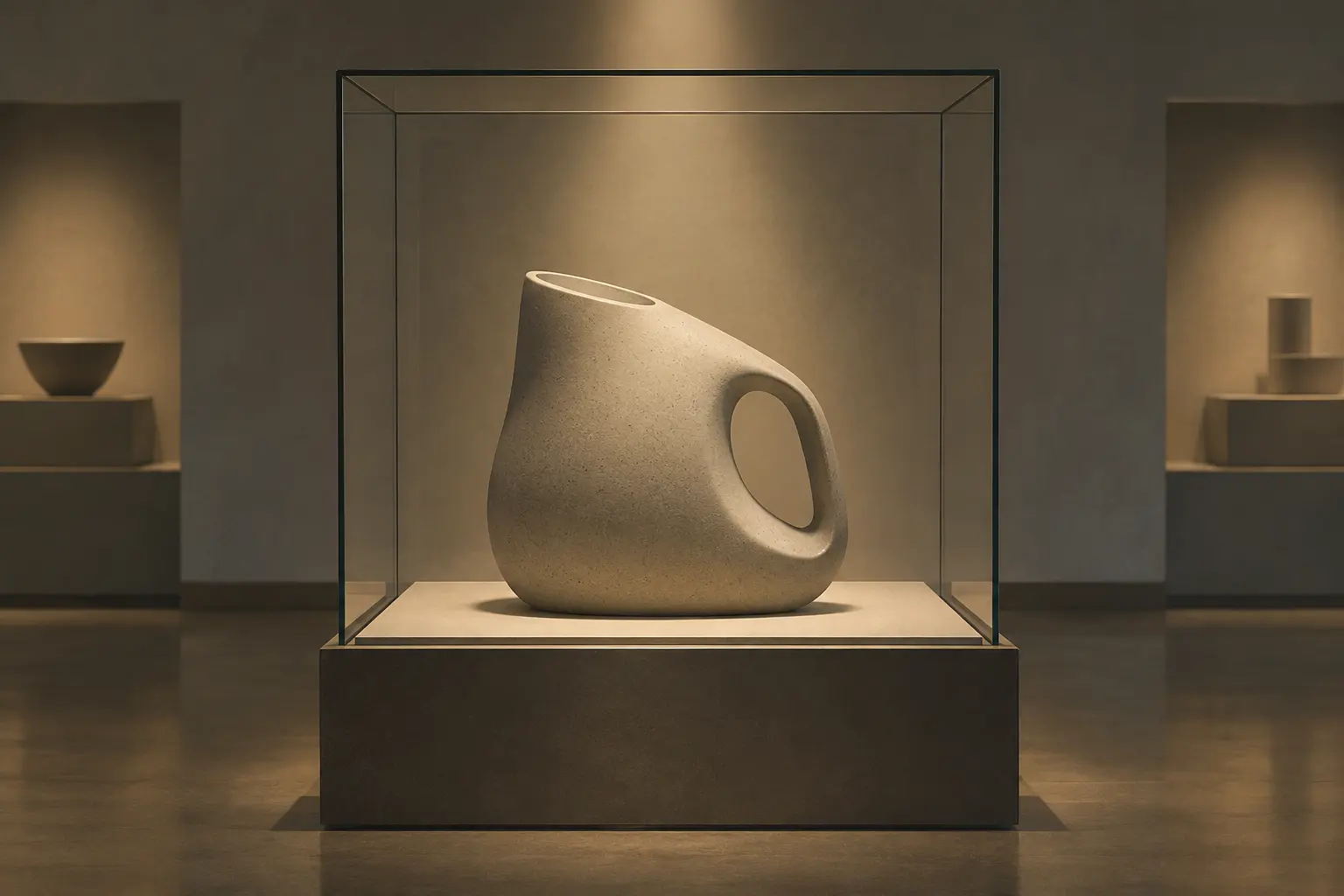
The relationship between industrial design and institutional memory has undergone a significant structural change. For decades, museums maintained a clear boundary between high art and functional objects, relegating product design to a secondary plane. This distinction has been eroded by the evolution of museology, which since the 1970s has expanded its scope to include elements that define everyday life. The result is a reconfiguration of heritage, where aesthetics is no longer the sole criterion of value, but is integrated with function, production, and social context.
The expansion of the museum concept
The transformation of museums from the 1970s marked a turning point in the understanding of material culture. Before this period, institutions focused predominantly on art history and archaeology. The inclusion of everyday design objects responded to the need to document contemporary society. This approach allows visitors to understand how design decisions influence the daily human experience. Modern curation, therefore, requires a gaze that transcends form to analyze the purpose and social impact of each piece.
The value of function over form
When evaluating a design object for inclusion in an archive, conservators must distinguish between its aesthetic value and its functional relevance. Not all commercial products deserve to be preserved; selection is based on the object's ability to represent an era or a technical innovation. The original function of the product becomes a historical document in itself. Understanding how an object was designed to solve a specific problem allows researchers to trace the lines of evolution of industry and technology. This functional perspective is crucial to avoid superficiality in cultural interpretation.
Advertising as an archival piece
Advertising communication plays a fundamental role in the preservation of design. Original campaigns are not mere accessories, but documents that reveal the communicative intent and brand positioning. Recent studies on advertising museums have highlighted how advertising helps contextualize design within its social environment. The conservation of these graphic materials allows understanding how the product was perceived at the time of its launch. This narrative dimension enriches the exhibition, offering a complete view of the relationship between the object and the consumer.
Challenges in material conservation
The preservation of design objects presents technical challenges distinct from those of traditional painting or sculpture. Many industrial products are made with synthetic materials, plastics, or metals that degrade over time. Conservation requires deep knowledge of the chemistry of these materials and the appropriate environmental conditions. Furthermore, technological obsolescence complicates the preservation of electronic devices. Conservators must balance the physical integrity of the object with the need to maintain its functionality or, at least, its original appearance. This technical complexity requires close collaboration between engineers, chemists, and curators.
The tension between brand and institution
The commodification of cultural heritage is a growing debate topic. When brands collaborate with museums, there is a risk that corporate identity supplants historical objectivity. Academic studies have explored how brand museums can facilitate the cultural transfer of a company's heritage. However, it is essential that institutions maintain their curatorial autonomy. Collaboration should enrich the historical narrative without turning the museum into a commercial showcase. This balance is delicate and requires clear governance policies to protect the integrity of the archive.
Multidisciplinary collaboration
The management of design collections requires a collaborative approach. Designers, restorers, and curators must work together to preserve the integrity of the object. Designers bring knowledge of the creative process and original intentions, while restorers guarantee the physical stability of the piece. Curators, for their part, contextualize the object within cultural history. This synergy allows for a richer and more accurate interpretation. The lack of collaboration can lead to interpretation errors or inadequate conservation that alters the historical value of the object.
Future perspectives and accessibility
Current research focuses on how to balance accessibility with conservation. Digital strategies offer new ways to present objects without exposing them to physical risks. Virtual reproductions and augmented realities allow audiences to interact with design safely. However, the physical experience remains irreplaceable for understanding the materiality of the object. The future of design museology will depend on the ability to integrate these digital tools while maintaining respect for the original piece. Accessibility should not compromise preservation, but should complement it to reach wider audiences.
- Decade
- 1990s
- Region
- Global
- Level
- Enthusiast
- Entities
- Museum
Sources and references
- Publicidad y diseño: la eficacia comunicativa y función social de las marcas: evolución y adecuación al contexto socialdoi.org · 2026-10-22
- El diseño y la publicidad de los espectáculos de variedades: la conservación de la colección de ventriloquía de Balder y Sanzdoi.org · 2026-10-22
- Diseño y patrimonio cultural: cómo asegurar la conservación ...turia.uv.es · 2026-10-22
- Museos de marca, mercantilización del patrimonio cultural ...translate.google.com · 2026-10-22
- (PDF) ¿Se merece la publicidad un museo? Estudio y ...www.researchgate.net · 2026-10-22
- MUSEOS ESTATALES. UNA IMAGEN PARA LA ...www.cultura.gob.es · 2026-10-22