A program is more than a file
Doom, released for DOS on 10 December 1993 according to the supplied encyclopaedia entry, is a concrete starting point for thinking about software preservation. The question is not simply whether a set of data survives. RetroPause’s article about old programs frames a broader challenge: maintaining integrity, authenticity, reliability and legibility. These qualities are not interchangeable. A file may continue to exist without proving, by itself, that the program works as it once did or that its conditions of use have been preserved.
What it means to preserve an experience
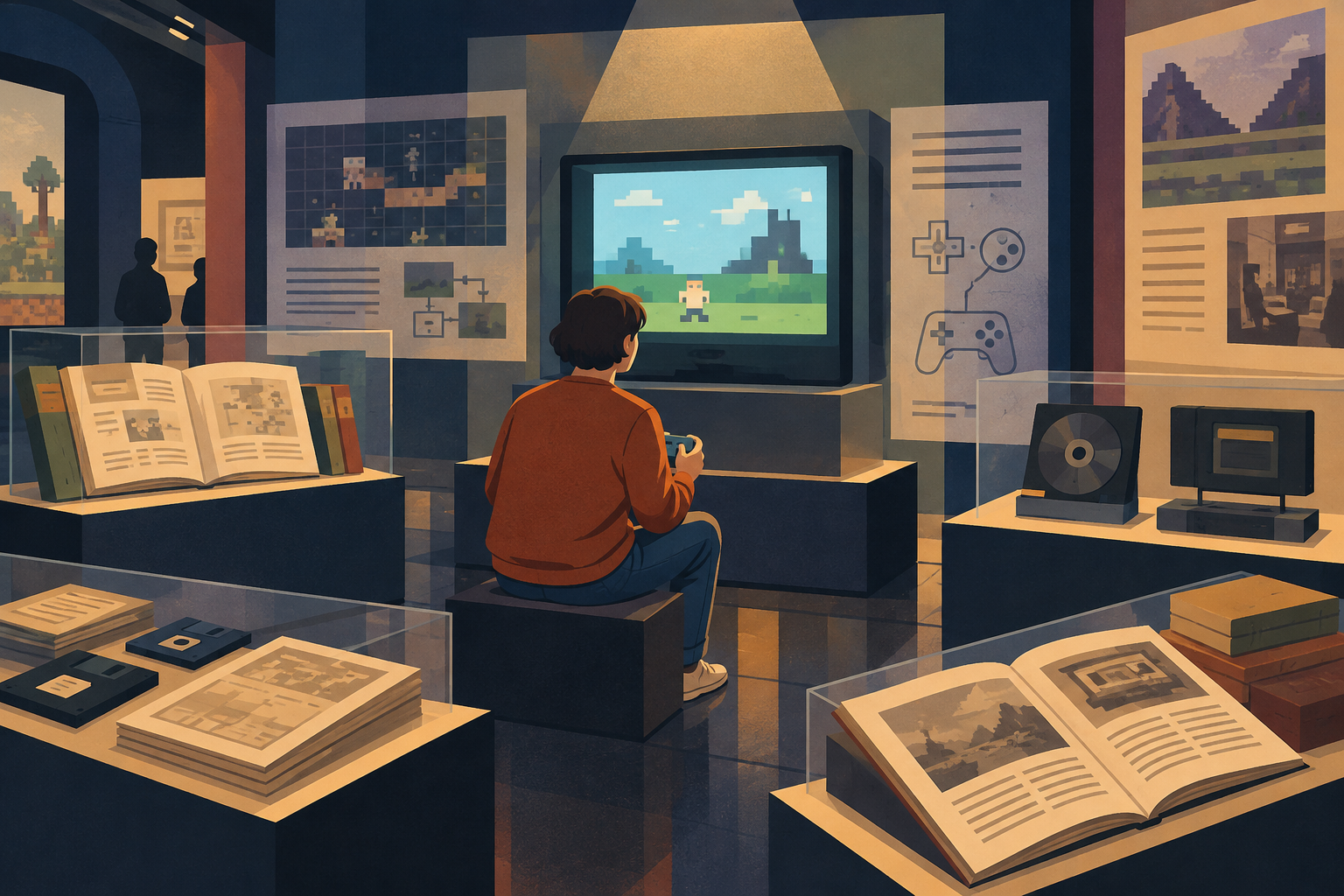
Playing a videogame involves running software and interacting with it. The available description identifies Doom as a first-person shooter and notes its use of two-dimensional images for enemies and objects within a presentation described as “2.5D”. This makes it possible to distinguish, cautiously, between preserving software and preserving the conditions that make play possible. The supplied sources do not document a specific restoration of Doom, a particular contemporary version or a comparison between its original and current materials. A specific recreation therefore cannot be presented as evidence.
From technology conservation to the museum question
The Reina Sofía Museum document on contemporary-art conservation raises the review of strategies for preserving works based on digital technologies. The UCLM proposal for an interactive videogame museum, in turn, includes preservation among its references and resources. Read together, these sources support a useful question: what must be preserved for a digital work to remain accessible or experienceable? The supplied excerpts do not provide a single protocol or an answer that applies to every game.
The archive and its limits
A scholarly article on the costs of digital preservation reminds us that preservation also involves decisions and resources; the supplied bibliographic record is not enough to attribute detailed findings to it. Another work, on digital records and cultural heritage, places preservation within a wider interest in memory. In this context, an archive can help identify and describe, but it should not be mistaken for a complete experience. Assessing a current version of a game would require specific evidence about its code, documentation, medium, operating conditions and changes.
Past and present without erasing the distance
Doom is useful as a case not because a copy or modern version can be declared equivalent to the 1993 release, but because it makes visible the difference between preserving a digital object, keeping it executable and offering a contemporary interpretation. Preservation can support new forms of access, but each requires a description of what it retains and what it changes. With the available evidence, the responsible conclusion is limited: Doom helps frame the problem; it does not support a restoration history that these sources do not document.
Documentary gallery


- Decade
- Contemporary
- Region
- Global
- Level
- Enthusiast
- Entities
- Museum, Museo Reina Sofía, Doom
Sources and references
- El cálculo de costes de la preservación digital: un análisis de modelosdoi.org · 2026-10-06
- Conservación de Arte Contemporáneorecursos.museoreinasofia.es · 2026-10-06
- Un programa antiguo no se conserva solo con el archivo ...www.retropause.com · 2026-10-06
- Museo Interactivo del Videojuego - UCLMwww.esi.uclm.es · 2026-10-06
- El entorno digital como base de los nuevos registros y ...publicaciones.unirioja.es · 2026-10-06
- Doom (videojuego de 1993)es.wikipedia.org · 2026-10-06