An incomplete album is more than a collection missing pieces. It also records a shared task: identifying what is absent, setting duplicates aside and looking for someone to trade with. The available sources describe the World Cup album as a format with a long-running history since 1970 and identify trading duplicates as part of the hobby. The University of Seville’s Pedagogical Museum, meanwhile, presents picture cards as objects connected to stories of friendship, complicity and anticipation. These descriptions make it possible to view collecting not merely as accumulation, but as a form of interaction.
A format built around gaps
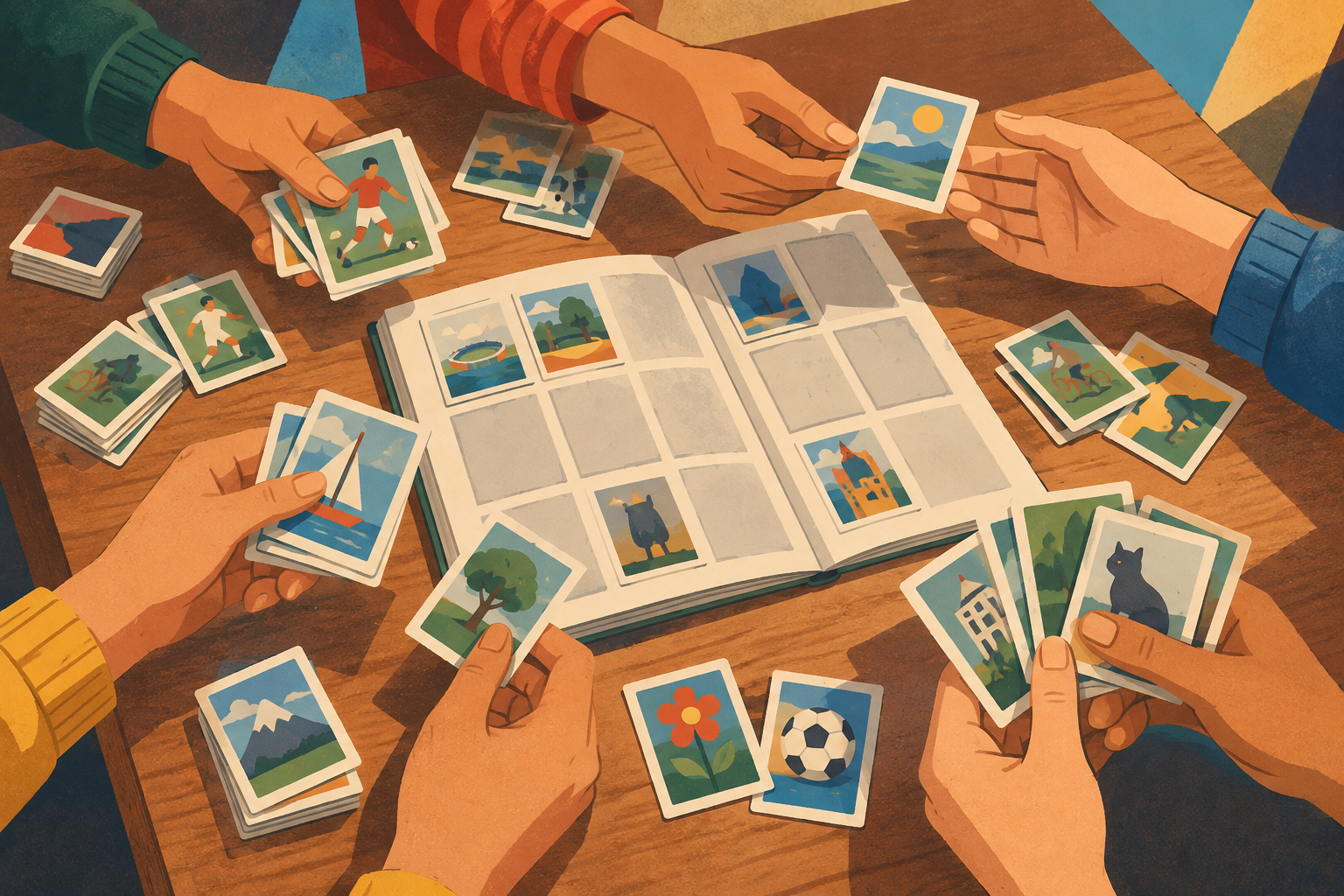
The album turns a potentially scattered collection into a visible sequence. Each empty space indicates a missing item; each duplicate raises the possibility of a trade. This reading draws on the general account of sticker collecting in the Wikipedia entry “Sticker album,” which mentions buying packets and exchanging duplicates. That encyclopedic source is not enough, on its own, to reconstruct how such exchanges were organized in different places or periods. It does, however, suggest a useful question: what activity grows around the images when an album turns them into a checklist of absences and matches?
From packet to conversation
Opening packets and looking for stickers are part of the ritual described in Cromo26’s history of the World Cup album. The same source dates its first edition to 1970 and presents the format as a widespread cultural practice. It does not provide, here, a verifiable inventory of every edition or a comparative study of its users, so its broad description should be treated as the source’s characterization, not as a quantified finding. Even with that limitation, the connection between opening, searching and the album helps explain why the object is more than a container: it structures an activity that can continue after the packet is empty.
Duplicates and the exchange network
Seen in isolation, a duplicate sticker can look like a surplus item. Within an exchange practice, it may instead be the means of acquiring a missing one. The encyclopedic account describes this basic logic, while the Pedagogical Museum offers a perspective on the emotional significance such objects can carry. The sources do not document a specific exchange or establish that every collector attached the same meaning to it. The cautious interpretation is that the format can turn an individual aim—completing an album—into an opportunity for contact with other people.
Collecting also preserves clues
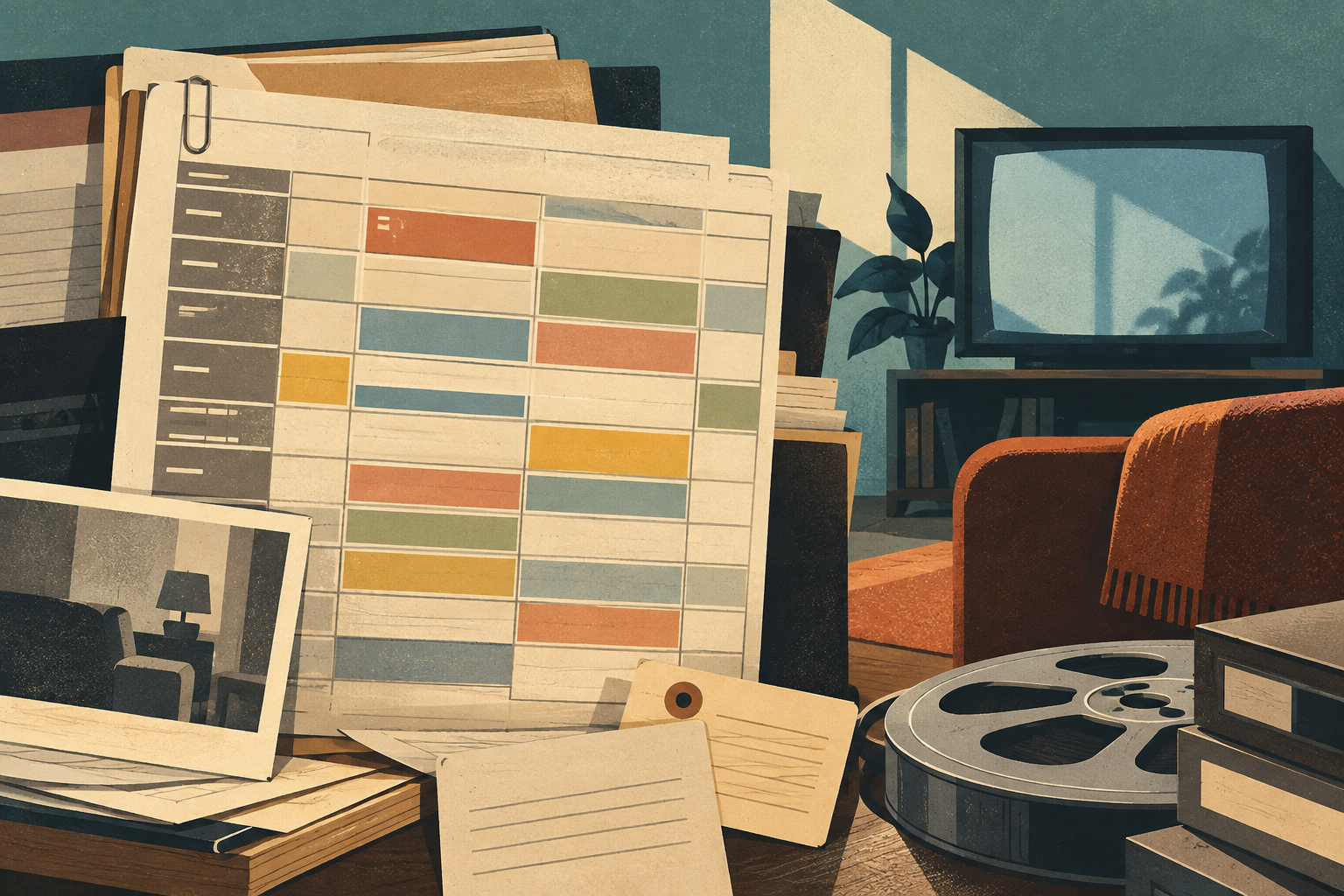
Completed albums, incomplete albums and loose stickers appear as categories of interest on Retrobjetos’ commercial page for Ediciones Este. That classification shows which kinds of material the business distinguishes in its offering, but it is not an independent historical catalogue and does not prove the rarity or value of any item. Used cautiously, the page does suggest that the collecting archive is not limited to completed albums: it can also include incomplete copies, detached items and variants that would require specific evidence to identify.
Which catalogue identifies a series or variant?
The evidence available here does not allow us to identify a specific catalogue that reliably identifies series and variants. Cromo26’s history provides a general account of the World Cup album; the encyclopedic entry summarizes the hobby’s mechanics; and Retrobjetos describes Ediciones Este materials it buys or receives. As presented here, none of these references supplies a complete cataloguing method, identification criteria or enough documentation to authenticate a variant. A rigorous record would need collection-specific sources—for example, consultable copies, corroborated publishing details and verifiable comparisons—which are not part of the supplied evidence.
What the album allows us to say
The sources support a limited conclusion: an album organizes stickers into series to be completed, and trading duplicates is part of the usual description of the practice. They also offer a clue to its social and emotional dimension, particularly in the Pedagogical Museum’s account. They do not prove that every album worked the same way or that the experience was identical across countries and generations. Nor are they enough to date particular exchange networks or establish the value of individual items.
The album is therefore worth reading both as a collectible object and as an incomplete record of relationships: it shows which spaces remained empty, which stickers were kept and which duplicates may have circulated. A catalogue helps when one exists and is documented; where it does not, exchange can be part of the archive, but cannot replace the evidence needed to identify a series or variant.
- Decade
- 1970s
- Region
- Global
- Level
- Enthusiast
- Entities
- Museum
Sources and references
- Historia del Álbum del Mundial: De 1970 a Hoy | Cromo26cromo26.com · 2026-10-04
- Historia de los cromos: de las cajetillas de tabaco a lo digitalapp.netcrom.com · 2026-10-04
- Álbum de cromos - Wikipedia, la enciclopedia librees.wikipedia.org · 2026-10-04
- Álbumes Ediciones Este Historia, temporadas y coleccionismoretrobjetos.com · 2026-10-04
- 136. Cartas-cromos | Museo Pedagogicogrupo.us.es · 2026-10-04