A broadcast was more than its programmes
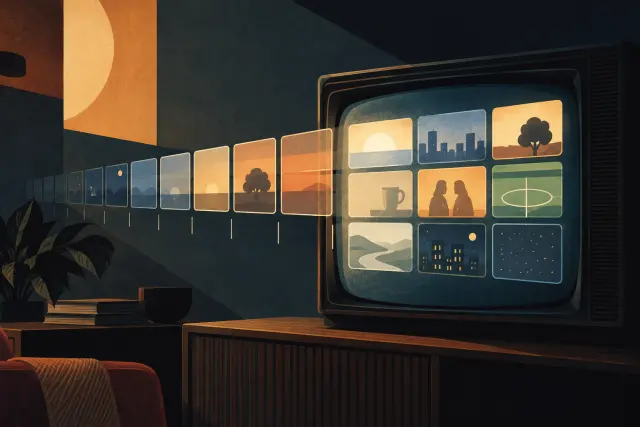
A schedule can list titles and times, but it cannot by itself reconstruct what watching television at a particular moment meant. Viewers encountered programmes, adverts, previews and continuity segments linked in a planned sequence. Raymond Williams called this form a flow: the experience depended not only on each programme, but also on how one unit led into the next. Recovering a historical broadcast therefore means attending to transitions and to each item’s place in the schedule.
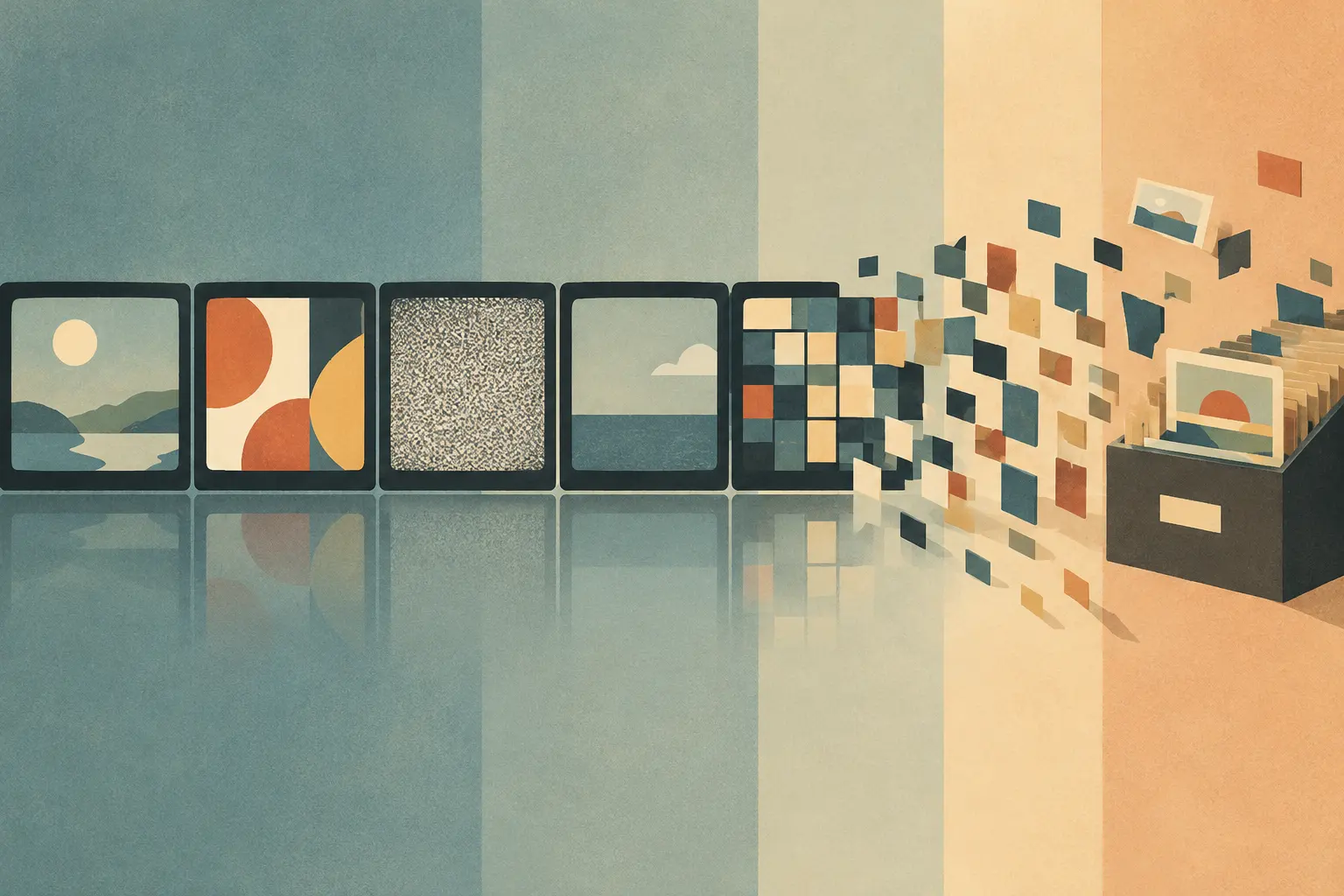
Archives often separate what transmission had joined together. Episodes or thematic excerpts may survive, while commercial breaks and transitions disappear or are catalogued as standalone records. In her study of Argentina’s Historical Archive of Radio and Television (RTA), Elina Adduci Spina notes that complete runs of programmes are rarely preserved, and that an excerpt can detach a news item from the programme in which it appeared. What survives may be valuable without retaining the structure that shaped its meaning on screen.
This fragmentation is not simply an accidental consequence of deterioration. Television was not created with an obligation to produce a comprehensive archive. Its industrial organisation prioritised broadcasting and the production of new content, while preserving the entire flow was complex and expensive. Archiving a complete sequence also presents a particular problem: a broadcast brought together different units—programmes, advertising and continuity—and their significance depended on how they related to one another.
Tape made recording, erasure and reuse possible
In television’s early years, many broadcasts were live and left no audiovisual record. Magnetic tape changed production possibilities: it made recording and rebroadcasting programmes possible, but also allowed content to be erased and the medium reused. According to Adduci Spina, this technical capacity did not itself create a preservation policy. Broadcasters’ collections tended to reflect operational needs, such as repeating programmes or retrieving material for new productions, rather than an effort to document television history comprehensively.
Argentina’s experience shows the consequences of that logic. The country’s first official broadcast, on 17 October 1951, was live and does not survive as an audiovisual record, the study explains. The subsequent expansion of channels and gradual adoption of videotape increased production, but did not end the disposal of recordings or ensure systematic preservation. Broadcasters’ operational archives and viewers’ private recordings can therefore complement one another: the former reflect institutional decisions and production needs; the latter, individual choices about what was worth keeping.
The distinction matters. A broadcaster’s archive may favour material useful for retransmission or later production; a home recording may capture a particular broadcast, though incompletely and according to what one person chose to record. Neither offers a total picture on its own. Together, however, they help us ask what was broadcast, what survived and which aspects of the television experience were left out.
What survives also depends on how it is described
Preservation is more than storing a carrier. For a document to be researchable, its contents must be identified and described, linked to related materials and made available for consultation. The three cases Adduci Spina examines in the Historical Archive of RTA illustrate different forms of this work: partial audio recordings of interviews from Gente (1960), official dictatorship-era promotions broadcast in 1979, and the miniseries Los gringos (1984), preserved on deteriorated tapes.
The case of Gente shows that a trace of television can survive outside the image. Augusto Bonardo made partial audio recordings of some broadcasts, and the National Library Mariano Moreno holds discs containing them. In 2018, a digital copy of the audio was added to the Historical Archive of RTA. The recordings do not restore the image or the programme’s complete sequence, but they make voices and content available for study that would otherwise be harder to find. They also remind us that television history can be reconstructed from dispersed sources: sound archives, printed schedules, production documents and private recordings, as well as broadcast tapes.
The 1979 promotions pose a different dilemma: how to preserve politically uncomfortable material. The study examines eleven propaganda campaigns from the dictatorship, preserved as separate items although they originally circulated across the country’s channels. Digitising them and making them available supports analysis of both their messages and their television form. Preservation is not endorsement: the archive documents how these materials were produced and circulated, making it possible to study them from a context different from the one that produced them.
Archival description can also make an item’s material history visible. In these campaigns, title cards before some adverts include technical information, such as titles and production and broadcast details. Elements that once belonged to the television production process thus become clues for reconstructing it. A fragmentary record contains more than images: it may preserve evidence of how material was prepared and distributed.
A surviving carrier is not always accessible
Physical preservation does not guarantee that a recording can be played. Of the twenty-one quadruplex tapes of Los gringos described in the study, fourteen were affected by adhesive deterioration known as glue flange. Only part of the series was accessible. Production photographs, scripts and press coverage could help reconstruct it, although none of these sources replaces missing or inaccessible episodes.
The case distinguishes two tasks that are often conflated: keeping a carrier and making its contents available for consultation again. A tape may have survived materially and still be unplayable. When that happens, documentary work expands: other versions are sought and records that originally served different purposes are brought into relation.
In Chile, the audiovisual archive of the Casa Museo Eduardo Frei Montalva shows another aspect of preservation: cataloguing and digitising a varied collection to identify its contents and facilitate use. Material produced during Frei’s presidency (1964–1970) includes 16 mm reels, mostly black-and-white and silent. According to the institution, about 1,800 records came under the care of the National Film Archive; around 300, amounting to nearly 27 hours, were digitised in 2014. The material includes newsreels, outtakes and footage of public activities and everyday life.
Digitisation makes consultation easier and reduces handling of the originals, but it does not turn a partial collection into a complete record of television schedules. Nor does it remove the need to describe what appears in the images: cataloguing itself helped identify material that might otherwise remain difficult to locate or understand. An archive is built from carriers and from the information that makes them findable and intelligible.
Reconstructing a broadcast means connecting sources
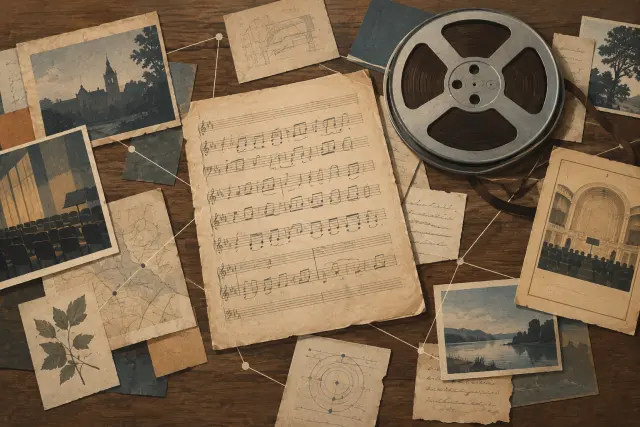
To return an item to its context, researchers and archivists can relate recordings to schedules, technical notes on tapes, advertising, photographs, scripts and press coverage. In the case of the 1979 campaigns, opening title cards offer clues about their production and broadcast. For Los gringos, photographs and scripts help researchers study a series whose video record is incomplete. Each source provides a different kind of evidence; some of its value lies in the possibility of comparing it with others.
It is also important to distinguish between what a published schedule announced and what actually reached viewers’ homes. A listing records intended times. A home recording documents a particular transmission, but may be partial. An institutional archive preserves material selected according to its own criteria. Bringing these sources together allows questions about what was broadcast, how it was presented and what a particular audience might have seen—without treating a printed schedule as a comprehensive record of reception.
Home recording made it possible to keep broadcasts beyond their original transmission time and watch them later. But the existence of such recordings is not, by itself, enough to establish how the practice changed across households or periods. It does, however, raise a historical question: once recording became possible, what did viewers choose to keep, and how did those copies relate to broadcasters’ archives?
Archiving television means accepting that the complete flow is difficult to recover and that every preservation decision shapes a partial memory. Schedules help reconstruct order; recordings show what survived; related documents supply context. By connecting them, it becomes possible to study not only programmes, but television as a shared timetable, a sequence of images and part of everyday conversation.
- Decade
- 2000s
- Region
- Global
- Level
- Enthusiast
- Entities
- Televisión, Cineteca Nacional, Elina Adduci Spina, Argentina, Archivo Audiovisual de la Casa Museo Eduardo Frei Montalva, Archivo Histórico de Radio y Televisión Argentina
Sources and references 5
- En conmemoración del Día Mundial del Patrimonio ...www.facebook.com · 2026-11-15
- 📺 Los medios públicos no solo transmiten programas ...www.facebook.com · 2026-11-15
- El patrimonio no solo se encuentra en edificios ... - Instagramwww.instagram.com · 2026-11-15
- Recuerdos en movimiento: Archivo Audiovisual de CMEFMwww.casamuseoeduardofrei.cl · 2026-11-15
- Paradojas y desafíos del patrimonio audiovisual televisivo. ...www.scielo.org.ar · 2026-11-15