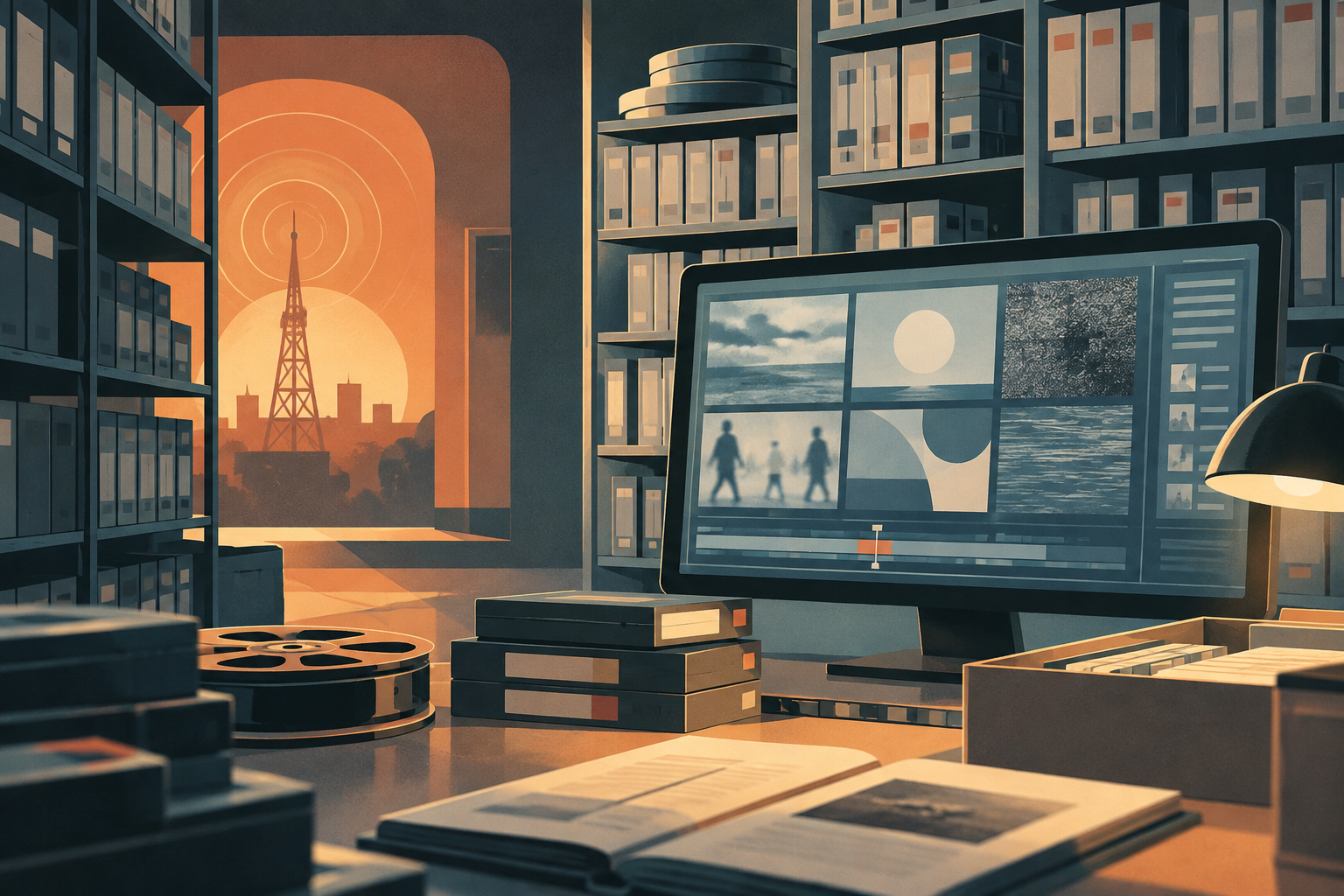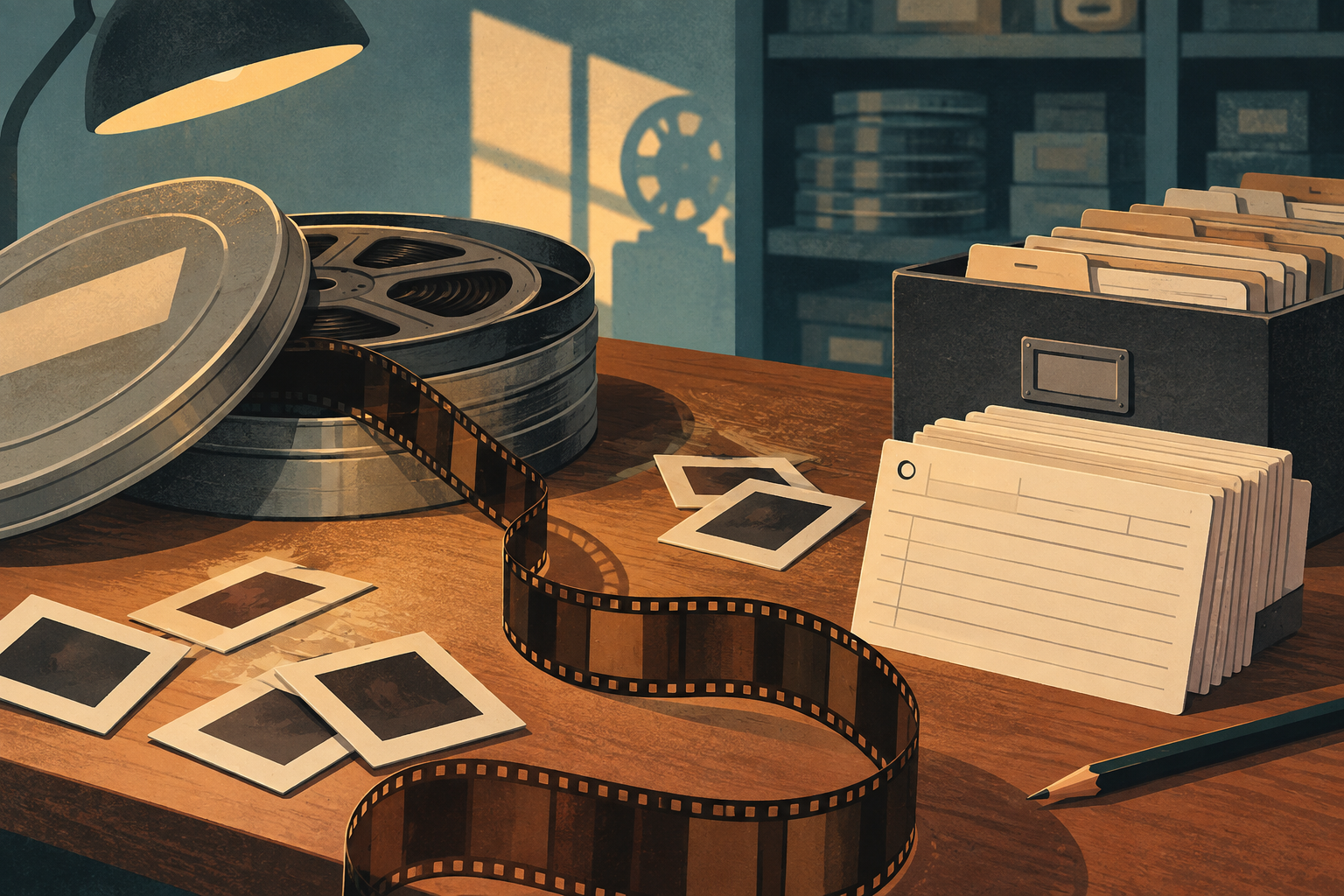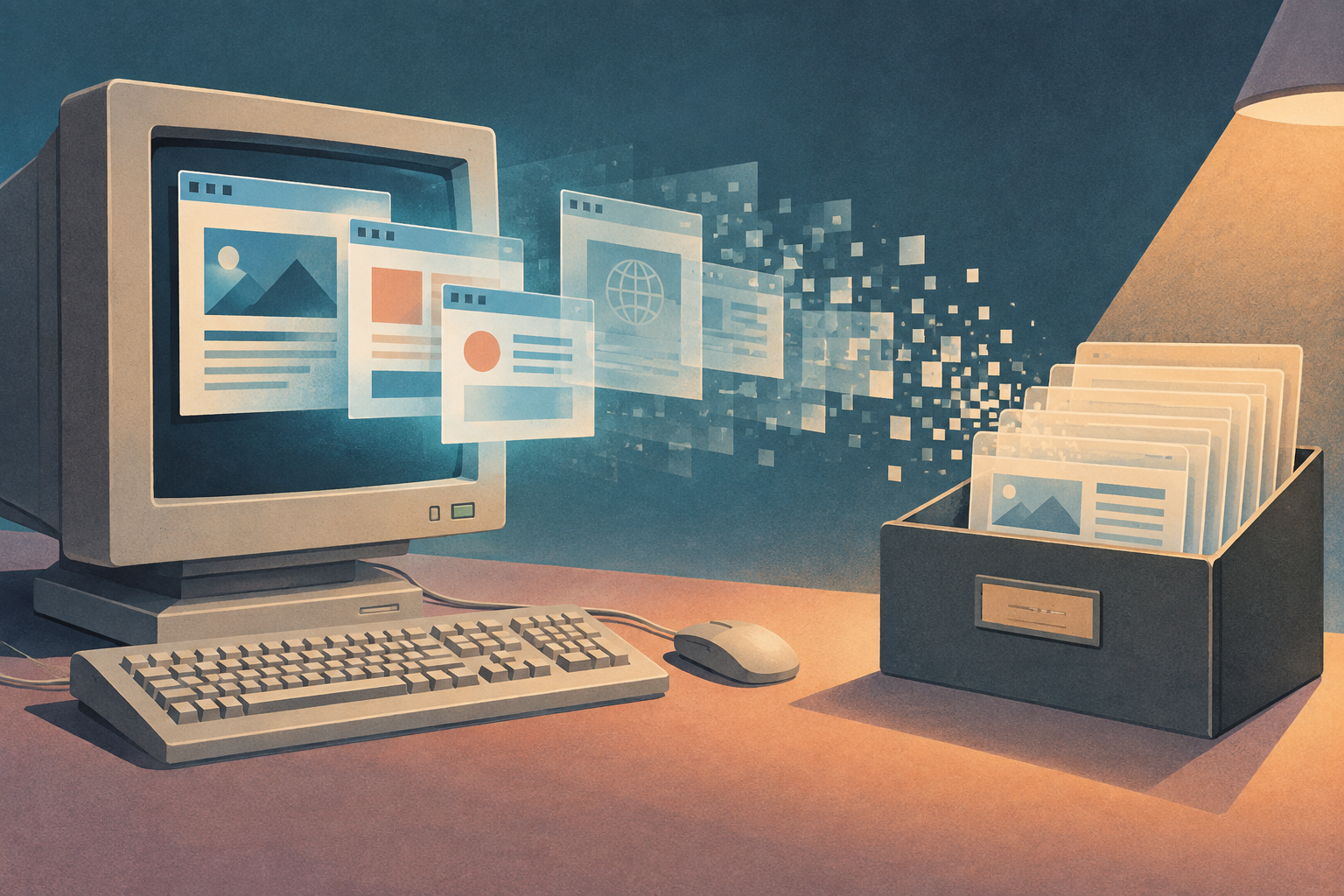
Internet history is often told as a succession of novelties: pages, services and forms of communication appear, while others fall away. Yet an early cultural website can be read as more than a stage in technological development. It is a historical way of presenting a collection, organizing information and reaching an audience in a changing medium. RetroPause identifies the Berkeley Art Museum and Pacific Film Archive’s online presence in 1994 as a starting point for this question. The National Library of Spain’s Spanish Web Archive states the other half of the problem plainly: websites are collected in order to preserve Spain’s documentary heritage on the internet. Together, these ideas raise a question: what does it mean to preserve a cultural experience born on a changing network?
A website has a context
A cultural collection is communicated not only through the objects it contains. The descriptions, connections between items and routes offered to visitors matter too. On a website, that mediation takes shape through text, images, links and the organization of content. We do not need to assign specific features to a 1994 page to recognize that a museum’s online presence belongs to its public history.
This is an interpretation, not a detailed description of that page: the supplied reference identifies a date and an institution, but does not reconstruct the design, content or browsing experience. That caution matters. If a digital artefact quickly becomes a symbol of “the first website,” the label can displace the evidence. A site’s historical value requires enough documentation to establish what it offered, how it appeared and what its audience could do.
From a live site to a preserved document
A functioning website and a preserved capture are not necessarily the same thing. The first participates in an active environment: it may change, link to other services or present different content over time. The second is a trace collected and maintained by an institution as part of documentary heritage. The National Library of Spain’s description states this preservation aim, but the supplied information does not detail its technical methods, coverage or access conditions.
This difference helps avoid a misleading idea: that saving a page automatically preserves the whole experience of the internet. Links may depend on other sites, some functions may stop working, and the context of use may fall outside the preserved document. These are general limits of digital preservation; the available evidence does not establish which ones affect any particular website from the 1990s. Naming them prevents us from confusing a preserved copy with a complete recovery of the past.
The museum as a presence, not only a building
An academic record indexed by OpenAlex, “Digital communication strategy in the museum,” treats museum digital communication as a subject of study. The supplied record identifies a 2012 article by Raquel Martínez Sánz, but gives neither its abstract nor its conclusions. We therefore cannot attribute specific arguments to it. It does, however, support the cautious observation that museum digital communication is a research topic, not merely a technological anecdote.
From this perspective, an early online presence can be considered part of the relationship between an institution and its public. That does not mean the web replaced in-person visits or that every museum adopted the medium at the same time. It means a museum’s history may also include the ways it made itself visible in digital spaces. That interpretation should be checked case by case against preserved documents and institutional sources.
Heritage changes form
An OpenAlex record on the evolution of the concept and social significance of cultural heritage—an article by Josué Llull Peñalba from 2005—offers a thematic frame, although the supplied record also omits its arguments. Another record, “Digital history: memory in the infinite archive,” by Jairo Antonio Melo Flórez, is dated 2011. Its title connects archive and digital memory; without consulting the text, we should not attribute more precise conclusions to it.
Even with these limits, the records allow a working interpretation: heritage related to the internet is not only about preserving separate files, but also about documenting how an institution produced and organized information in a digital environment. CER.es, Spain’s Digital Network of Museum Collections, indicates the existence of an initiative for online access to museum collections. The available information is not enough to equate that network with a website archive; they are different things. It does help distinguish two complementary tasks: providing access to collection information and preserving websites as historical documents.
What we still cannot reconstruct
The supplied sources do not allow us to describe Berkeley’s 1994 website in detail, establish how many people visited it, compare its design with other museums or specify which elements survived. Nor do they provide a general chronology of the expansion of museum websites. Keeping these gaps visible does not weaken the account; it prevents a brief reference from becoming a complete history that the evidence cannot support.
What can be said is narrower, and therefore useful: according to the RetroPause reference, a cultural institution had an online presence in 1994; the National Library of Spain describes collecting websites to preserve documentary heritage; and research records address museum digital communication, digital memory and cultural heritage. Together they open a history of questions rather than a closed chronology.
Preserving the way an institution appeared
Treating the old web as heritage means paying attention both to what a page said and to how an institution tried to appear in a new medium. Preservation does not automatically restore the past or guarantee that the original browsing experience remains intact. But it can leave evidence for studying decisions, changes and forms of communication that would otherwise be hard to trace.
In this sense, “before the web became an archive” does not point to a single moment when the internet stopped changing. It names a lasting tension: pages are made to communicate in the present, but over time they can become documents about that present. Preserving them with context, stating the limits of what has been recovered and distinguishing access from preservation are necessary steps toward telling that history without inventing what remains unknown.
- Decade
- 1990s
- Region
- Global
- Level
- Introduction
- Entities
- Museum, Archivo de la Web Española
Sources and references
- Estrategia comunicativa digital en el museoopenalex.org · 2026-09-30
- Evolución del concepto y de la significación social del patrimonio culturalopenalex.org · 2026-09-30
- Historia digital: la memoria en el archivo infinitoopenalex.org · 2026-09-30
- Archivo de la Web Española | Biblioteca Nacional de Españawww.bne.es · 2026-09-30
- Antes de la web-museo: las primeras colecciones culturales ...www.retropause.com · 2026-09-30
- CER.es Colecciones en Red - Ministerio de Culturaceres.mcu.es · 2026-09-30