A photograph can preserve a scene and still leave basic questions unanswered: who made it, when, by what process and for what use. Research is clearer when we distinguish what is visible from what the object contributes and from what its associated records say. That distinction is useful for both a paper print and a digital file. The supplied sources address photography as a historical document, press-photography archives, and practices of developing, printing and preservation. Together, they suggest a cautious method: describe the clues, record their provenance and do not turn a possibility into a fact.
The image is not the whole photograph
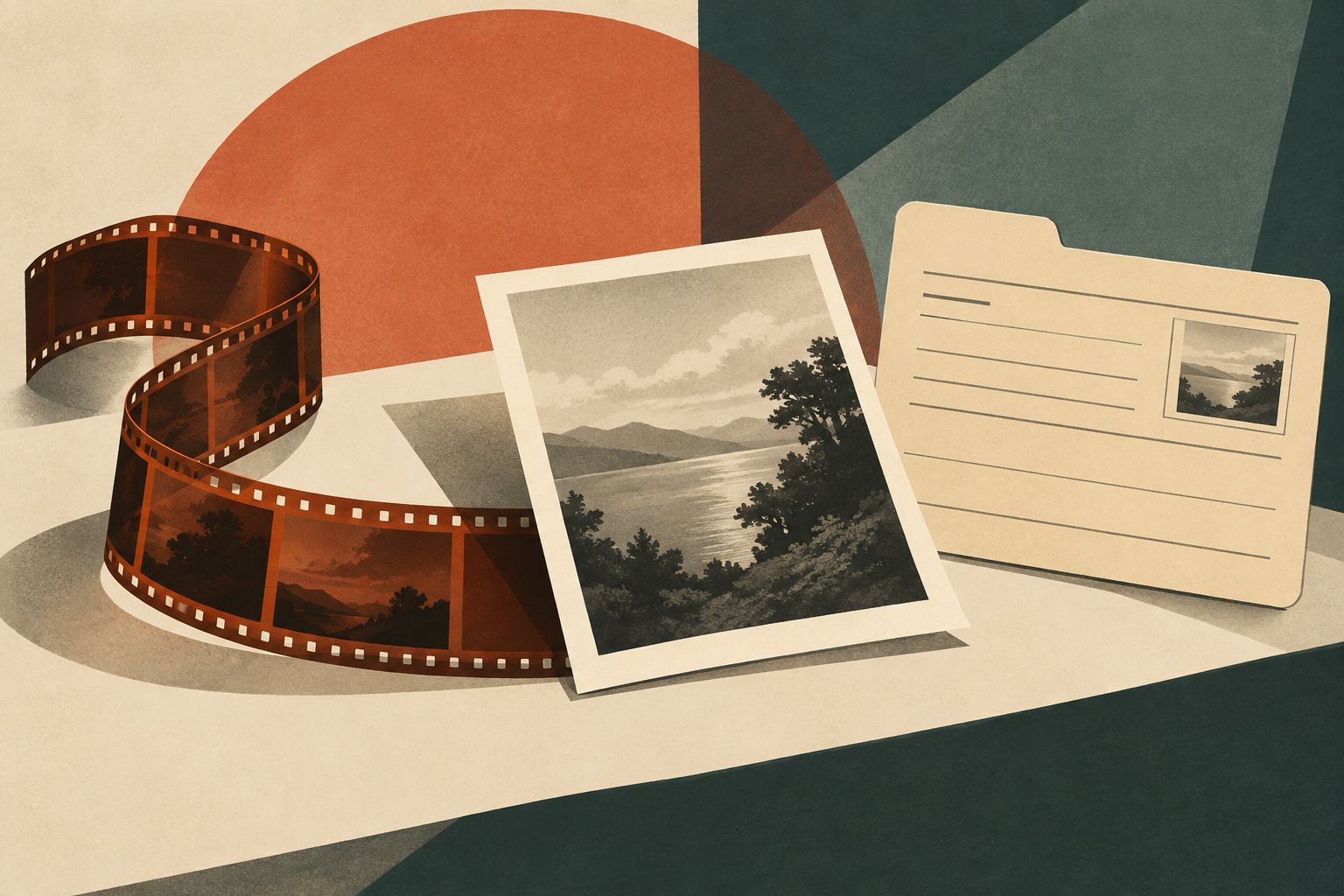
In everyday use, “photograph” can refer to the image, the process that produced it and the object that preserves it. The supplied encyclopaedia definition broadly distinguishes capture on a light-sensitive material from converting light into electronic signals. This is a useful starting distinction, not a sufficient identification of a particular object. Seeing a reproduction on a screen does not, by itself, establish the original’s support or how it was processed.
The academic article on photography as a historical document notes that dating can sometimes rely on a date written by the photographer on the back of developed paper. “Sometimes” matters: an annotation is a clue to describe and assess, not automatic proof of the exposure date. It can guide research, but the available excerpt establishes no universal authentication rules and does not allow us to attribute any particular image.
The reverse and the catalogue record: clues, not verdicts
A physical support may carry information absent from the image: an inscription, a mark or a note. If present, record its location, appearance and relation to the print, separating transcription from interpretation. A date on the back demonstrates that the inscription is there; treating it as the date of exposure may require corroboration the object itself does not provide.
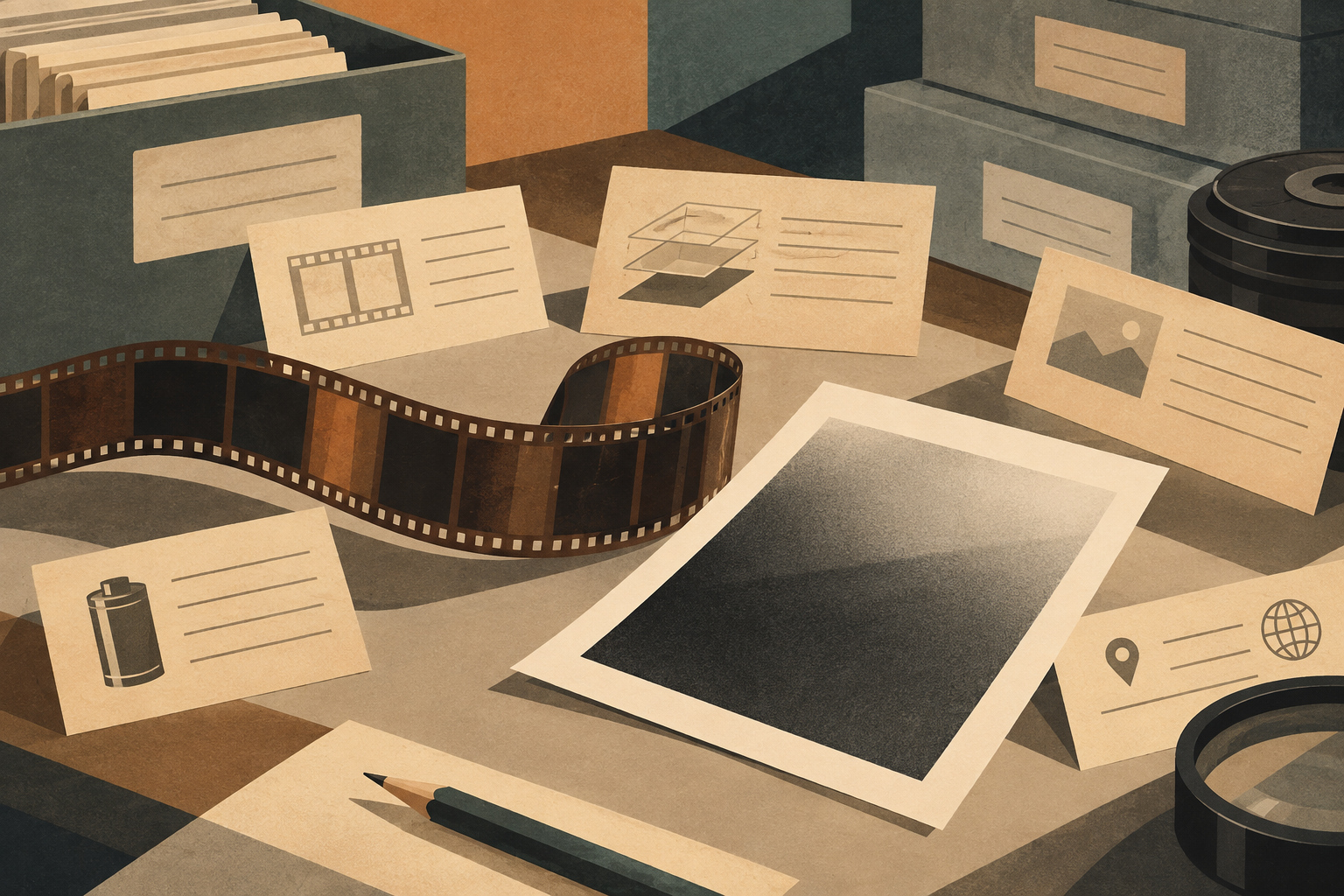
The same caution applies to an archive record or catalogue description. The Spanish Ministry of Culture’s census of photographic holdings shows that documentary collections may sit alongside facilities and working resources such as developing spaces and enlargement laboratories. The available excerpt does not provide a detailed cataloguing protocol, but it does underline that photographic materials are preserved within contexts and collections, not merely as isolated images. Recording where a print came from, which other materials are kept with it and what information accompanies it helps keep that context visible.
Developing and printing are part of the process
Research on press-photography archives considers, among other things, developing and printing procedures, cameras and lenses. This list points to a practical idea: the final image does not exhaust the process that made it possible. However, the supplied reference does not let us assign a specific procedure to every press photograph or reconstruct the steps of a particular laboratory.
When describing an analogue image, identify only what direct observation or sources support. “Paper print” or “negative” may be descriptive categories if the support has been examined; “developed on this date” requires different evidence. Distinguishing observation from inference prevents technical vocabulary from creating a stronger impression of certainty than the documentation warrants.
A digital workflow does not remove the question of support
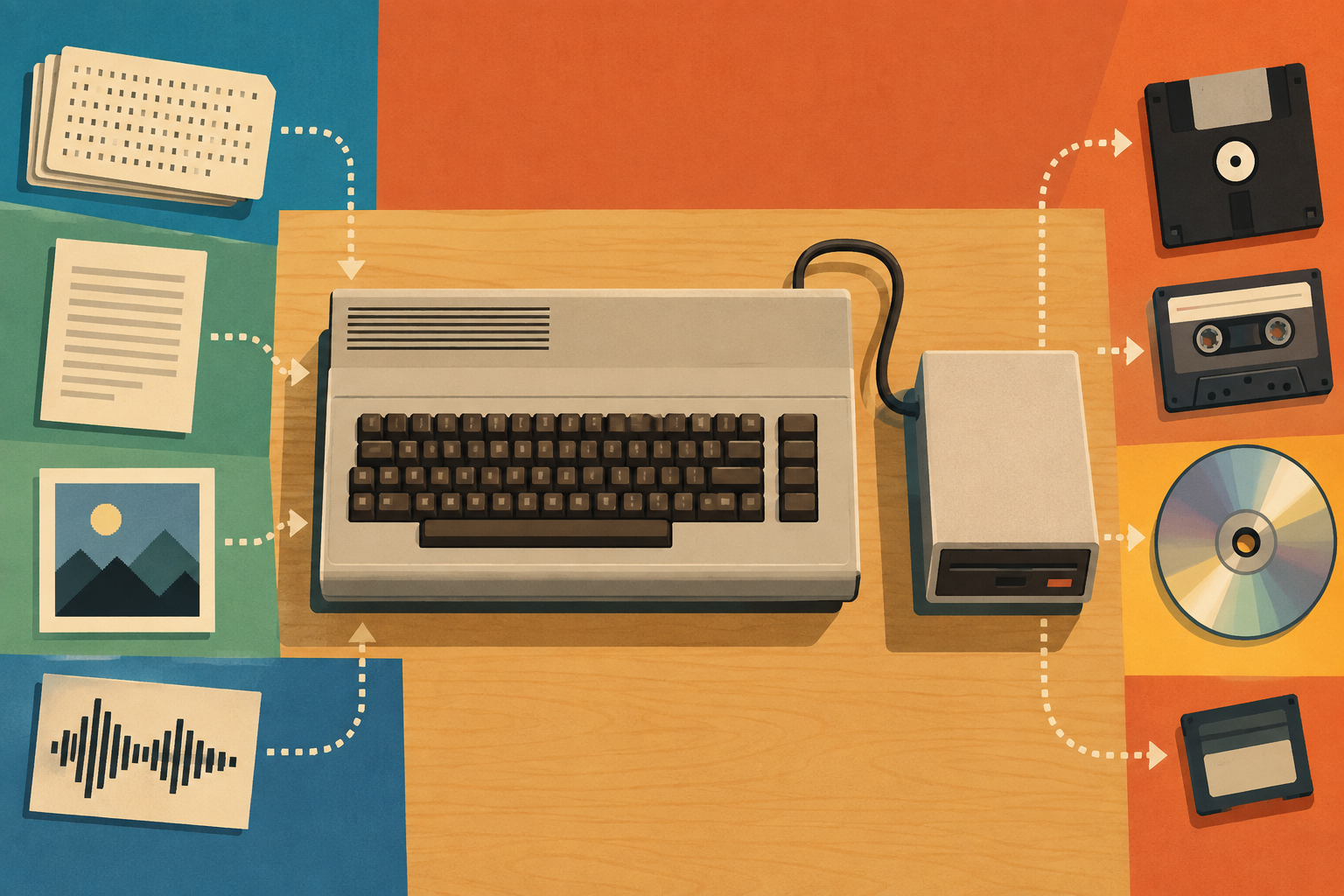
The RIMAR project publication includes a tutorial on developing RAW images and mentions a workflow combining development, treatment and digital preservation. That sequence identifies several operations within a digital process. It does not, however, establish the software, camera or settings used for any particular file: the supplied source does not specify those details.
The comparison with paper should not become a simple opposition between a “true” photograph and a “manipulated” one. The sources confirm that chemical and digital procedures both involve stages and supports; they do not provide criteria here for judging the content or truthfulness of a particular image. In describing a digital file, it is important not to confuse the image as displayed with the whole process of capture, development and preservation. If records are incomplete, say so.
Saving also means preserving relationships
A photographic collection may include images, documents and objects, while its description connects individual items to a preservation context. A supplied news fragment about a Vigo archive mentions a collection of images alongside cameras, curtains and developing materials. Because it comes from a social-media post excerpt, it cannot verify the collection’s full scope or access conditions here. With that caveat, it serves as a reminder that archives may preserve more than loose prints or negatives.
RIMAR’s account of digital preservation reinforces the value of thinking in stages—development, treatment and preservation—although the summary specifies no preservation standards, formats or technical procedures. Responsible description does not fill those gaps. It states which support has been examined, which information comes from an inscription or record, and which aspects remain unconfirmed.
A reading with explicit limits
Photography as a historical document can provide evidence and raise questions, but it does not make every visual detail a self-sufficient claim. The supplied material supports an approach attentive to support, process and archival context. It does not identify the origin of an unknown photograph, establish a date without corroboration or reconstruct a particular workflow.
The practical conclusion is simple: describe before interpreting. Record observable characteristics, preserve the relationship between image and documentation, and distinguish recorded information from hypothesis. That allows a photograph to be read without asking it to prove more than it can. From the back of a paper print to the workflow of a RAW file, process matters; so does knowing where the evidence ends.
- Decade
- 2000s
- Region
- Global
- Level
- Introduction
- Entities
- No linked entities
Sources and references
- Para una sociología de la fotografíaopenalex.org · 2026-10-02
- LA FOTOGRAFÍA COMO DOCUMENTO HISTÓRICOrevistaselectronicas.ujaen.es · 2026-10-02
- ARCHIVOS FOTOGRÁFICOS DE PRENSArevistas.ucm.es · 2026-10-02
- censo-guia-de-archivos-informe-sobre-fondos-fotograficos. ...www.cultura.gob.es · 2026-10-02
- Memorias compartidas. Andalucía-Marruecos a través de la ...repositorio.iaph.es · 2026-10-02
- La fotografía como documento históricowww.educ.ar · 2026-10-02
- El patrimonio fotográfico en la encrucijada digitalestaticoarchivo.carm.es · 2026-10-02