Denim as an everyday staple
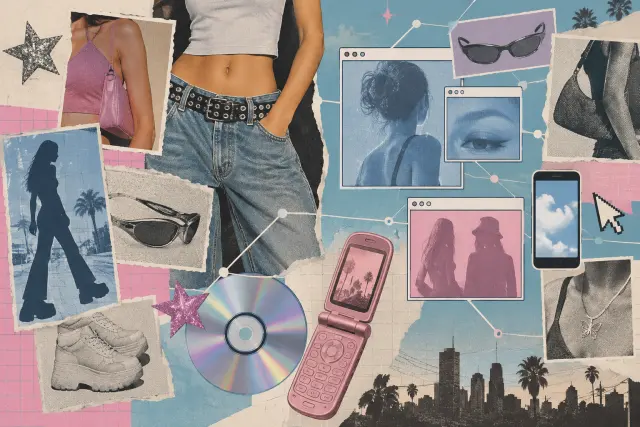
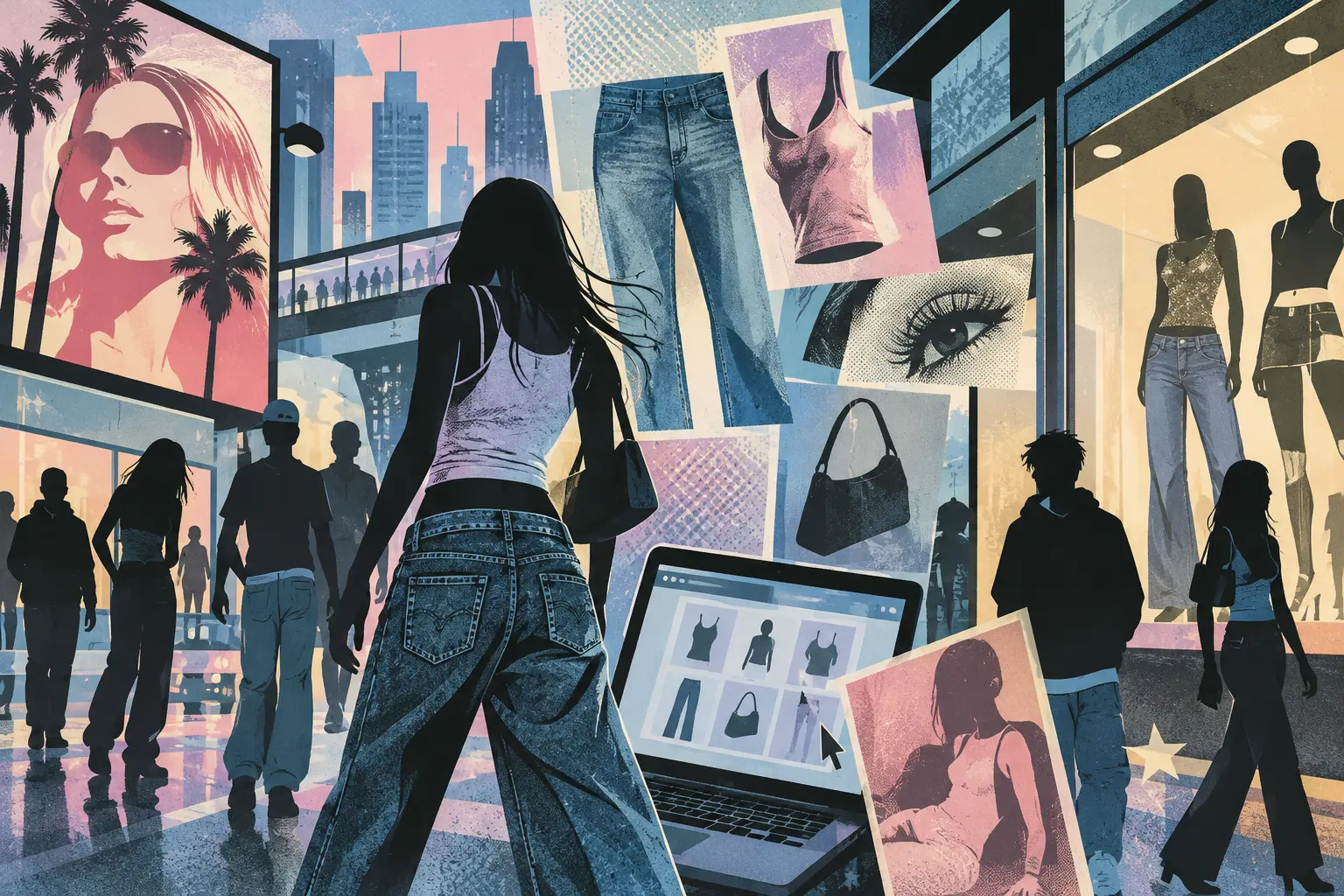
Fashion timelines describe a decade that inherited trends from the late 1990s, while the internet and celebrities’ constant presence in the press accelerated the circulation of images. Denim stood out for its reach and its changing silhouettes: low-rise flared jeans were characteristic of the early years; bootcut cuts gained ground mid-decade, and skinny jeans spread from 2005–06. Distressed and ripped finishes were also visible.
A garment’s repeated appearance in magazines and timelines does not mean everyone dressed alike. Such sources help identify prominent trends, not inventory the everyday wardrobes of every group or region. Street photographs and preserved garments offer different kinds of evidence about how clothes were worn and how use changed over time.
Boho and garments turned into emblems
In the early 2000s, bohemian—or boho—style combined second-hand clothing and vintage references with pieces from boutiques and brands. Karina Reddy, writing in the Fashion Institute of Technology’s (FIT) timeline, presents it as a more deliberately composed aesthetic than the worn look associated with 1990s grunge. Sienna Miller became closely linked to the style in the public imagination.
Other items became media emblems: Juicy Couture velour tracksuits, UGG boots and Von Dutch trucker hats. Their prominence helps show how a garment can condense an era’s imagery, but does not by itself establish how often different social groups wore it. Visibility in images, retail availability and everyday use are related, but distinct, phenomena.
Silhouettes, the red carpet and television
Women’s clothing in the decade ranged from fitted, short garments, cropped tops and mini-skirts to dresses with more structured silhouettes. Roland Mouret’s Galaxy dress, presented in 2005, offers a specific example of a runway design becoming a subject of public discussion and appearing in commercial fashion. Images of the collection and contemporary coverage document both the dress’s construction and its rapid circulation in public conversation.
Celebrity influence extended beyond the red carpet. The press photographed everyday outfits and turned them into style references. On television, Gossip Girl, which premiered in 2007, made its characters’ clothes central to the narrative. A 2008 New York Times report described viewers trying to identify garments and find similar versions; the show’s website made that search easier. The example illustrates an increasingly direct relationship between fiction, fashion and consumption, but it is not a measure of what all young people wore.
Designers, high-street retailers and the internet
In November 2004, H&M launched a collaboration with Karl Lagerfeld. The FIT timeline and WWD’s coverage describe strong demand and the rapid sell-out of many pieces. The release became a notable precedent for collaborations between luxury designers and accessible fashion chains: it brought haute couture names to a wider audience while concentrating attention on a limited collection.
The internet sped up the circulation of images and trends, and shopping pages made it easier to find garments seen in campaigns or television programmes. The FIT timeline also records growth in online fashion sales in the decade’s later years, within a development that continued beyond them. At the same time, the speed with which retailers could offer affordable versions of popular styles fuelled debate about fast fashion. It is more precise to treat this as a change in the pace of circulation and retail than as the sole explanation for production and consumption at the time.
A decade of overlapping trends
2000s fashion was neither a uniform sequence nor a single dominant aesthetic. Denim coexisted with sportswear, retro references, bohemian looks and structured silhouettes. Menswear paired tracksuits and polo shirts with references to indie music and hip-hop. Music scenes circulated styles, but their codes varied by place, group and context; they did not amount to a shared wardrobe for everyone.
Magazines and advertising show which images were made visible and desirable; street photographs and preserved garments allow different questions about use. Considering both kinds of material helps tell the decade’s story without confusing a media selection of trends with a description of how the whole population dressed.
- Decade
- 2000s
- Region
- Global
- Level
- Introduction
- Entities
- Televisión, Internet, Karl Lagerfeld, Karina Reddy, Roland Mouret
Sources and references 6
- 2000-2009 | Cronología de la historia de la modatranslate.google.com · 2026-11-16
- Historia de la moda - Wikipedia, la enciclopedia librees.wikipedia.org · 2026-11-16
- vestidos del mundo desde la antigüedad hasta el siglo xix: ...www.facebook.com · 2026-11-16
- Biblioteca — Historia de la Modahistoriadelamoda.net · 2026-11-16
- ÁREA 09 - Museo del Trajemuseodeltrajevirtual.com · 2026-11-16
- Anna Wintoures.wikipedia.org · 2026-11-16