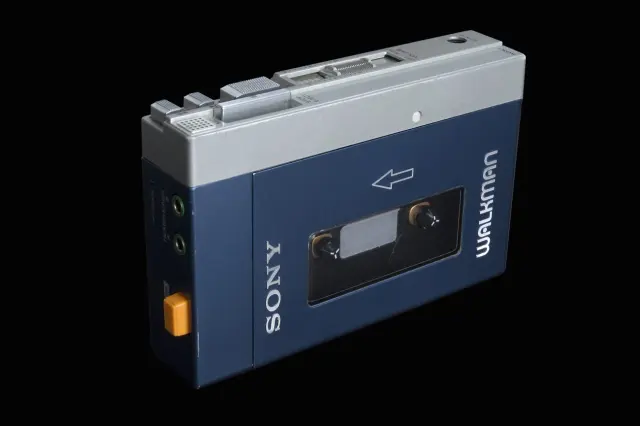
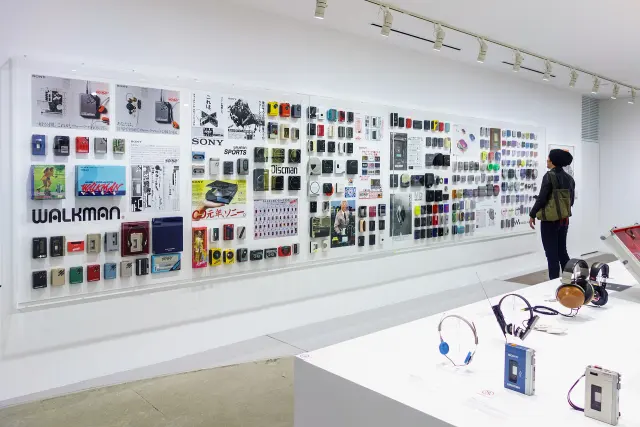
The Sony entry lists the Walkman among products developed by the company in the decades following its early years.
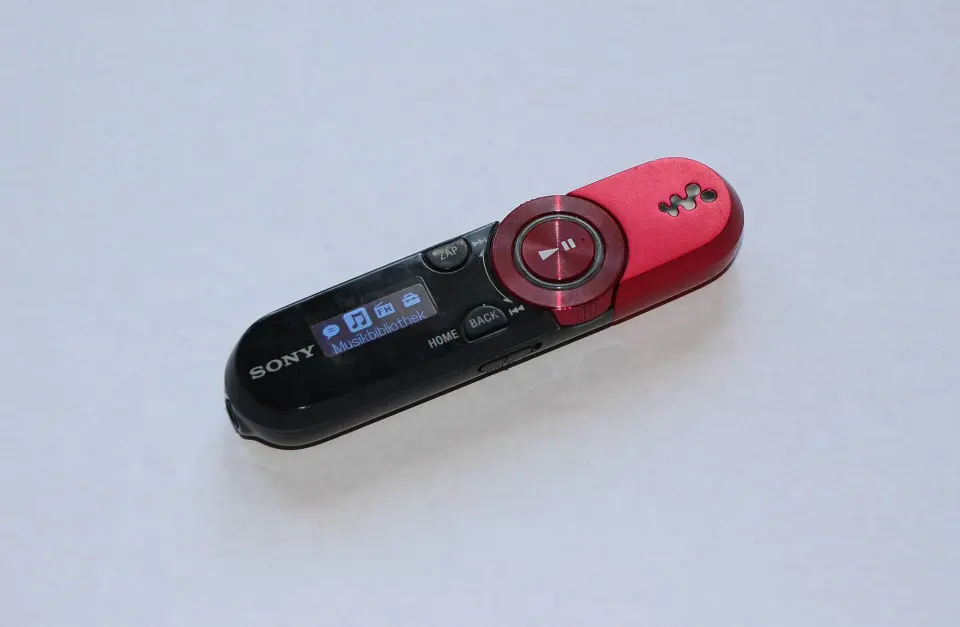
Selected excerpts from our archive offer more context on this subject. Each reading links to the original article and its sources.
1970 or 1979: The Date Worth Revisiting in Walkman History
The Walkman has a highly visible place in accounts of portable listening. That is exactly why an imprecise date can spread easily: one source supplied for this research says that Sony’s Walkman definitively changed how people listened to music “in 1970,” while another states that Sony presented it in July 1979. The two claims are not equivalent. The first places the change within a decade; the second gives a month and year for the product’s presentation.
A timeline’s task is not to choose the most striking version, but to retain the precision actually supplied by the evidence. With the available material, 1979 is the usable date for Sony’s presentation; 1970 should be handled as a documentary discrepancy, not as a confirmed Walkman date.
The AARP reference describes the Walkman as the “first portable stereo sound player,” presented by Sony in July 1979. It adds two concrete aspects of use: lightweight headphones and the ability to listen privately while in public. It also says that the product was an immediate success and that the Walkman became a fashionable consumer brand, setting a standard for later personal devices.
Hoyesarte covers an exhibition on the history of music recording at Espacio Fundación Telefónica in Madrid. In a route that mentions the phonoautograph, phonograph, tape recorder, compact cassette, Discman and MP3 players, it attributes leadership in device miniaturisation to Japan. Its Walkman sentence, however, places the change in 1970. The chronological conflict is explicit when read beside the July 1979 dating.
From Phonograph to Walkman: How Portable Listening Changed
Music history is not limited to works, performers, or genres. It also depends on the objects and systems that make it possible to record, carry, and replay sound. The supplied documentation supports a cautious line of enquiry: from mechanical devices preserved by institutions to the private listening associated with the Walkman, and then to a digital landscape mentioned by a popular exhibition on sound recording.
This is not a complete history of popular music, nor an exhaustive chronology of every format. It is instead a history of mediations: of the ways an instrument, a carrier, or a player changes the circumstances of listening. That distinction matters. The available sources describe devices, collections, and a few milestones; by themselves, they do not establish what an entire generation felt or precisely measure the commercial reach of each innovation.
Barcelona’s Museu de la Música dates its acquisition of the Arellano Collection to 1970, describing it as a very complete body of phonographs and gramophones. This matters because it presents such objects not as mere antiques, but as pieces needed to explain a technical genealogy of recorded music. The museum also states that its main collection already comprised 966 instruments in 1969, helping place the acquisition within a wider process of building collections.
A phonograph or gramophone preserves more than one way of producing sound. It also reveals a particular relationship between music, domestic object, mechanism, and carrier. Displaying these devices invites us to regard listening as a material practice: there is a machine, an operation, a place, and a listener. The Museu de la Música’s new exhibition of its collections, inaugurated at L’Auditori in March 2007, continues this public presentation of musical holdings.
KEY FACTS
- Type
- Device
References
- Sonyes.wikipedia.org