An association dedicated to the enjoyment, study and dissemination of computing from earlier times and of its relevance to contemporary society. It organizes RetroMañía and maintains the Museum of Historical Computing (MIH).
Selected excerpts from our archive offer more context on this subject. Each reading links to the original article and its sources.
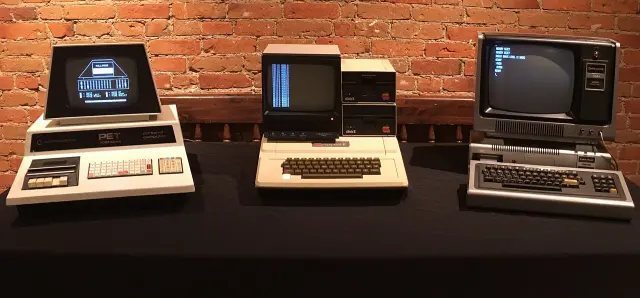
The “1977 Trinity”: When the Personal Computer Began to Become a Market
Preserving objects and narratives also matters. UPM reports a collection of nearly 3,000 pieces devoted to the evolution of computing and communications; RetroAcción describes a museum arranged around components, home computers, Apple systems, PC compatibles, portable computing and servers. Such collections restore material presence to a history too often reduced to brands and dates.
The 1970s and the Arrival of the Personal Computer
The cited museums help reveal the material legacy of these transformations. UPM preserves a collection of close to 3,000 objects related to the evolution of computing and communications, with 200 pieces on display. RetroAcción organizes its Historical Computing Museum into areas devoted, among other fields, to components, home computers, Apple machines, PC compatibles, portable computing, servers, and terminals. These museum divisions are not a complete chronology, but they make visible that computer history is composed of machine families, peripherals, and contexts of use.
KEY FACTS
- Type
- Company
- Country or region
- Spain
References
- RetroMañía 2025 | Asociación RetroAcciónretroaccion.org
- Museo de Informática Histórica (MIH) | Asociación RetroAcciónretroaccion.org