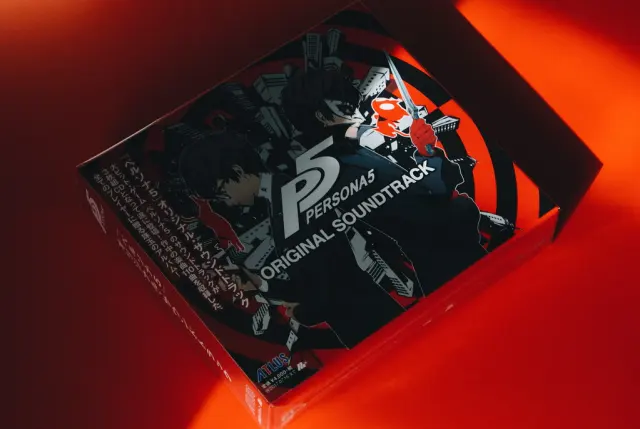
Role-playing video game developed by Atlus for PlayStation 3 and PlayStation 4. The evidence states that it launched in Japan in 2016 and combines role-playing, dungeon exploration and social simulation elements.
Selected excerpts from our archive offer more context on this subject. Each reading links to the original article and its sources.
Persona 5 turns rebellion into a visual language
Persona 5 is often described as a JRPG with a strong visual identity, but that description becomes more useful when we ask what the imagery does within the game. The available information links its alternate universe to human cognition and to the characters’ desires and fears; it also describes a palette of vibrant colors and bold graphic design. Taken together, these elements suggest that presentation belongs to the storytelling rather than serving as an interchangeable layer. They do not, however, establish how far the game changed the design of an entire genre.
The events of Persona 5 take place in Tokyo and follow Ren Amamiya, who transfers to Shujin Academy after being convicted. This concrete setting matters: the story unfolds not in an abstract space, but in a recognizable city within the fiction. The evidence consulted does not provide enough detail to reconstruct how individual real or fictional locations appear on screen. It is therefore important to distinguish the documented narrative setting from broader claims about the game’s visual depiction of Tokyo.
The tension between an everyday setting and an alternate universe associated with cognition supports a clear cultural reading. Transformation does not depend solely on moving the action to another world; it emerges from the relationship between what the characters perceive, desire or fear and the spaces the fiction builds around those forces. This interpretation rests on the general description of the game, though it is not a scene-by-scene analysis.
The available description characterizes the design as vibrant and graphically bold, linking those choices to themes of rebellion and transformation. That connection matters because it resists treating style as decoration added after the story was written. If the narrative concerns cognition and the alteration of reality, emphatic presentation can help make that conflict feel like a rupture.
Video game history does not fit into a single timeline
Dates can seem certain, but first it is necessary to say which date is meant: announcement, publication, regional availability, reissue or expanded version may be different moments. The Persona 5 entry among the results, for example, distinguishes several releases and platforms for the game and Persona 5 Royal. This shows why “the release” may not be a single event; it does not authorize transferring those dates to other regions or works.
KEY FACTS
- Type
- Video game
- Year
- 2016
References
- Persona 5es.wikipedia.org