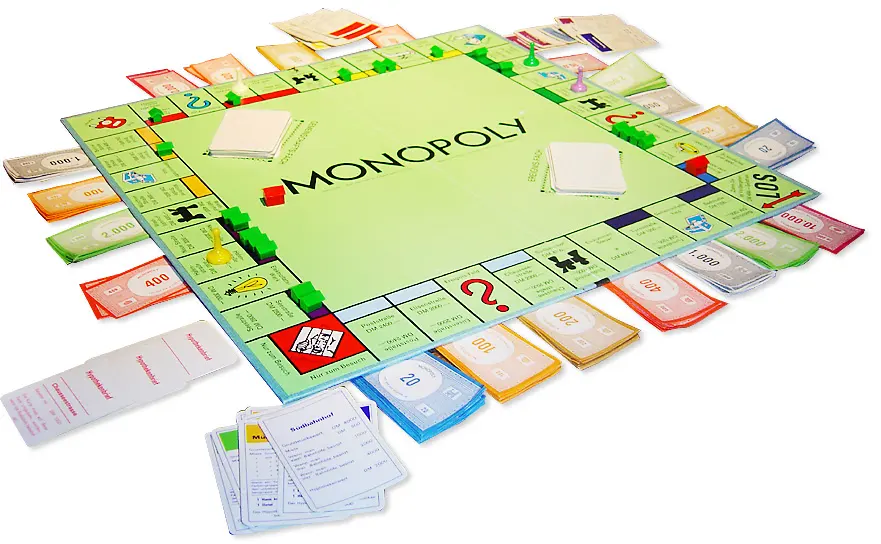
A board game whose history includes different versions and changes to its rules and design. The source mentions changes to the standard U.S. edition in 2008.
Selected excerpts from our archive offer more context on this subject. Each reading links to the original article and its sources.
Before Monopoly, a game about who owns the land
Monopoly’s history is often compressed into the story of a commercial success born from one person’s idea. The evidence available here points to a less simple beginning: before the game popularized under that name, Elizabeth Magie designed The Landlord’s Game in the early twentieth century. That connection matters not only as a question of chronology. It changes the cultural question raised by the board: alongside how people play, there is the issue of what discussion about property the game might set in motion.
The supplied evidence supports describing The Landlord’s Game as the earliest known version connected with Monopoly’s history and identifying Magie as its designer. It does not reconstruct every stage of transmission or establish, on its own, a complete and uninterrupted lineage between the two games.
The available material characterizes The Landlord’s Game as critically oriented toward capitalism and concentrated ownership. That description makes the board more than a space for moving pieces: rules and transactions can be read as a way of representing economic relations. Yet the excerpts do not give a detailed account of its rules, its different forms, or the actual experience of its players. It is therefore appropriate to describe its broad intent without assigning specific mechanics that the evidence does not document.
It is also important to distinguish design from reception. Calling the game a critical teaching tool does not establish how fully players understood that purpose or how their interpretations differed. The stated intention helps situate the game; it cannot, by itself, tell the story of every practice around it.
From Children’s Boxes to Designer Games: Board-Game Milestones, 1970–2009
Care is even more necessary with Monopoly. The source recalls litigation and books concerning Parker and the game’s original inventor, saying that lawsuits ended in the 1970s with recognition of predecessors dating to 1903. It also says long-running advertising preserved Charles Darrow’s public image without reference to Elizabeth Magie. The episode shows how a familiar box can contain disputes over creation, credit, and commercial memory.
KEY FACTS
- Type
- Board game
- Country or region
- United States
References
- Historia del Monopolyes.wikipedia.org