Data network precursor to Internet that connected 23 computers in 1971, establishing the technical foundations of the modern network.
Selected excerpts from our archive offer more context on this subject. Each reading links to the original article and its sources.
Internet Before the Web: A Guide to ARPANET, Email, and Protocols
Speaking of “old Internet” often produces an overly compact image: a modem, a rudimentary page, or a .com address. That image belongs to a later phase. Before the World Wide Web became the network’s most visible layer, Internet was largely a set of technical problems and working agreements: how to communicate between different machines, move information, identify destinations, and enable separate programs to understand one another.
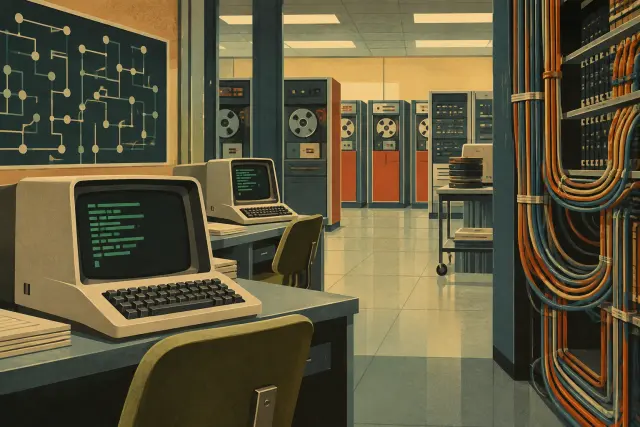
Internet Society’s historical material places ARPANET at the centre of this process. In its early years, computers were added to the network while host-to-host protocols and network software were developed. In December 1970, the Network Working Group, led by S. Crocker according to that account, produced an initial host protocol specification. This was not a home product or a consumer experience; it was infrastructure under construction.
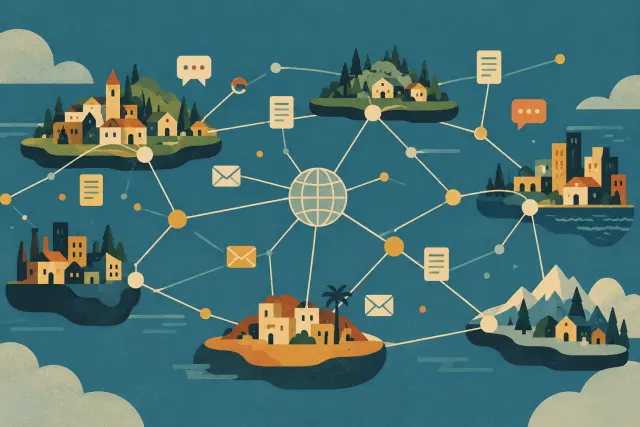
A practical idea explains part of the initial logic. Computers were expensive resources, and connecting them could cost less than duplicating them. The network enabled people at one machine to use resources hosted by another. This is why two early uses highlighted by Internet Society are remote login and file transfer.
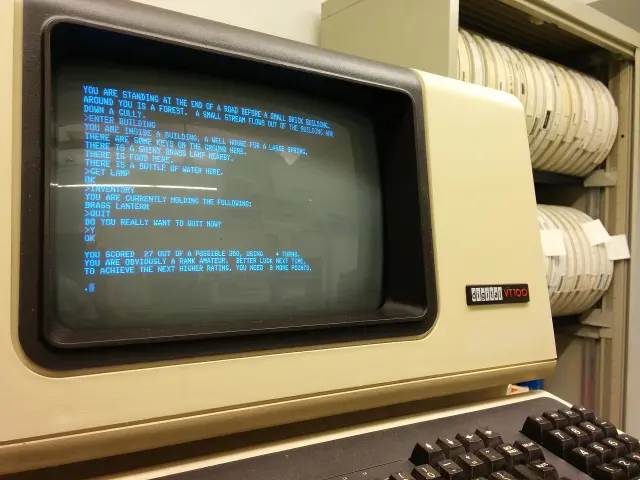
Remote login, commonly associated with Telnet, made it possible to operate another system from a distance. File transfer addressed another need: moving data or programs between connected machines. Both services correct a frequent anachronism. The early network was not centred on visual browsing or uninterrupted content consumption; it was used to share computing capacity, documents, and access.
Internet Before the Web: A Cautious Timeline of Networks, 1957–2009
The reference to 1957 explains why accounts of the Internet often begin before ARPANET. It helps locate research, institutions, and technical priorities, but it does not describe a user experience or a worldwide system. From a retro perspective, this period belongs more to institutional and technical prehistory than to everyday Internet use.
The timeline becomes more specific in 1970. Internet Society states that computers were rapidly added to ARPANET during these years while work continued on a fully functional host-to-host protocol and other networking software. It places the Network Working Group in December 1970 under the leadership of S. —the supplied excerpt does not expand the name. The value of this point is not to turn it into an absolute beginning, but to show that the network relied on sustained technical coordination.
Another included source says that an ARPANET network was established in 1970 among Harvard, MIT, and BBN. Since the supplied material offers no additional primary documentation to reconstruct that arrangement, it should be handled as that source’s attribution, rather than as a complete picture of the network. It does, however, fit Internet Society’s broader account: ARPANET was growing, and the challenge involved both connecting machines and agreeing on communication rules.
A secondary source adds ARPANET’s first transatlantic connection with University College London in 1973. The claim broadens the view beyond the United States, although it appears in the supplied material without supporting documentation. Cautiously, it should remain a source-attributed milestone, not a reason to claim that the network already had universal reach or access.
KEY FACTS
- Type
- Service
- Year
- 1969
- Country or region
- Northern America
References
- Historia de Internet - Wikipedia, la enciclopedia librees.wikipedia.org
- Hitos de la historia de Internetanci.gob.cl