Museums communicate through images too
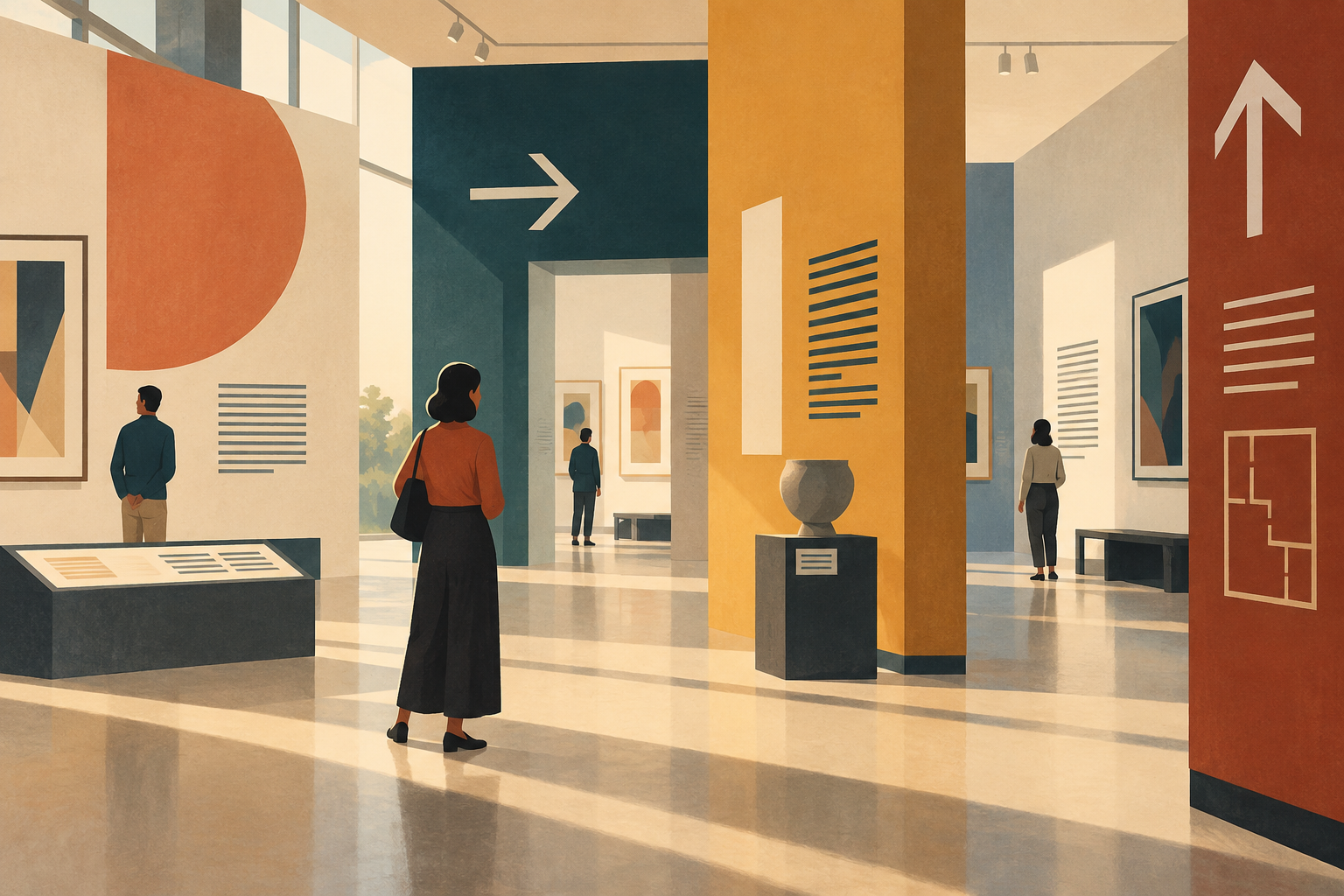
An exhibition experience consists of more than the objects a museum preserves. Texts, signs, the arrangement of elements and graphic resources accompanying a visit all contribute. A study of seven museums in Valencia proposes examining graphic design as part of the visual environment of their facilities and links those choices to each institution’s promotion and public image. This makes it useful to think about design and advertising beyond the advertisement itself: in a museum, visual communication can be present throughout the visitor’s route.
That claim needs to remain within its evidential limits. The study’s available abstract describes its scope and approach, but does not provide the names of the seven museums, the examples analysed or detailed findings. It therefore supports questions about design’s role, not specific conclusions about individual institutions.
From graphic work to the visitor experience
The study published in i2 Investigación e Innovación en Arquitectura y Territorio describes graphic design as an element incorporated into museum spaces. It notes that both permanent galleries and temporary exhibitions provide visual environments in which graphic work contributes to a museum’s image and promotion. It also describes the visit as a process of learning in which visual stimuli help shape the visitor’s gaze.
In practical terms, this invites us to consider elements that often go unnoticed: signs, panels, labels and other forms of spatial communication. It does not mean that they all serve the same purpose, or that the study proves they independently improve understanding. More cautiously, design is part of the environment in which visitors encounter and read an exhibition.
Design arranges relationships
A source on museography and semiotics argues that arranging objects and artefacts responds not only to classification or preservation needs; it can also establish relationships and convey narratives. In this account, space mediates between past, present and future, while objects acquire new readings when incorporated into contemporary museography.
This perspective helps explain why exhibition design is not a neutral finish. Placement, information hierarchy and the relationship between object and text may influence how a gallery is experienced and interpreted. But the source offers a general framework for reflection. The available excerpt documents no specific exhibition and cannot measure the effect of a graphic decision on visitors.
Promotion does not stop at the entrance
A museum’s promotion can be understood as a visual identity expressed across more than one medium. The Valencia study connects graphic work in museum spaces with promotion and institutional image. The Museum of the History of Advertising, meanwhile, describes itself as a journey through print, radio, television, outdoor and digital formats, and says it aims to connect history, creativity and technology.
That last reference should be read as the website’s own description of its project, not as an independent assessment of its scope or collections. Even so, it points to a useful tension: advertising can be both a subject of historical interpretation and a tool for attracting audiences. This dual role makes it especially important to distinguish promoting an exhibition from documenting communication historically.
Preserving context as well
Design is not only an image seen in the present. Documents recording a museum’s decisions and changes may be valuable when studying how it presented itself to the public. Instructions for organizing museum archives refer to identifying document types, classification schemes, metadata and appraisal and preservation schedules. A text on museum archives, in turn, highlights inventories, descriptions, finding aids and preservation measures.
These sources support the importance of documenting institutional material, but they do not prove that any particular institution preserves campaigns, identity manuals or historical versions of its signage. Nor do they establish what material exists at the Valencian museums examined by the graphic-design study. That would need to be checked in specific catalogues, archives or collections.
What the evidence supports—and what remains open
The available sources support the existence of research on graphic design in museums in Valencia, connecting it with visual context, promotion and the visual stimuli encountered during a visit. The sources also include theoretical approaches that treat museography as the narrative organization of space, as well as general guidance on museum documentation and preservation.
These excerpts cannot reconstruct a history of graphic styles, identify specific campaigns, compare institutions or prove changes in audience behaviour. The strongest claim is also the most limited: design contributes to how a museum makes its proposal visible and legible, but describing its effects and development requires verifiable objects, dates, authors and contexts.
An identity worth preserving
Treating museum design as part of communication brings together two questions that are often separated: how an institution presents itself and how it preserves traces of that presentation. The sources suggest that graphic work contributes to the spatial experience and that archives provide tools for preserving and making documentation accessible. They do not, however, provide an inventory of visual identities or a complete history of museum advertising.
That limit does not make the subject less interesting; it marks the start of a concrete investigation. Posters, signs, leaflets and design documents could be studied alongside the exhibitions to which they belong, provided their provenance is located and recorded. Design could then be examined not only as the visual frame for a visit, but also as part of an institution’s memory.
- Decade
- Contemporary
- Region
- Spain
- Level
- Enthusiast
- Entities
- Museum
Sources and references
- Diseño Museográfico y Semiótica – EVE Museos + Innovaciónevemuseografia.com · 2026-09-26
- Museo de la Historia de la Publicidad — Descubriendo la huella de la Publicidadmuseohistoriapublicidad.org · 2026-09-26
- instrucciones para la gestión y organización de archivos ...www.navarra.es · 2026-09-26
- Archivos de Museo: Funcionamiento - EVE Museos + Innovaciónevemuseografia.com · 2026-09-26
- Diseño gráfico del museo como estímulo creativo en educación patrimonial | i2 Investigación e Innovación en Arquitectura y Territorioi2.ua.es · 2026-09-26
- Capítulo 10 - El museo como centro de investigación. La necesidad de documentar las piezas en el museo. Tendencias documentales actuales. Normalización y gestión integral del museo. - Fco Javier Zubiaur Carreñowww.zubiaurcarreno.com · 2026-09-26