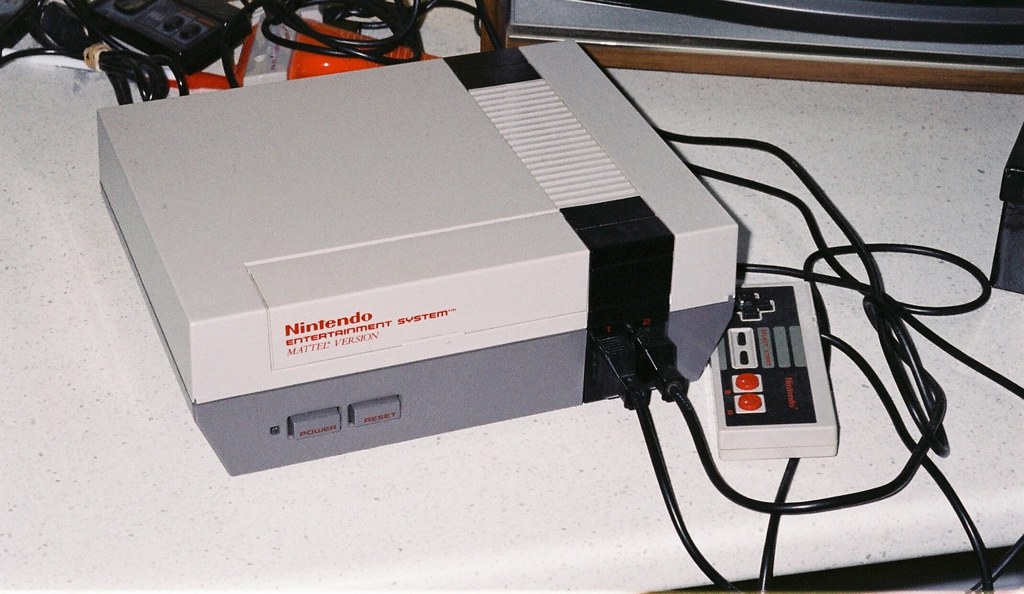
The Nintendo Entertainment System holds a central place in video game history, yet its understanding through academic sources presents specific nuances. The available evidence, centered on the work 'I Am Error', offers a window into how this device is documented in the realm of cultural and technical research. This article examines what specific information these sources provide about the console's design and identity, and where verifiable data ends to give way to later interpretation.
Device identity in the sources
Academic sources identify the Nintendo Entertainment System as an 8-bit third-generation console. This technical classification is consistent across bibliographic entries and chapters dedicated to the system. The name 'Famicom' appears as the original name in Japan, establishing a dual identity that the sources explicitly recognize. This distinction is not minor, as it marks the difference between the home market and international expansion, a fact that academic documentation records as part of the device's history.
The context of 'I Am Error'
The work 'I Am Error' serves as the primary container for the evidence analyzed here. Within this publication, there are specific chapters dealing with the system, such as 'Entertainment System'. The presence of these chapters indicates that the NES has been studied in contexts that go beyond mere technical description, entering the realm of material culture and technology history. The structure of the work suggests an approach that values bibliographic documentation as a tool for understanding the evolution of entertainment platforms.
Bibliographic appendices and their function
One of the most relevant elements of the evidence is the existence of specific bibliographic appendices for Famicom/NES. These appendices, such as 'Appendix A: Famicom/NES Bibliographic Descriptions', fulfill a crucial function in research. They do not limit themselves to listing games or hardware, but provide bibliographic descriptions that allow researchers to track the production and reception of the system. This documentation structure reflects an effort to systematize dispersed information about the console, offering a reference framework for future studies.
Limitations in technical specifications
Despite the richness of the cultural and bibliographic context, current evidence does not detail the console's internal technical specifications exhaustively. Precise data on processor architecture, memory, or original peripherals are not included in the cited sources. This means that for a deep technical analysis, the reader must turn to other specialized sources. The academic documentation presented here focuses more on the device's identity and context than on its internal components, which is an important limit to consider when interpreting the findings.
The absence of sales and license data
Another aspect where the evidence is limited is regarding sales figures and original licenses. The sources do not provide exact data on the number of units sold or details on the licensing agreements that allowed the system's expansion. This absence does not invalidate the cultural importance of the NES, but it does require caution when making claims about its quantitative commercial impact. The device's history, according to these sources, is built more through its presence in culture and academia than through market metrics.
Distinguishing fact from interpretation
It is fundamental to distinguish between what the sources document and what has been culturally interpreted a posteriori. Academic documentation allows us to assert the existence of the system, its basic technical classification, and its place in console history. However, narratives about its impact on the industry, its aesthetic design, or its cultural legacy often rely on interpretations that go beyond primary data. This article is limited to what the cited sources directly support, avoiding conjecture about undocumented aspects.
Conclusion on documentary value
The analysis of academic sources on the Nintendo Entertainment System reveals a device well-documented in terms of identity and cultural context, but with limitations in technical and commercial details. The work 'I Am Error' and its appendices offer a solid basis for understanding the NES as a cultural and technological object of study. For researchers, these sources are a gateway to the console's history, provided that the limits of available information are recognized and supplemented with other sources when necessary for a more detailed analysis.
Documentary gallery


- Decade
- 1980s
- Region
- Global
- Level
- Enthusiast
- Entities
- Nintendo, Nintendo Entertainment System
Sources and references
- Afterword: Famicom Remixdoi.org · 2026-10-17
- Appendix A: Famicom/NES Bibliographic Descriptionsdoi.org · 2026-10-17
- Entertainment Systemdoi.org · 2026-10-17
- Nintendo Entertainment Systemdbpedia.org · 2026-10-17
- Super Nintendo Entertainment Systemdbpedia.org · 2026-10-17


