A video game does not end at the screen
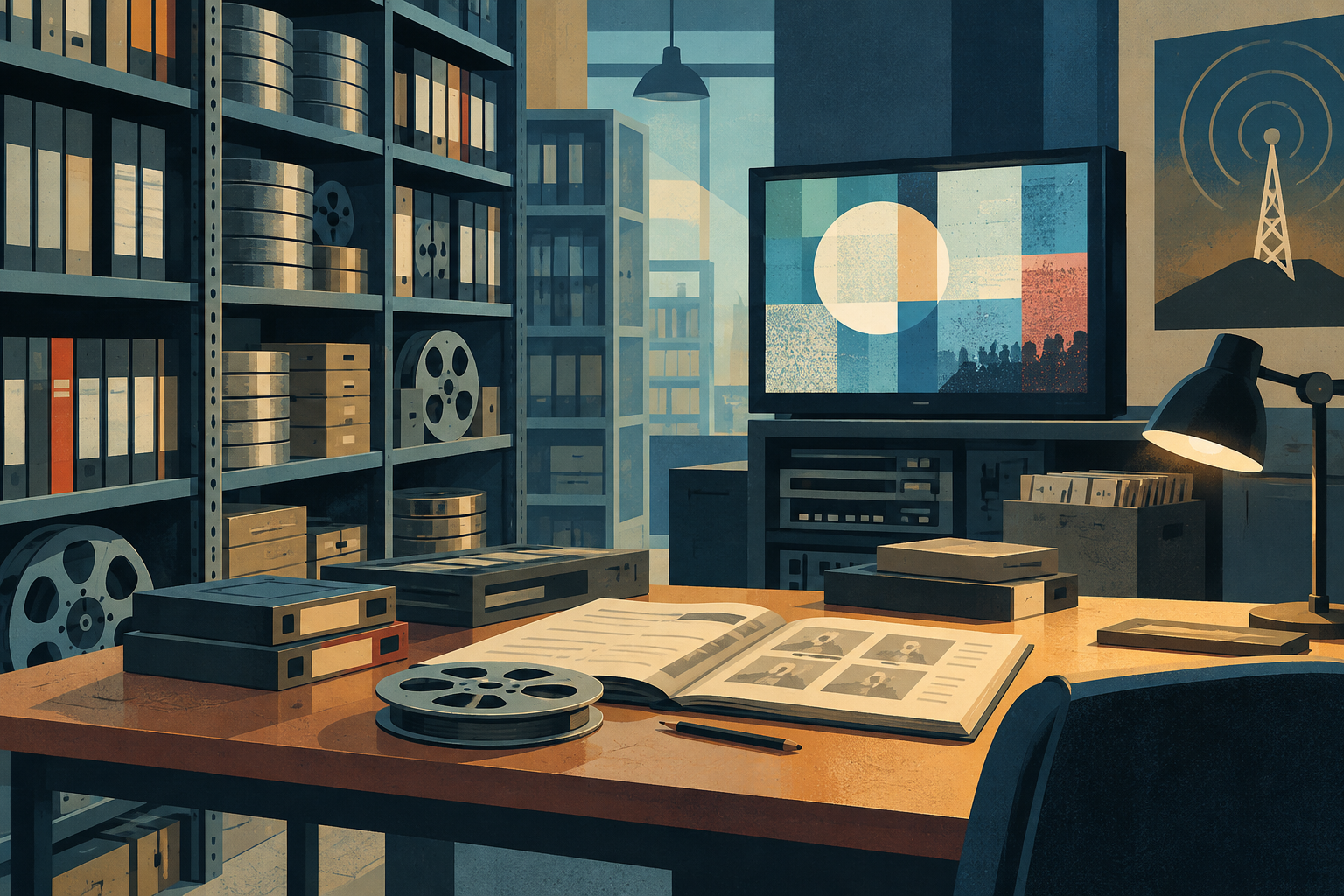
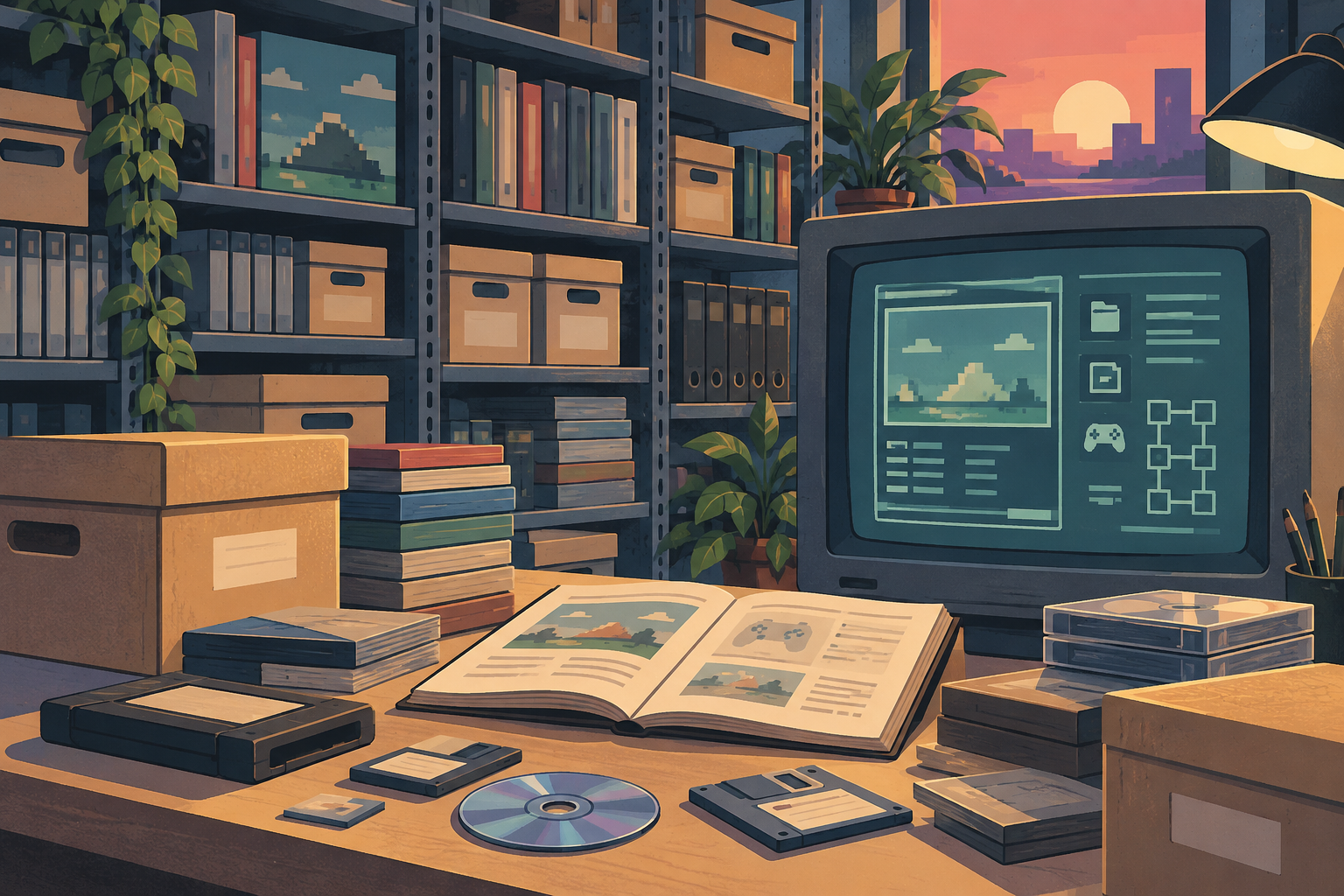
Keeping a video game may seem straightforward at first: preserve the program and retain a device capable of running it. But that idea leaves out much of what helps us understand a work and its time. The Museo del Videojuego describes a history in which arcade machines, consoles, handheld devices, and computers interact with digital electronics, software, and firmware. It also says that it collects data, images, magazines, and videos. That breadth offers an important clue: the thing being preserved is not always a single object.
A box, manual, promotional publication, or recording can explain how a game circulated and how it was presented to its audience. A digital archive and a physical object are not automatic substitutes for one another. Each preserves different information and makes different questions possible. This is an editorial interpretation consistent with the collections and materials described by the sources; it is not a claim that all archives follow one agreed method.
Collecting also builds a narrative
Institutions decide what to collect, how to describe it, and what to display. Each decision contributes to the picture of the past that the public can consult. Canino’s article stresses that preservation and exhibition choices are shaped by how those responsible understand the medium and the experiences it produces. It also contrasts institutions with different collection scopes: some gather objects from many places, while others focus on national or local histories.
That difference is not merely administrative. A collection of arcade machines, a library of magazines, and a software archive can illuminate complementary aspects, although none alone represents the entire history of video games. The Museo del Recreativo, for example, describes its aim as providing ways to consult, display, and teach with documentation, machines, software, and hardware. Its approach makes one useful idea visible to visitors: preservation means more than storage; it also means enabling access and context.
The challenge of preserving technology-dependent works
The Museo del Videojuego notes that the medium’s history includes both devices and their associated software and firmware. That technical dependence complicates preservation: a digital file without context may not explain what equipment it needed, while a machine kept without information about its use cannot tell the whole story of the experience. The evidence available here supports the claim that these components are part of the challenge; it does not support presenting a universal technical recipe for solving it.
The academic discussion cited by Canino provides a specific historical frame. The article mentions a 2008 quantitative study by Paul Gooding and Melissa Terras, and places works such as Racing the Beam and the text Save the Videogame! within 2009 debates about preservation and platforms. These examples show that concern about preservation is not merely nostalgic: it has also been examined through research into digital culture and platform materiality. The supplied references, however, are not enough to summarize the detailed findings of those works.
Archives, museums, and public experiences
An archive can preserve documents; a museum can arrange them into a public experience; and a video game can itself serve as a medium for communication. Ana Ordás’s article describes NUBLA as an educational project connected to the Museo Thyssen-Bornemisza, using puzzles and a narrative set in a fantastic world inside paintings. It also explains that archives have a role in the long-term preservation of video games. These functions are related, but not identical: creating a new cultural experience does not replace the task of preserving existing works and documents.
The same distinction helps us read contemporary outreach initiatives. Yellow Jacket argues that cultural projects should begin with the story, audience, and experience to be created, rather than with the tool. This is a design proposal, not a universal rule. Its value for this debate is the reminder that mediation matters: audiences need more than an object in a display case or an unexplained archive.
Digital access expands reach and raises limits
The Museo del Videojuego library describes digitized and preserved materials such as publications, advertising, guides, videos, and promotional resources. Online availability can make materials consultable that might otherwise be less accessible. But digitization does not automatically turn every item into a complete history: description, provenance, and context are needed to make consultation intelligible. The supplied sources support the existence of these kinds of materials and aims, but do not detail rights policies, file formats, or access conditions for every item.
It is also worth avoiding a hasty equation between preserving a file and guaranteeing that a work can be played again in every circumstance. Canino identifies technological change, updates, and games dependent on services as obstacles. Wikipedia provides more specific information about rights and legal exceptions, but given the nature of that source and the limited scope of this evidence set, it would be unwise to turn those excerpts into legal advice. Cultural preservation and legal availability are related, but distinct questions.
A plural memory, not a definitive display case
The Museo del Videojuego says that its aim includes preserving history so that people unfamiliar with the periods before PlayStation or Xbox can learn about them. Its collection brings together records of games and consoles, as well as magazines, images, and videos. The Embracer Games Archive, according to information reported by Microsiervos, is another archival initiative devoted to games, consoles, and accessories, with cataloguing and digitization work. These examples do not allow a comprehensive comparison of their methods, but they do illustrate that preservation takes different institutional forms.
The conclusion is not that a perfect archive exists, but that video game memory depends on several layers: objects, programs, documentation, description, and public access. Every collection leaves something out and, at the same time, opens possibilities for research and experience. Recognizing that limit does not weaken preservation; it makes it more honest. A well-told history should distinguish what it preserves, what it interprets, and what it cannot yet demonstrate. The screen then ceases to be the only place where a video game exists: the traces that help us understand how it was made, distributed, played, and remembered matter too.
- Decade
- 2000s
- Region
- Global
- Level
- Enthusiast
- Entities
- PlayStation, Museum, Museo del Videojuego
Sources and references
- Objetivo del Museo del Videojuego | Museo del Videojuegowww.museodelvideojuego.com · 2026-09-23
- Videojuegos para bibliotecas, archivos y museos – Ana Ordásanaordas.com · 2026-09-23
- "Everything not saved will be lost": de museos, archivos y preservación de videojuegos - Caninowww.caninomag.es · 2026-09-23
- (PDF) Museos y videojuegos. La renovación de los espacios culturales hegemónicos.www.researchgate.net · 2026-09-23
- Videojuegos para museos: una nueva forma de acercar el patrimonio culturalwww.yellowjacketvideogames.com · 2026-09-23
- La conservación de la historia de los videojuegos en el Embracer Games Archivewww.microsiervos.com · 2026-09-23
- Fondo de Preservación | Museo del Recreativomuseodelrecreativo.es · 2026-09-23