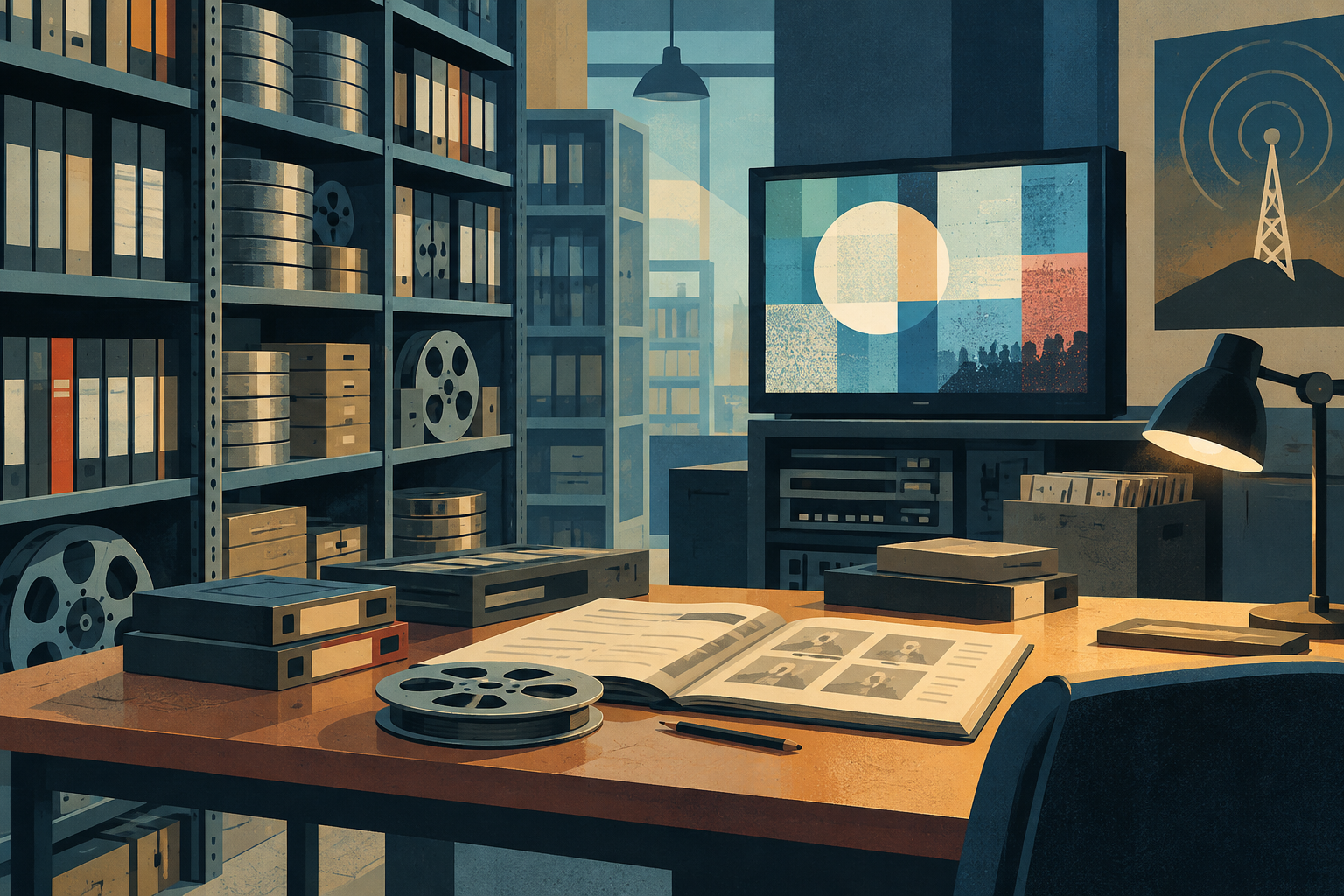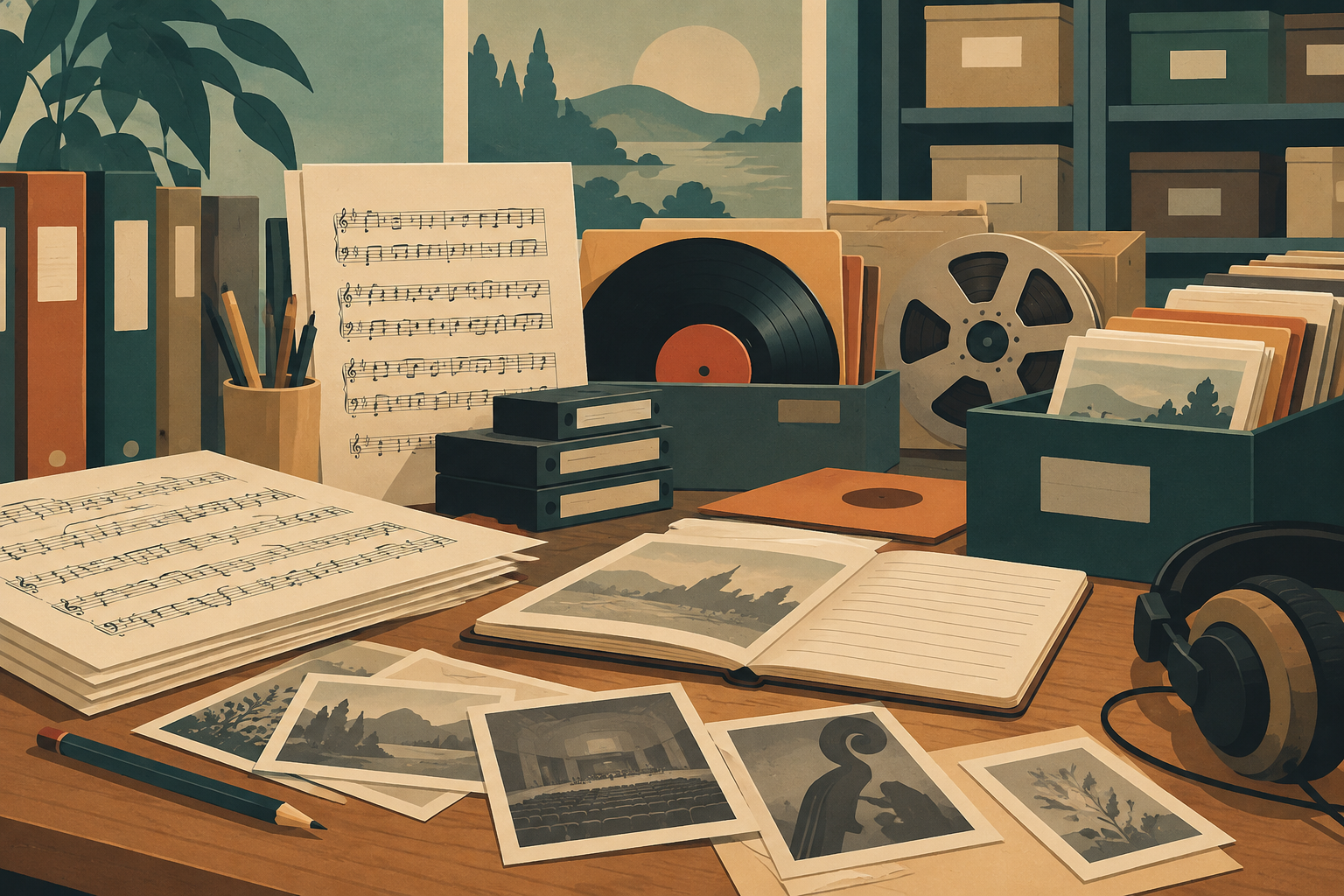
A music archive preserves more than music. Its holdings may include scores, documents and recordings connected with practices, institutions and communities. Each item carries information, but also raises questions: who produced it, under what circumstances did it circulate, and how does it relate to the people who performed or heard it? Research on musical archives and heritage emphasizes that a document cannot be fully understood apart from its context. This changes how we view a score, a recording or a file: they are not merely vessels for a work, but evidence of cultural activity.
From sound to document
Music is an activity unfolding in time; a document allows some traces of it to persist. Julio Mendívil’s reflection on music preservation connects this possibility with the fixing of sound on media and notes that preservation has been tied to different formats, from wax cylinders to digital files, including vinyl records and compact discs. This variety matters because each medium preserves differently and raises its own questions about history and use.
Musical documentation, however, is not limited to sound. A library-focused review of musical collections distinguishes books and notated music, and notes that sound and audiovisual materials form a broad field requiring specific analysis. This distinction is useful: it avoids treating a score, a book about music and a recording as interchangeable. They may be connected, but each has different characteristics and descriptive needs.
A work alone cannot tell its whole story
A catalogue of works can identify compositions, but an archive helps situate them. Research on the organization of music archives stresses the importance of connecting documentation with a catalogue and with the context in which it was produced. Such connections make a collection more legible: they show not only what materials exist, but also the processes, people and institutions associated with them.
Context is not decorative. Research on musical heritage at the intersection of musicology and ethnomusicology questions rigid divisions between history and social practice, and between writing and orality. It invites us to understand heritage as including both written documents and musical practices and cultural relationships. This perspective is especially important when an archive contains expressions for which sound, oral transmission and participation are central.
Arrangement is also interpretation
Organizing an archive requires decisions: how documents are identified, which relationships are recorded and what information other people need to consult them. Research on music archives presents this work as an essential part of their treatment, not as a neutral stage separable from scholarship. A collection described only by titles or formats risks losing connections that explain its provenance and significance.
Managing historical, modern and digital collections also involves differences between materials. Bibliopos describes the musical document as a resource for preserving and disseminating knowledge and as written testimony to culture. Its review focuses on books and notated music, while leaving sound and audiovisual materials as areas requiring their own attention. This caution helps avoid promising one solution for every medium: describing and preserving materials requires knowing what kind of document is involved.
Living heritage, memory and access
Preservation does not mean immobilization. In his reflection on music and preservation, Mendívil notes that sound archives have supported publications and collaborations with states or cultural groups connected to the materials and that, in some cases, repatriation programmes have been promoted. He also argues for reconsidering historical power relations and creating new channels through which safeguarded practices can circulate. These observations broaden the archive’s purpose: preservation and access should be considered alongside representation and relationships with those who sustain the practices.
Research on musical heritage in archives and sound libraries highlights, from another perspective, the importance of recognizing the cultural value of an archive and of the collective subject from which it originates. In the case examined, attention to a symphonic band and its history enabled further studies in response to a documentary gap. The example supports a specific point: an archive can begin an investigation and help reconstruct questions and relationships; it is not merely the place where research ends.
What we can establish—and what remains open
The sources consulted offer complementary perspectives, but they do not amount to a complete technical manual or allow us to describe the preservation conditions of any particular archive. Some focus on written documents; others consider recorded sound, institutions, musical practice or communities. Nor do they all address the same periods or regions. It is therefore useful to distinguish general principles—the importance of context, document organization, and the relationship between preservation and dissemination—from specific decisions, which depend on each collection.
What can be established is that musical heritage may encompass documents and practices, that formats shape how music is preserved, and that organizing collections facilitates study and dissemination. These sources do not show which specific techniques would suit a particular item, nor do they establish that all archives face the same problems.
An archive as a relationship
Viewing a music archive as a relationship among documents, sounds, people and contexts helps explain why its value does not lie solely in storing objects. A score preserves notation; a recording fixes a performance on a medium; other documents may shed light on circulation, organization and practice. By describing these materials without erasing their differences and maintaining links with the people who give them meaning, an archive offers more than an inventory: it makes it possible to investigate how music participates in cultural life.
The editorial consequence is simple, though demanding. Telling music’s history requires more than listing works or displaying old media. We need to explain what they document, how they relate to one another and what the limits of our knowledge are. An archive cannot replace musical experience or preserve everything a community remembers; it can give form and continuity to testimony which, placed in context, allows that experience to be studied more carefully.
- Decade
- 2000s
- Region
- Global
- Level
- Enthusiast
- Entities
- No linked entities
Sources and references
- Estudio y análisis de los museos de música en Europadiposit.ub.edu · 2026-09-27
- Acervos de Documentos musicales - Bibliopos: Biblioteca de recursos para Bibliotecarios y Opositoreswww.bibliopos.es · 2026-09-27
- El patrimonio musical en la convergencia entre musicología y ...revistas.ucm.es · 2026-09-27
- Año 10, No. 10, 2014 bibliotecas anales de investigacióndialnet.unirioja.es · 2026-09-27
- Redalyc.La organización de archivos musicaleswww.redalyc.org · 2026-09-27
- La conservación de la música - SUBURBANOsuburbano.net · 2026-09-27
- El archivo musical documental: subjetividades y aportaciones al sujeto culturalwww.redalyc.org · 2026-09-27