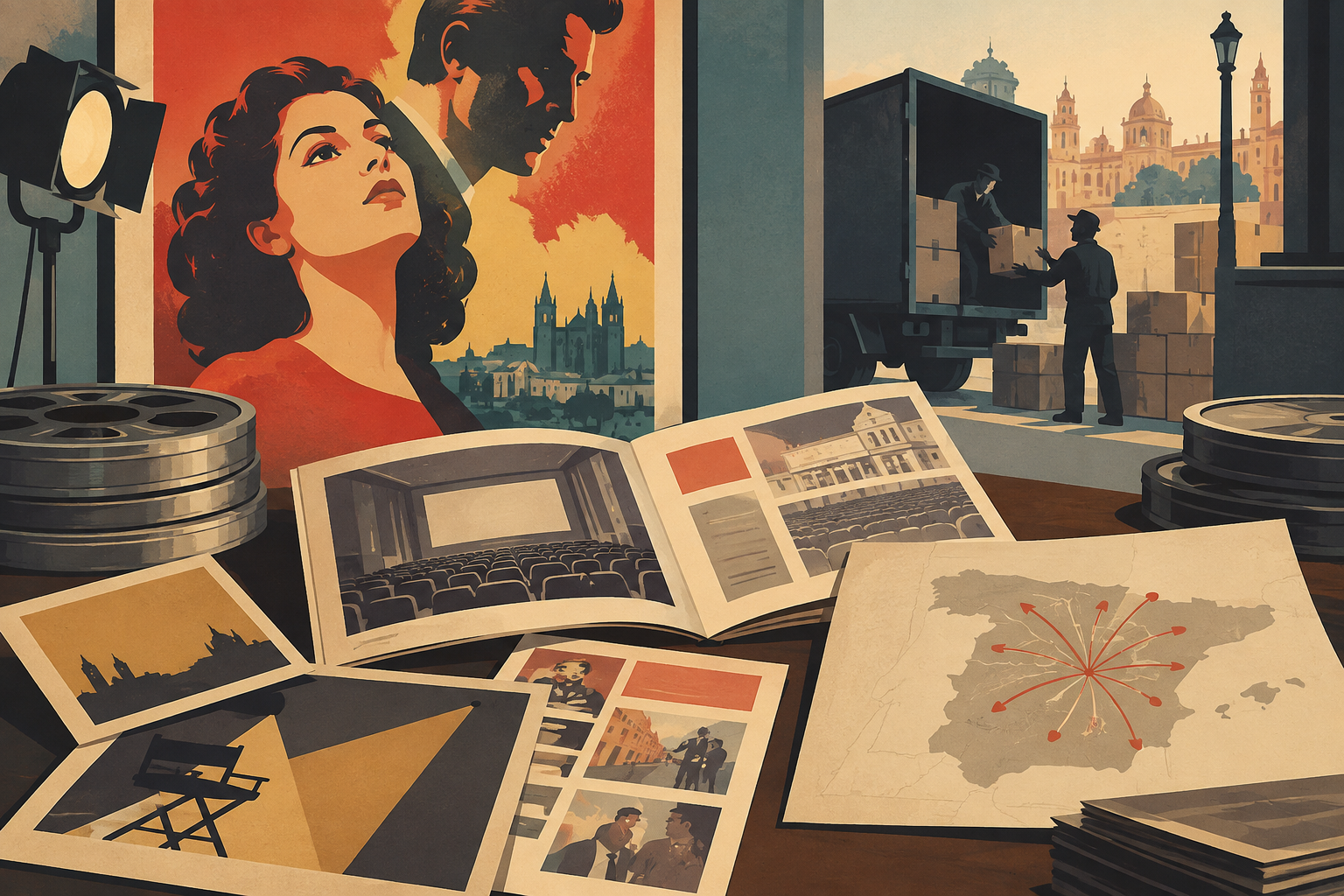
A film could be finished and ready for exhibition, yet one decisive task remained: getting it to cinemas. Distribution was the link between those who made a work and those who might see it. It was not an administrative detail on the margins of film history. It shaped the organisation of exhibition rights, the materials that accompanied films and the documentary traces left behind for anyone trying to reconstruct their circulation. The sources consulted offer a concrete starting point for studying this process in Spain, and they also counsel against inventing what the documents do not say.
A profession between production and exhibition
Archivocine describes the distributor as a company distinct from the producer: once a film is finished, the distributor buys rights to exhibit it in cinemas. The same source says that the producer cedes the distributor a percentage of the income. This is a general account of how the arrangement worked, not a particular contract or a description of every operation in the sector. The distinction matters: a definition helps explain a function, but by itself does not prove how each company handled each film.
Archivocine places the approximate consolidation of Spain’s distribution sector around 1905. It links this process to changes in the structure of cinema exhibition, the appearance of permanent buildings devoted to film, the growth of catalogues and the gradual increase in film length. The word “approximate” matters. The source proposes a framework for change, not a single date on which distribution suddenly came into being.
Companies and market conditions
The academic article available through Dialnet places foreign film companies—including Lumière, Pathé, Méliès and Gaumont—among those opening branches in Spain. Its abstract notes that Spanish businesspeople handled their commercial management, drawing on their knowledge of the market and local negotiating customs. The study focuses on Spanish cinema during the Second Republic and considers market developments from 1925 to 1950. That is a more defined historical context than a comprehensive account of the whole industry.
Archivocine also describes an imbalance between foreign and Spanish films and reports a call for a distribution quota at the First Spanish Cinematography Congress in 1928: one Spanish film for every twenty-five foreign films. The supplied evidence supports describing this as a proposal reported by the source; it does not establish that the measure was adopted, observed or produced a particular effect. That caution does not make the episode unimportant. It shows that access to cinemas and the relative presence of domestic films were matters of debate.
What printed materials can tell us
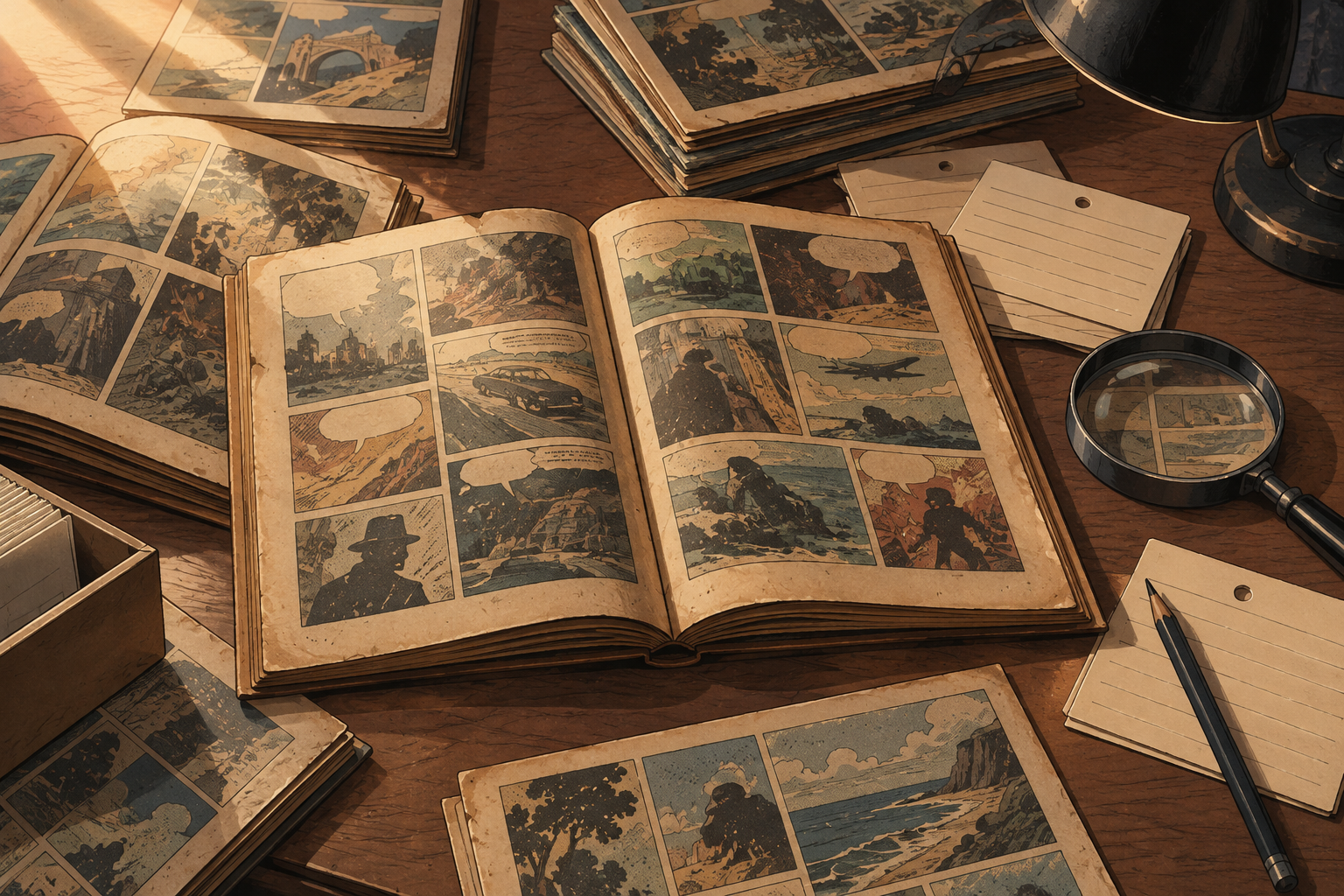
Distribution also left traces on paper. Archivocine defines a film poster as a printed or handwritten sheet displayed in public to advertise a film. It describes advertising guides, or pressbooks, as materials prepared by distributors to provide information about films to critics and cinema proprietors. These documents are more than campaign decoration: they invite questions about what information circulated, whom it addressed and how a work was presented for exhibition.
Film magazines provide another kind of testimony. The source on film publications says that, from the early twentieth century, reviews and criticism appeared alongside reports on productions, releases and biographical profiles. This mixture makes it possible to study cinema as both a public and commercial subject. Each magazine nevertheless needs to be examined on its own: the available summary does not identify particular titles, print runs, readers or editorial positions.
Archives for reconstructing histories
Filmoteca Española preserves personal and corporate archives acquired through purchase, donation, deposit or loan. The institution says it holds more than one hundred archives of both kinds and describes their documents as important evidence for the historical analysis of Spanish cinema. Its general account of the collections includes materials from film institutions and the Historical NO-DO Archive, as well as personal and business archives relating to producers and distributors.
This points to a research route, not a guarantee that any fact can be found in any file. Following a film’s history would require identifying specific collections and comparing documents. Posters and pressbooks may show how it was promoted; magazines, how it was discussed; and business archives, if they preserve relevant material, could add information about operations and professional relationships. That last possibility must be checked item by item.
A history that distinguishes evidence from assumption
Taken together, the sources describe a basic structure: distribution companies linking films and cinemas, materials intended to inform and promote, and debates over the balance between domestic and foreign cinema. They also offer indications of changes in the sector from the early twentieth century and an academic framework for studying the market from 1925 to 1950.
They do not, however, provide a complete list of companies, films, contracts, box-office results or the implementation of policies. Nor do they justify turning an approximate date of consolidation into an absolute beginning. The history becomes stronger when every claim is matched to its type of evidence and checked against archives, publications and independent studies. Seen this way, distribution gives a film something often lost when accounts focus only on production or release: the network of decisions and documents that made it possible to bring a work before an audience.
- Decade
- Before 1950
- Region
- Spain
- Level
- Enthusiast
- Entities
- No linked entities
Sources and references
- Archivos personales y de empresas - Filmoteca Española | Ministerio de Culturawww.cultura.gob.es · 2026-09-26
- EMPRESAS DE DISTRIBUCIONarchivocine.com · 2026-09-26
- Archivo - Filmoteca Española | Ministerio de Culturawww.cultura.gob.es · 2026-09-26
- REVISTAS de cinearchivocine.com · 2026-09-26
- Revista Arte y Patrimonio • núm. 1 • año 2016, ISSN: 2530-0814, pp. 33-50. 33dialnet.unirioja.es · 2026-09-26
- Archivo Cine - Carteles Cine - Historia Oscararchivocine.com · 2026-09-26