A city read through clothing
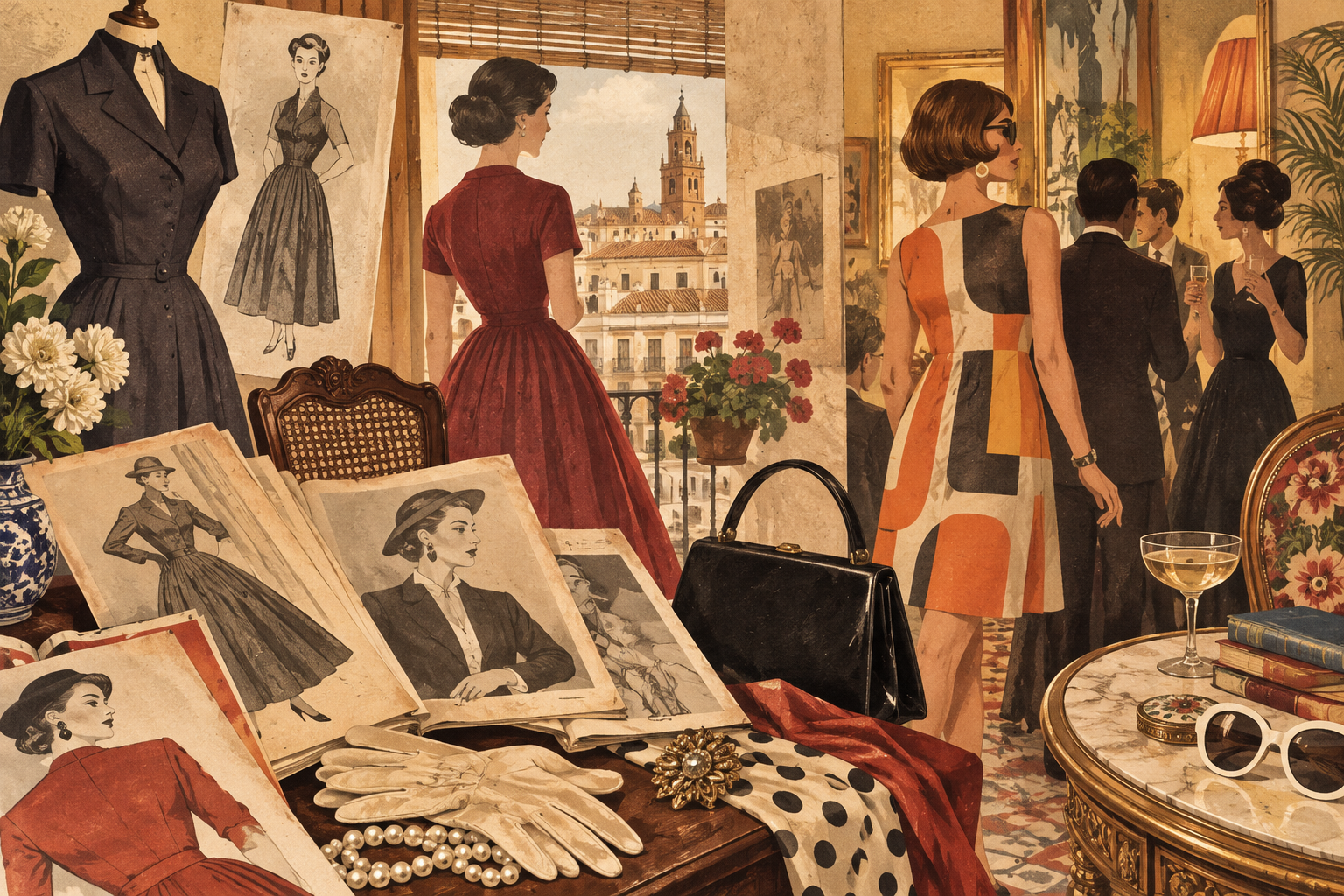
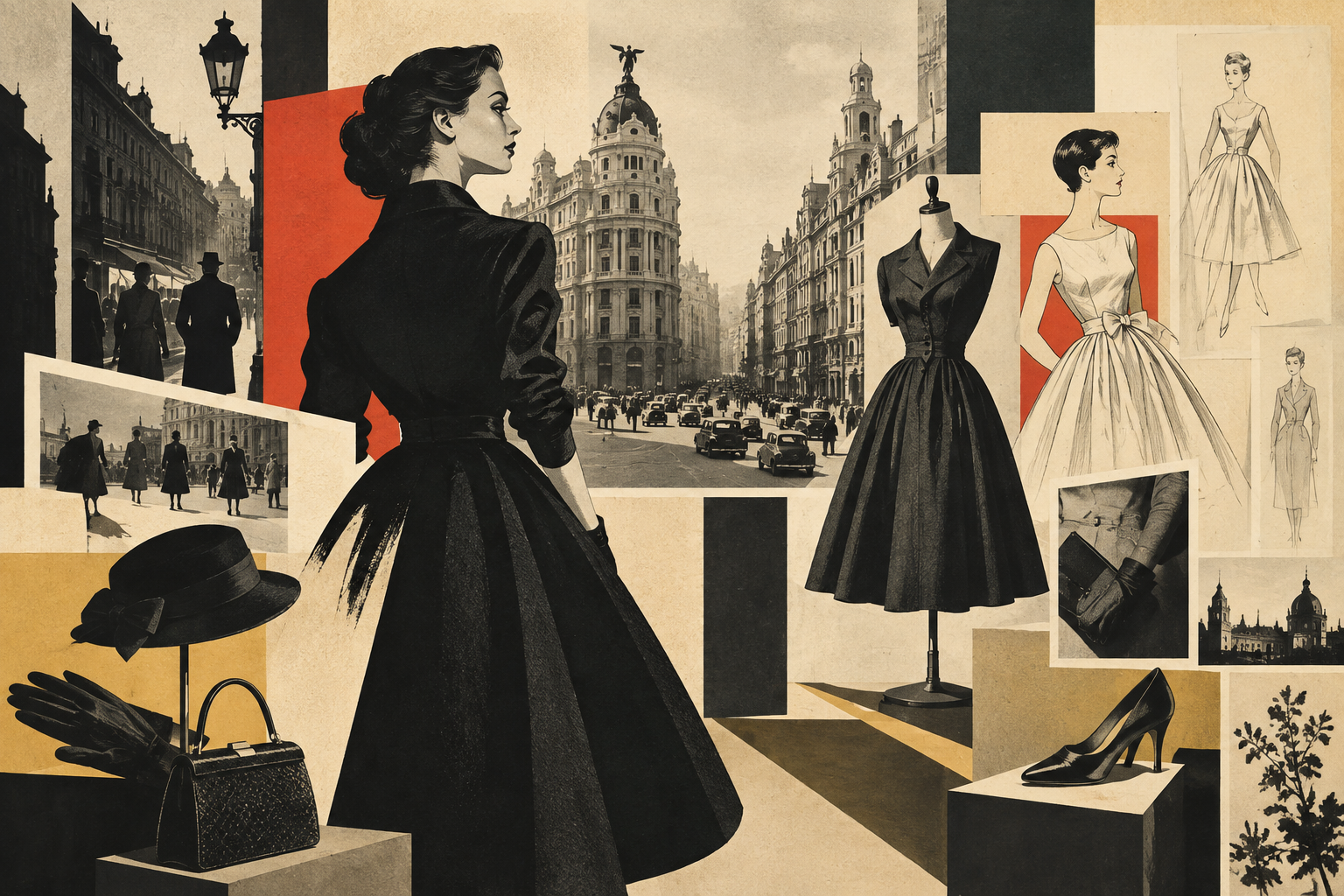
Fashion can be studied as a sequence of forms, but also as material culture: garments, accessories, images, patterns and publications record decisions about use, production, representation and preservation. The Community of Madrid exhibition En Madrid. Una historia de la moda, 1940-1970 offered a journey from post-war Spain to the 1970s. Its documented scope was not limited to designers: it included designers and models, costume designers and actresses, dressmakers and anonymous Madrid residents.
That approach matters because it shifts the question. Rather than looking for one single “Madrid fashion,” it asks which kinds of evidence reached an institution and how they were arranged to tell a story. The exhibition brought together 118 photographic reproductions—many described as previously unpublished—and 76 pieces from, among other institutions, the Regional Archive of the Community of Madrid and the Museo del Traje.
From isolated object to documentary set
A garment can reveal fabric, cut, decoration and traces of use, but it cannot by itself explain where it circulated or how it was seen. Combining photographs and objects makes it possible to relate a preserved item to its visual context. It does not automatically turn that relationship into a universal experience: an exhibition works through selection, and every selection has limits. It can, however, show the coexistence of very different protagonists in one city.
Among the items mentioned by the Community of Madrid is a 1942 Manolita dress, described as wool crêpe with jet embroidery. This is a specific fact and a reminder that historical analysis should begin with identified objects and records rather than a generic retrospective aesthetic. With no further documentation in the sources gathered here, it would be inappropriate to assign it a particular social use, circulation or meaning for an entire decade.
1940–1970: a frame, not a single label
The exhibition’s period covers three decades shaped by social and cultural change. Its presentation speaks of an evolution from the post-war period toward the 1970s, and of social customs and stylistic references recovered through photographs and objects. This is more precise than imagining a linear, uniform transition: practices, professions and references can coexist in one city.
Men’s and children’s dress may also be unevenly represented in a collection. The catalogue Des-vestidos. Una moda entre dos siglos (1850-1950) notes that both are less represented in its exhibition, though it includes notable pieces. The observation is a methodological warning for any account: what survives is not everything that was worn, and what is displayed does not exhaust an archive’s holdings.
Magazines, fashion drawings and systems of circulation
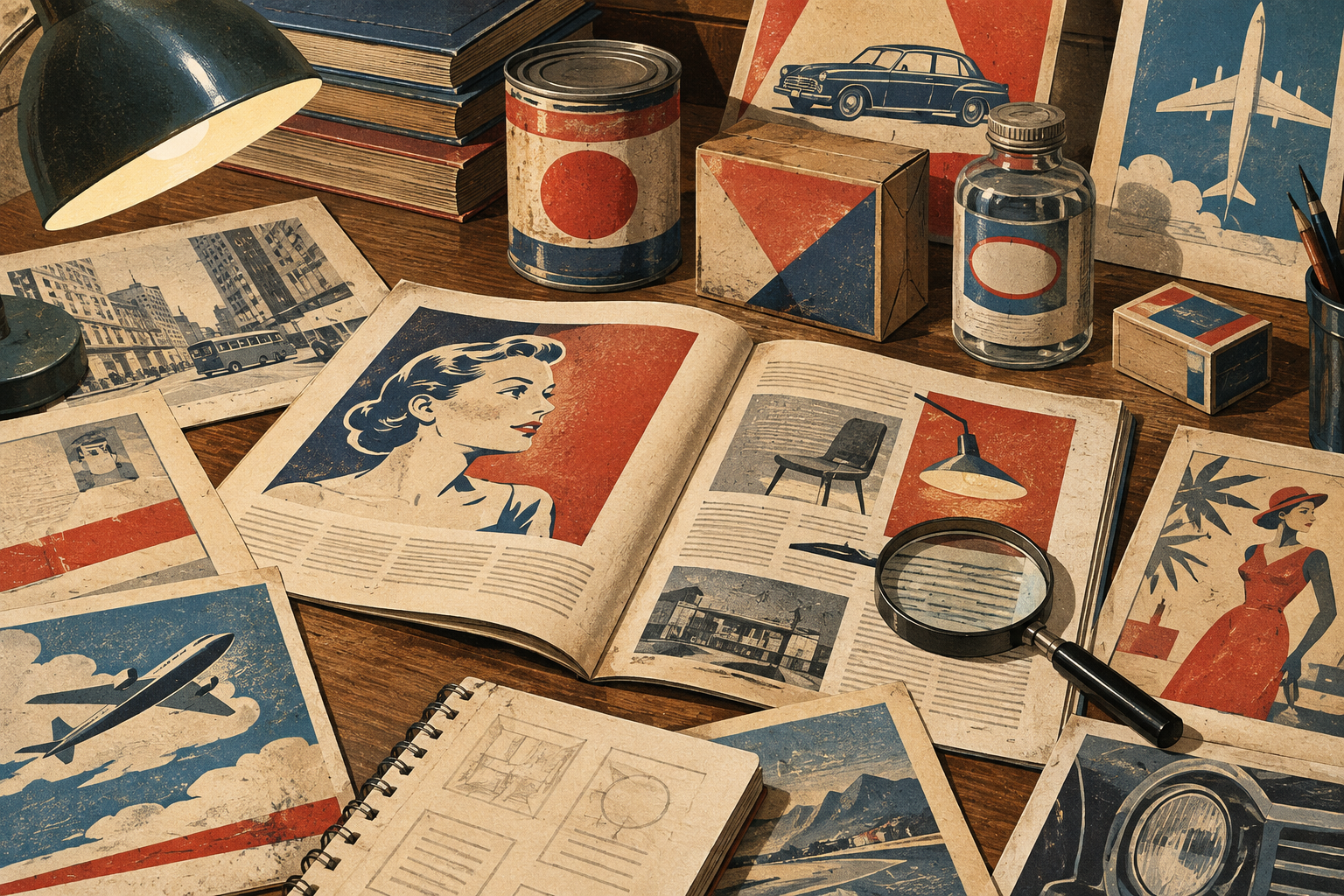
Fashion does not circulate through finished clothing alone. The Museo del Traje explained that its exhibition ¡Extra, Moda! El nacimiento de la prensa de moda en España assembled publications and magazines, fashion drawings and patterns, garments, accessories and other objects. Its stated aim was to reflect on the fashion system and on the press as its principal means of dissemination.
Held from 22 November 2019 to 1 March 2020, the exhibition displayed more than one hundred objects: 32 clothing ensembles, 20 publications and 28 fashion drawings. Its subject was not confined to Madrid between 1940 and 1970, but it offers a key for reading that period: a fashion photograph and a garment are not the only possible documents. Printed matter and patterns also mediate between creation, industry, aspiration and the public.
Collecting is not freezing clothes in time
The Museo del Traje states that it holds a broad representation of works by Cristóbal Balenciaga and Pedro Rodríguez, together with the complete documentary archive of the latter for 1940–1978. This confirms the research value of archives for studying a creator’s work; it does not, by itself, allow the characteristics of that work to be extended to the everyday dress of all Madrid.
Preservation also raises a fundamental issue: textiles are fragile materials. Researcher Bárbara Rosillo notes that few eighteenth-century pieces have survived and stresses the value of post-mortem inventories for studying dress. Although her example predates this article’s central period, the lesson remains relevant: when objects are absent, written documents and images can complement research, but they must be read according to their origin and purpose.
What the evidence allows us to say
The available sources establish that Spanish institutions have exhibited and preserved garments, accessories, photographs, publications, fashion drawings and documentary archives for the study of fashion. They also establish that an exhibition on Madrid used 118 photographic reproductions and 76 pieces to cover 1940–1970. They do not establish a definitive list of dominant trends, prices, sales volumes, shopping habits or social hierarchies for each decade.
That caution does not weaken the account; it makes it more useful. Fashion becomes historically legible when we identify what kind of document we are looking at, which institution preserves it and what question it can answer. A dated dress, a period image, a pattern and a magazine speak in different ways.
Conclusion
The value of viewing Madrid between 1940 and 1970 through fashion is not in reducing three decades to one silhouette. It lies in understanding that a city leaves traces in objects and mediations: garments, embroidery, photographs, fashion drawings, publications and archives. The documented exhibitions provide a sound entry point, as long as the distinction remains clear between a preserved selection and the totality of social experience. That distinction is precisely what turns visual nostalgia into historical reading.
- Decade
- 1960s
- Region
- Spain
- Level
- Introduction
- Entities
- Manolita, Museum, Museo del Traje
Sources and references
- ¡Extra, Moda! El nacimiento de la prensa de moda en España - Museo del Traje | Ministerio de Culturawww.cultura.gob.es · 2026-09-22
- Moda e indumentaria - Museo del Traje | Ministerio de Culturawww.cultura.gob.es · 2026-09-22
- Así fue... Exposición: En Madrid. Una historia de la moda, 1940-1970 | Comunidad de Madridcomunidad.madrid · 2026-09-22
- Los inventarios: fuente para la historia de la moda – "Arte y demás historias" por Bárbara Rosillo, doctora en Historia del Artebarbararosillo.com · 2026-09-22
- DES-VESTIDOS - Una moda entre dos siglos (1850-1950)www.museosdetenerife.org · 2026-09-22