A period that calls for cross-read sources
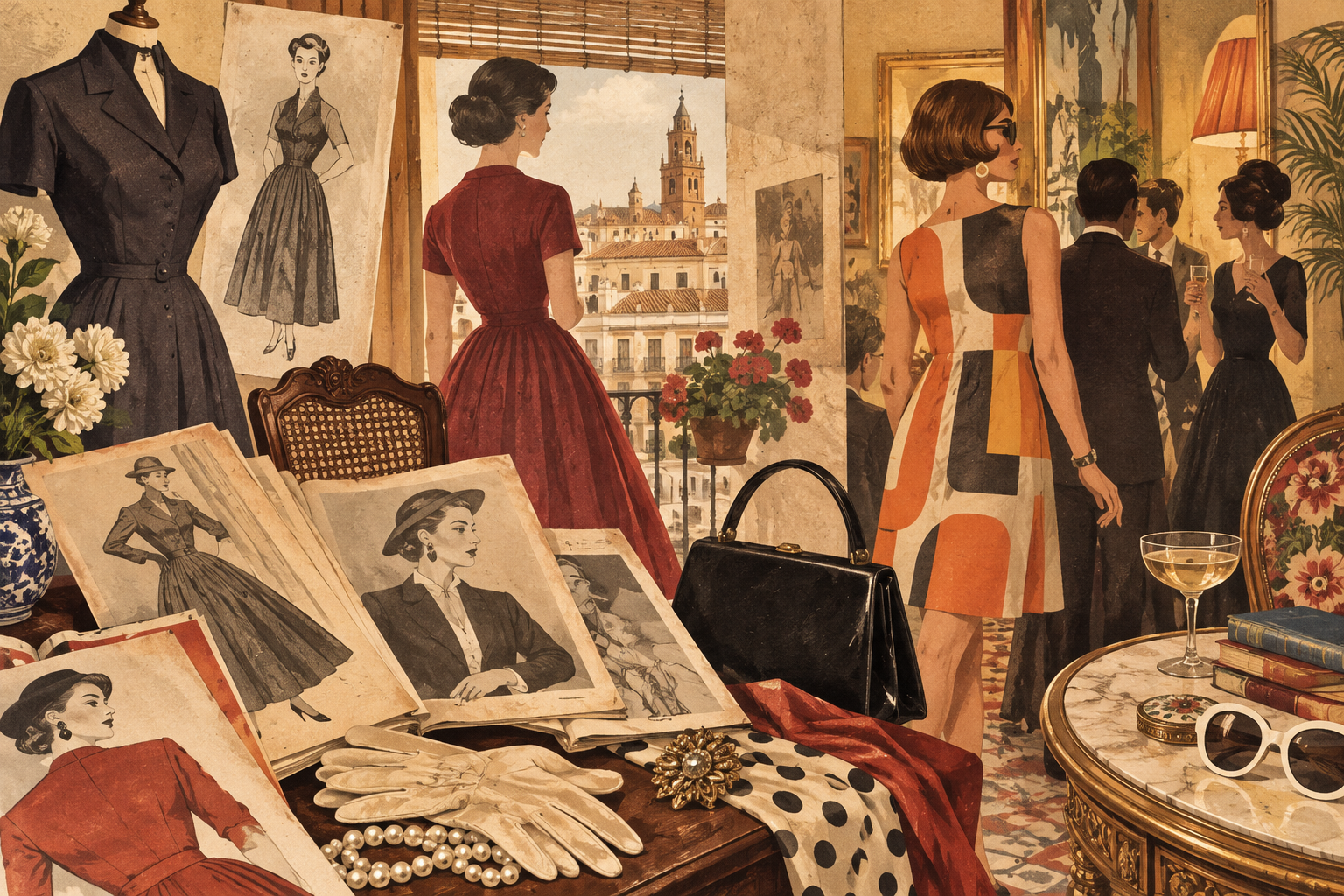
Speaking about Madrid fashion between 1940 and 1970 can suggest a simple story: one silhouette replaces another and one decade gives way to the next. The available documentation calls for a more careful reading. En Madrid. Una historia de la moda, 1940-1970, an exhibition presented by the Community of Madrid, addressed precisely this span, from post-war Spain to the 1970s. Its approach did not stop at designers or models: it included costume designers, actresses, dressmakers and anonymous residents of Madrid. That breadth matters because it moves fashion away from an imagined runway and toward a network of trades, images and social uses.
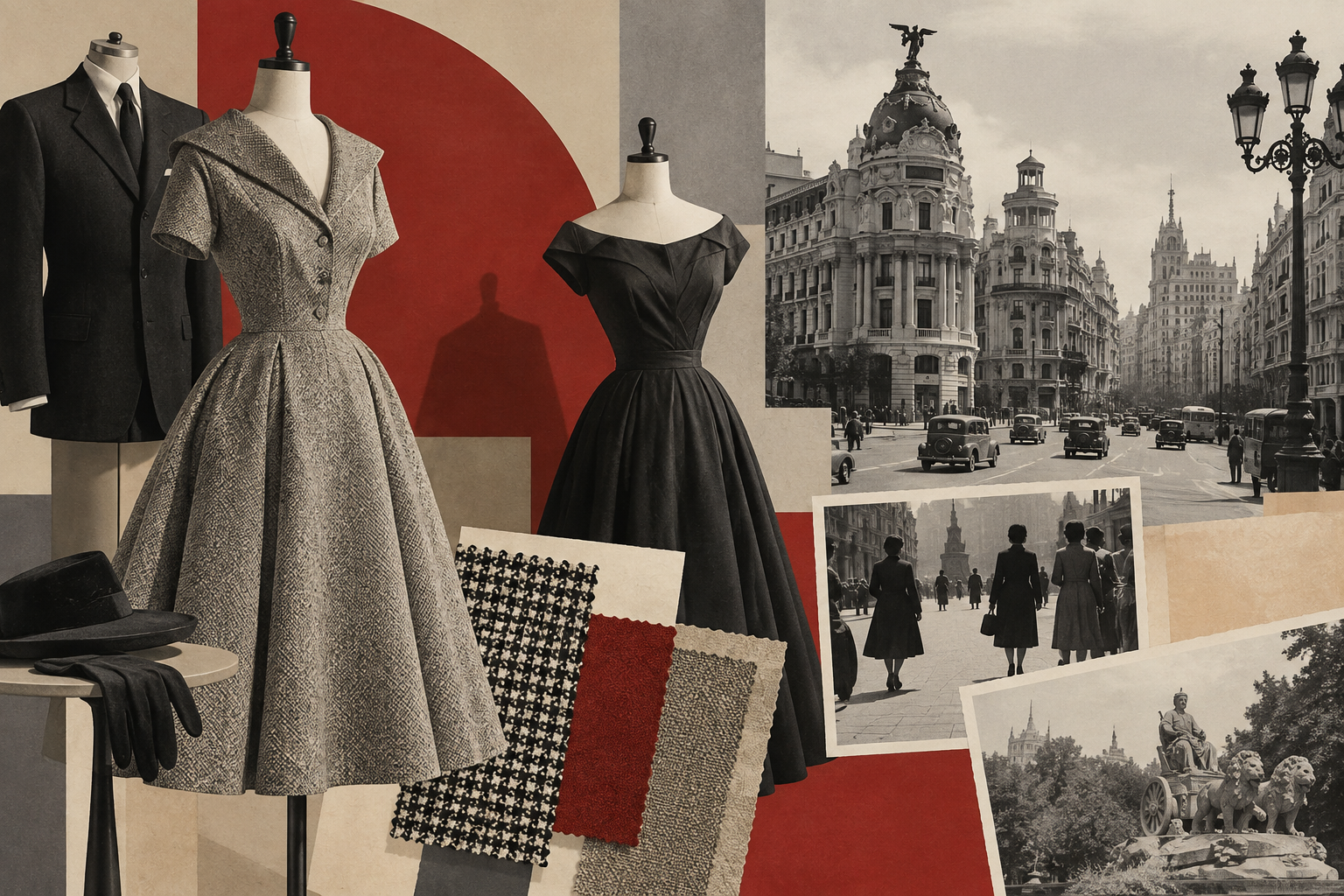
The exhibition brought together 118 photographic reproductions—many described as previously unpublished—and 76 pieces from institutions including the Regional Archive of the Community of Madrid and the Museo del Traje. Those figures do more than indicate scale. They also clarify the method: a preserved garment and a photograph do not answer exactly the same question. The former allows attention to material, cut and construction; the latter places, or at least suggests, a way of wearing clothes, a pose, a setting and a public circulation of appearance.
A garment is not, by itself, everyday life
The institutional presentation cites a 1942 Manolita dress in wool crepe embroidered with jet. It is a useful case for responsible description. The record allows us to state that a piece with that attribution, date, material and decoration exists in the Museo del Traje. It also permits attention to the dialogue between wool fabric and embroidery. It does not, on its own, allow the dress to stand for the typical clothing of every woman in Madrid in 1942, nor does it reveal who wore it, what it cost or where it was used.
That limit does not make the object less interesting; it makes its meaning more precise. Clothing is material culture and, as the Museo del Traje’s exhibition information indicates, can be considered alongside accessories, publications, fashion plates and patterns. This combination prevents two common errors. The first is to treat a dress as a self-sufficient image. The second is to assume that every preserved garment was common. A piece may have entered a museum because of rarity, condition, authorship or provenance; those circumstances are not automatically the same as frequency of use.
Photographs: valuable context, incomplete evidence
The 118 photographic reproductions in the Madrid exhibition provide a different kind of evidence. A photograph can show proportions, hairstyles, accessories, social groupings and urban settings; it can also show how an appearance was composed for the camera. Yet it remains a selection. Unless a specific caption documents it, we do not know whether a scene was everyday, staged, promotional or exceptional. Nor should the publication date of a photograph be assumed to be the manufacturing date of every visible garment.
It is therefore useful to ask separate questions: what is clearly visible, what does the caption identify, and what is interpretation? Across objects and images, correspondences can strengthen a reading, but they do not turn a hypothesis into certainty. A photograph showing a silhouette and a museum dress from a nearby date may enter into dialogue; they do not prove that they are the same model or represent the same public unless the documentation says so.
This caution is especially necessary in today’s archive market. Fashion journalism defines archive pieces, in a strict sense, as older works by designers that have added value because of historical relevance or difficulty of finding them. That definition is useful, but it does not replace cataloguing. “Archive” should not be used as an automatic guarantee of date, authenticity or provenance.
Press, fashion plates and the fashion system
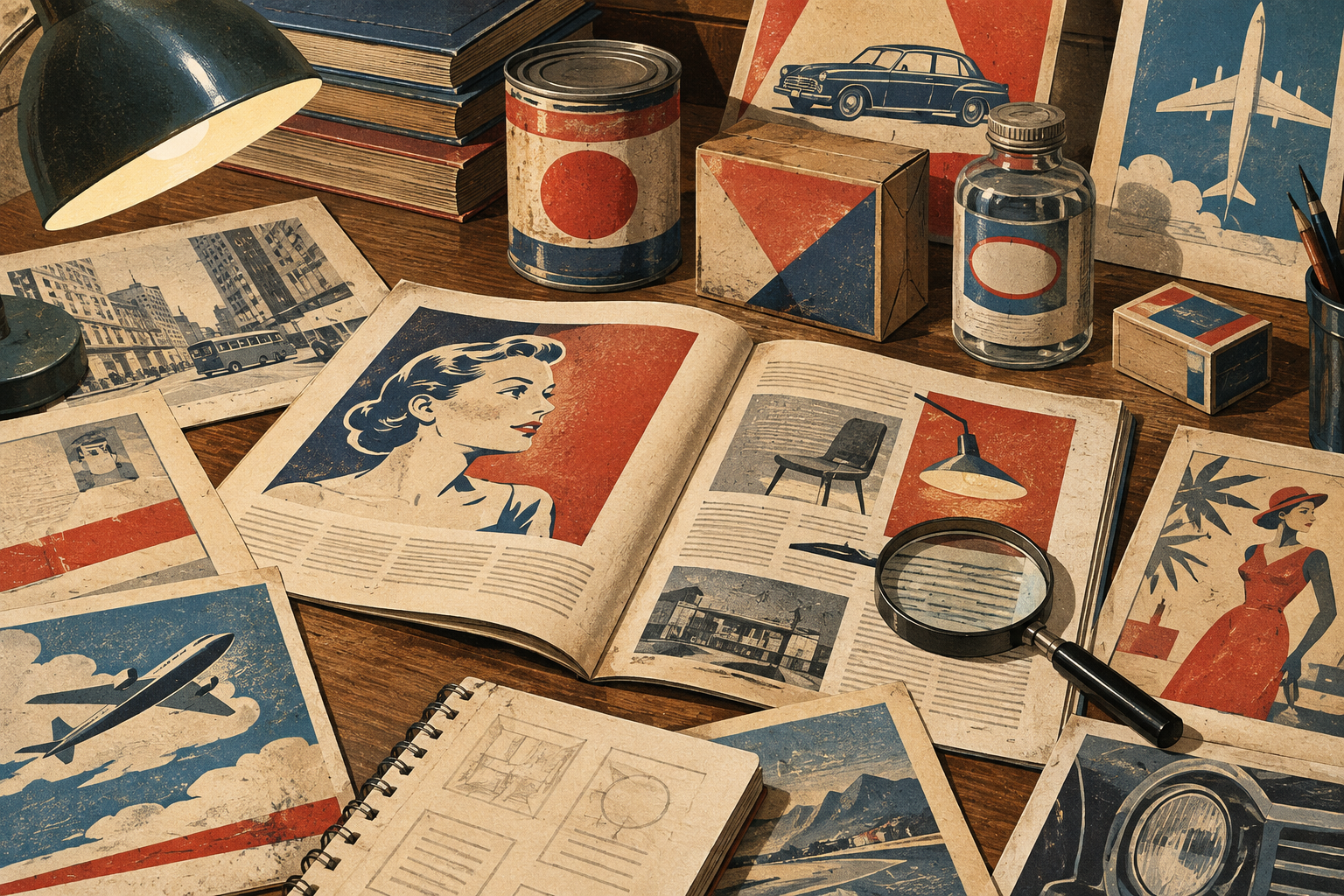
¡Extra, Moda! El nacimiento de la prensa de moda en España, organized by the Museo del Traje and Acción Cultural Española, supplies a broader framework. According to the Ministry of Culture, it assembled publications and magazines, fashion plates, patterns, garments, accessories and other objects to reflect on the fashion system and on the press as its main channel of dissemination. The exhibition ran from 22 November 2019 to 1 March 2020 and displayed more than one hundred objects, including 20 publications and 28 fashion plates.
Although that exhibition is not restricted to Madrid from 1940 to 1970, it helps explain why a local history of fashion cannot be written from garments alone. Magazines, drawings and patterns intervene between idea, circulation and making. A fashion plate can propose a silhouette; a pattern can translate a shape into instructions; a magazine can organize desires, references and seasons. None separately proves that a proposal reached every wardrobe, but together they make it possible to study the channels through which fashion was imagined and circulated.
Museum writing collected by EVE Museos + Innovación places fashion from the 1960s onward in a framework of mass consumption and popular visual culture, with the media as relevant actors. This is a general observation, not a measurement specific to Madrid. Used carefully, it helps prevent an artificial separation of photograph, printed matter and garment when they belong to the same visual ecology.
What to look for in a collection, without inventing biographies
For a visitor to an exhibition, reader of a catalogue or finder of an old garment, a useful approach is to record five levels. First, the physically observable: fabric, seams, fastenings, decoration and wear. Second, the catalogued: authorship, date, holding institution and provenance where explicitly stated. Third, the visual: how a silhouette appears in photographs or fashion plates. Fourth, the media level: what magazines and patterns publish. Fifth, the interpretive: the reading proposed about taste, identity or social position.
Keeping those levels apart does not prevent a personal encounter with the object. On the contrary, it lets imagination operate without presenting itself as data. The available museum information notes that clothing exhibitions have historically shown garments alongside ornaments, rules of behaviour and rituals of life. The connection between clothing and context is essential, but it must rest on the particular evidence of each documentary group.
A legacy made of objects and questions
Madrid fashion from 1940 to 1970 can be read as a field of research rather than a closed album of definitive looks. The Community of Madrid exhibition provides a material and photographic corpus; the Museo del Traje offers a framework for relating garments, accessories and print media; and reflections on visual culture help explain why these sources need one another.
What is verifiable here is clear: an exhibition devoted to this period took place, with photographs and pieces from institutional collections; the cited objects include the 1942 Manolita dress; and fashion press was institutionally presented as a central means of dissemination within the fashion system. What remains open matters as well: each wearer’s exact experience, the actual spread of each silhouette and the intimate meaning of every outfit. Reading fashion well means not filling those gaps with certainties the sources do not contain.
- Decade
- 1960s
- Region
- Spain
- Level
- Enthusiast
- Entities
- Manolita
Sources and references
- La moda en la historia - Museo del Trajemuseodeltrajevirtual.com · 2026-09-18
- ¡Extra, Moda! El nacimiento de la prensa de moda en España - Museo del Traje | Ministerio de Culturawww.cultura.gob.es · 2026-09-18
- Así fue... Exposición: En Madrid. Una historia de la moda, 1940-1970 | Comunidad de Madridcomunidad.madrid · 2026-09-18
- Qué es la moda de archivo y cómo coleccionar ropa como una expertawww.cosmopolitan.com · 2026-09-18
- Moda – EVE Museos + Innovaciónevemuseografia.com · 2026-09-18