More than a screening copy
Thinking about film heritage often leads first to films themselves. But research on film archives and museums describes a broader set of materials: alongside the works, there are items that help us study how films were made, preserved, circulated and received. The film remains central, but it is not alone.
A study of cinematic heritage and museums describes a museological view of cinema as a work connected to authorship, a period or a cultural movement. It also points to a tension between treating film primarily as an artistic concept and attending to its material form. That distinction matters: a work can circulate as an audiovisual experience while also existing on supports and in documents with histories of their own.
Context belongs in the archive too
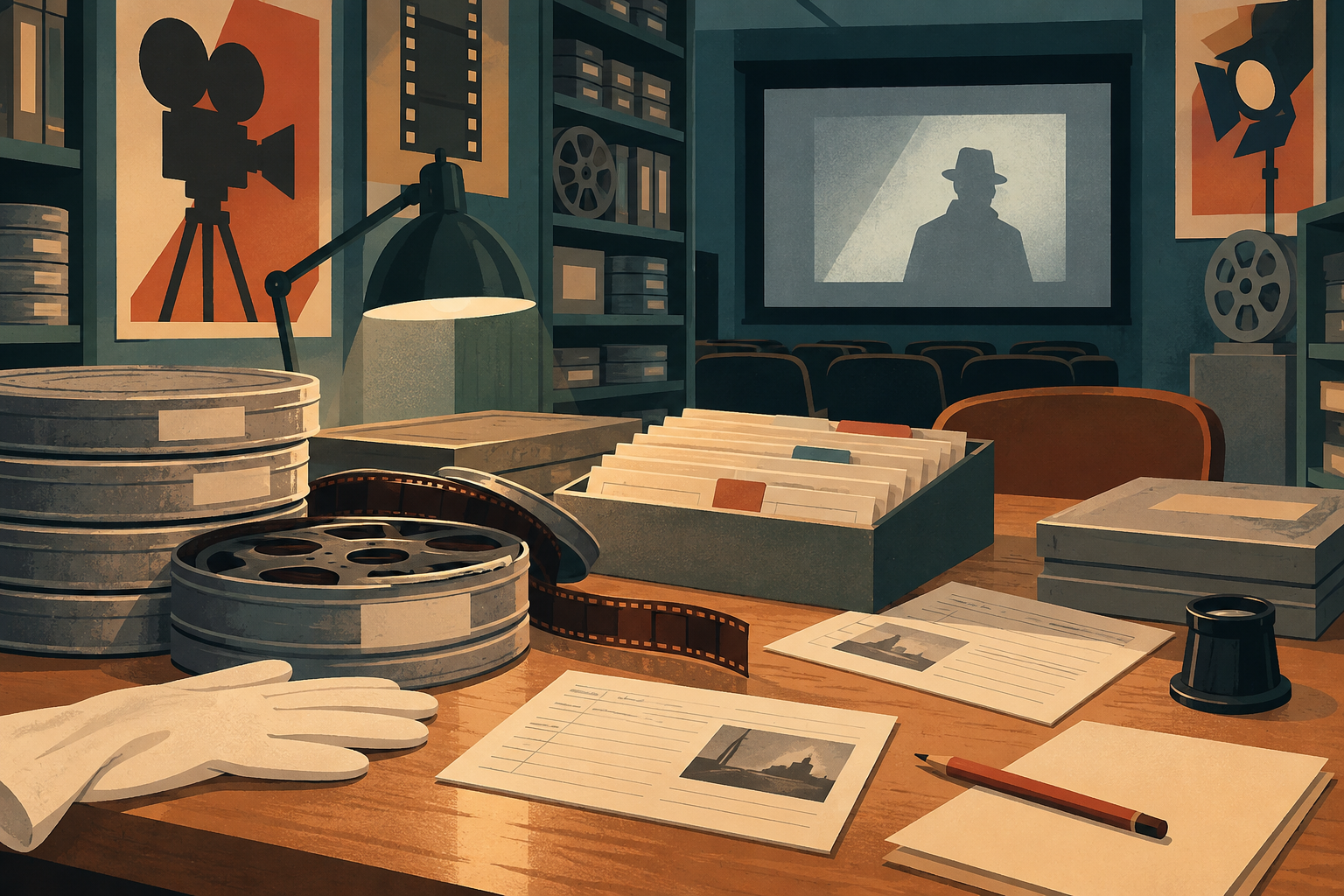
Related materials are not mere accessories. An academic article on Mexico’s Cineteca Nacional names photographs, posters, projection equipment and elements related to film production among the objects that can help explain cinema’s technical and material history. The value of each item depends on what it documents and how it relates to other evidence.
This broadens the questions a museum can ask. Not only “What film is this?” but also: what support has survived, which documents accompany it, and what can those sources establish? Archives allow us to make connections, but they do not license us to fill documentary gaps with conjecture.
Preservation, conservation and restoration
These terms are not always used in the same way. Research published in SciELO on the Cineteca Nacional de México notes that specialists have debated the meanings of preservation, conservation and restoration, and that language, institutions and procedures affect their use. It is therefore best not to treat them as automatic synonyms.
Filmoteca Española’s page on film conservation describes its department’s mission as safeguarding heritage and enabling access to content over time. For audiovisual works on video and in digital formats, it also emphasizes the variety of forms and media. That is a useful reminder that conservation is not simply a matter of keeping one definitive file.
A text on film restoration published by the Andalusian Institute of Historical Heritage places the work in a complex field involving institutions and collaboration with laboratories. The evidence available here is not enough to summarize a universal method or describe particular interventions. It does support a more careful point: restoration decisions belong to specialist practice, not simply to cosmetic improvement.
From custody to public access
Preservation without access would leave one of these archives’ cultural functions incomplete. A study of film archives links preservation with dissemination and mentions the specialist library as a public resource in the Spanish context. Dissemination does not necessarily mean that every item is always available in every format; the supplied sources do not detail the access conditions of each collection.
The Spanish Ministry of Culture’s announcement of a future Film Museum in the former NO-DO building offers a current example of a proposed connection between place, archive and historical interpretation. According to the announcement, NO-DO negatives are deposited at Filmoteca Española’s Conservation and Restoration Centre, and the project envisages a space for memory and interpretation connected to the building and to Spain’s audiovisual history during the Franco era. The announcement describes a project; it cannot by itself establish its eventual outcome.
What we know and what remains open
The sources agree that film heritage includes films, objects, documents and technologies, and that preservation involves considering both the survival of materials and continued access to their content. They also make clear that professional vocabulary and institutional practice are complex.
This set of references cannot provide a complete history of film archives, compare their policies or describe the condition of specific collections. Nor is it enough to turn restoration into a step-by-step recipe. Acknowledging these limits does not make the subject less interesting. It helps distinguish what is documented from what would require further research.
The film and everything around it
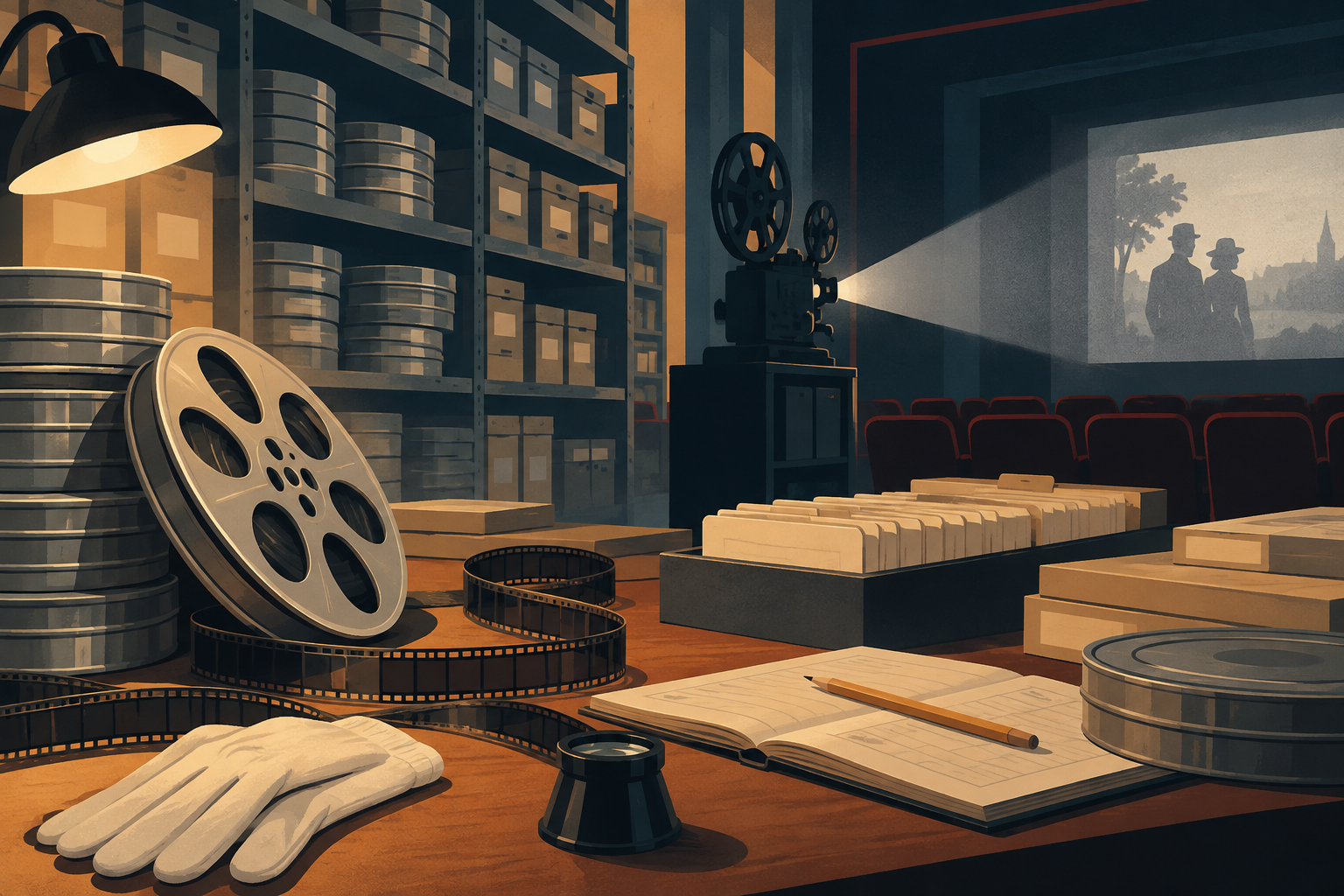
A film can be an artwork and, at the same time, a material object within an archive. Related documents, media and the institutions that preserve them add context that a screening alone may not convey. A film museum can make those relationships visible; an archive can sustain them through custody and description.
Looking beyond the screen does not displace the film. It helps us understand what makes its public memory possible. A rigorous account keeps three things together: the work, the evidence around it and the professional decisions that allow it to be preserved and shared.
- Decade
- Contemporary
- Region
- Global
- Level
- Introduction
- Entities
- Museum
Sources and references
- Concepto | Estudios El Patrimonio cinematográfico en el Museodigibug.ugr.es · 2026-09-25
- El nuevo Museo del Cine se ubicará en el antiguo edificio del NO-DO | Ministerio de Culturawww.cultura.gob.es · 2026-09-25
- 1 Dossiê El cine como patrimonio culturaldialnet.unirioja.es · 2026-09-25
- Investigación Restauración cinematográfica. Tierra de nadiewww.iaph.es · 2026-09-25
- Acerca de los conceptos de preservación, conservación y restauración fílmica en el caso de la Cineteca Nacional de México desde los planteamientos de Paolo Cherchi Usaiwww.scielo.org.mx · 2026-09-25
- Departamento de Conservación fílmica - Filmoteca Española | Ministerio de Culturawww.cultura.gob.es · 2026-09-25
- 1 Cine y el Archivo: Investigación, preservación, creaciónelojoquepiensa.cucsh.udg.mx · 2026-09-25