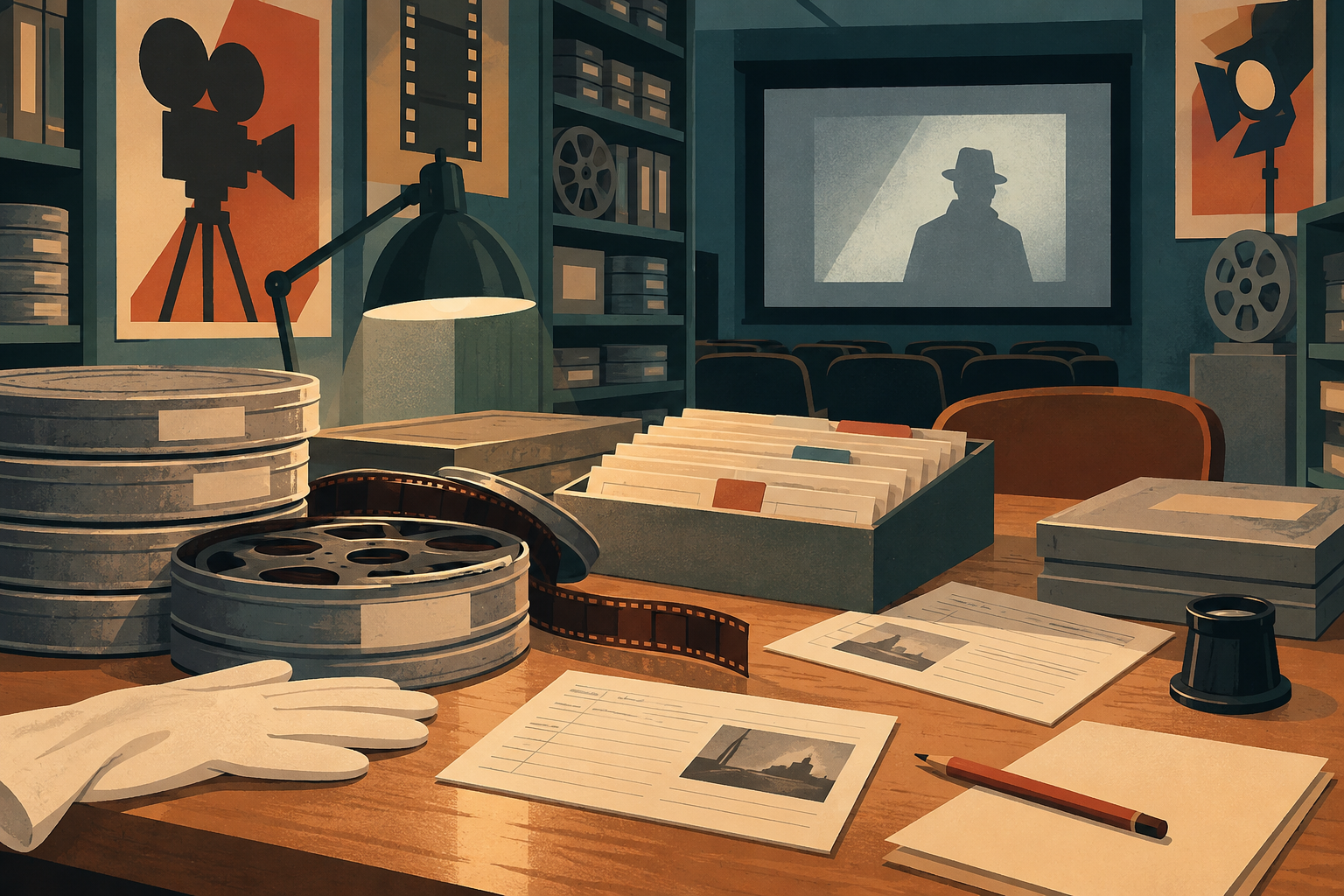
The Ministry of Culture’s announcement that the former NO-DO building will house a Film Museum raises an apparently simple question: what is preserved when cinema is preserved? The answer does not fit in a film can or a digital file. The project is presented as a place to exhibit and conserve Spanish film heritage, with a space for memory and interpretation connected to the building and to NO-DO’s role in the audiovisual imagination during the Franco period. That wording already shifts attention from the isolated film to a set of objects, documents, practices and interpretations.
A film is both a work and an object
Research on film heritage describes a useful tension. Cinema may be understood as art, as human testimony linked to authorship or a cultural context, yet it also has a concrete material existence. The copy, its medium, its version, the elements accompanying it and its condition shape what can be seen and how it can be studied. Treating a film solely as available content erases this physical dimension; treating it only as a material item can sever the work from its historical and cultural meanings.
Research on Mexico’s Cineteca Nacional helps define the issue. It distinguishes a film-museum sphere made up of archives that hold unique or historically relevant copies and also recognises the historical value of photographs, posters, projection devices and stage-related elements. These are not merely decorative additions: they make it possible to understand technical and material processes in film history. A museum therefore does not add context after preserving a film; it preserves items that make that context reconstructable.
From archive to public consultation
Film archives are not simply storage facilities. A study of cinema as cultural heritage stresses that their model brings together features of museums, archives and libraries. This combination matters because each function asks a different question. The archive organises and describes; the library supports research; the museum interprets and displays; conservation seeks to carry materials through time. None of these tasks automatically guarantees the others.
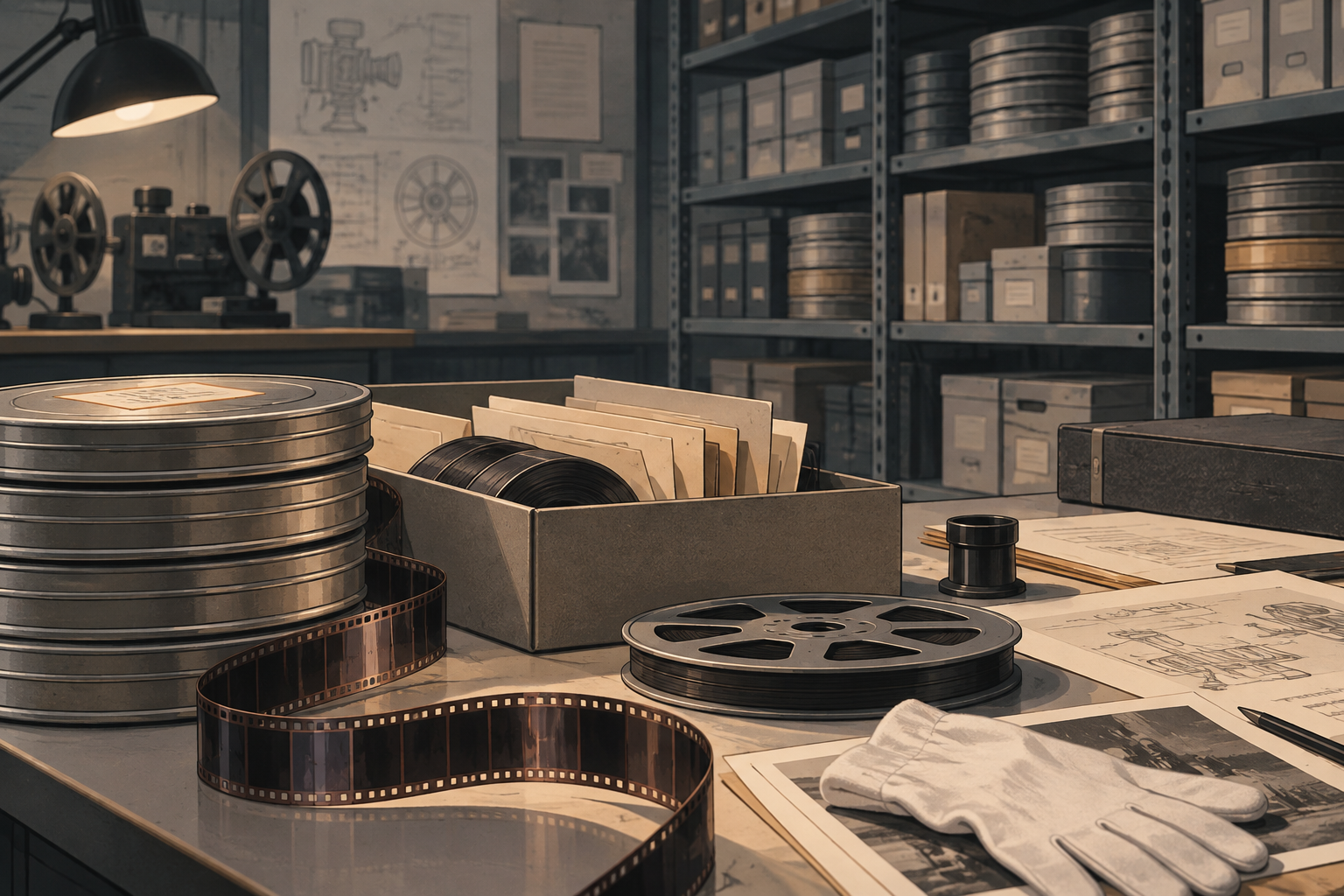
Filmoteca Española’s institutional information makes this working network tangible. Its Carlos Saura Conservation and Restoration Centre keeps documents associated with films: inspection and restoration reports, title material, end-credit reels, deeds related to rights, exhibition licences and censorship bulletins, among other records. It also identifies practical uses of those documents in cataloguing, description, loans, reproductions, restoration and digitisation. Film history that can be researched does not depend on a screening alone; it also depends on technical, administrative and legal traces that help identify, describe and manage collections.
Conservation is not the same as immobilisation
The field’s terminology is not fully uniform. A study published in Intervención notes that preservation, conservation and restoration have been debated by specialists, and that languages, institutions and specific processes make a single definition difficult. This caution is valuable for audiences because it prevents every archival activity from being reduced to the word “restoration”.
Filmoteca Española’s film-conservation department states a clear mission for works on video and in digital-file formats: to ensure their conservation and guarantee access to their contents regardless of the time elapsed since their origin. It also notes the diversity of media that may store a digitised or born-digital audiovisual file, including CD, DVD, Blu-ray, hard drives, USB drives and LTO. This is not a promise of automatic permanence. It shows that preservation requires ongoing decisions amid varied formats and changing conditions of access.
NO-DO: memory, building and interpretation
Within this framework, the museum announced in 2025 is significant because it links a new institution to a specific place. The Ministry states that the building housed NO-DO from 1942 and that roughly 70,000 negatives from its archives are held at Filmoteca Española’s Conservation and Restoration Centre. It further specifies that the museum will include a memory and interpretation space to preserve and share the building’s history and NO-DO’s role in the audiovisual imagination, while facilitating access to those archives and to the history of Spanish audiovisual production during the Franco period.
That choice demands precision. An archive is neither a neutral narrative nor a uniform block of shared memory. Consulting it can provide evidence about institutions, techniques and audiovisual discourses; museum interpretation must make production and circulation contexts visible. A museum’s value lies not in turning every document into celebration, but in providing tools for reading it critically.
Exhibiting cinema creates conditions for reading
Public programming can also change the relationship between a film and its heritage. The Ministry’s “Cinema at the Museum” initiative proposes discussions between specialists in history and archaeology and cinema specialists before screenings, addressing historical and archaeological context, film narratives and fiction. The example does not establish a universal formula, but it illustrates a crucial point: seeing again is not enough; the questions, sources and mediation through which one sees again matter.
This is why a film museum can matter even when domestic access to images seems immediate. Its role is not to compete with title availability, but to assemble dispersed evidence, explain material forms, organise provenance and create spaces for discussion. Screens show films; a heritage institution can also show what enabled their existence, what documents remained around them and where the limits of certainty lie.
What remains open
The available evidence describes an announcement and institutional functions, not the final programme, displayed collections or concrete visitor experience of the future Film Museum. Nor does it permit digitisation, conservation and restoration to be treated as identical operations. These limits are precisely why the project should be followed through its criteria for access, contextualisation and transparency.
Preserving cinema means caring for works, media and documents, but also preserving the possibility of asking new questions about them. If the planned museum presents heritage as historical material rather than a static display or a mere catalogue of images, its contribution may be to turn the archive into a place for public, critical reading.
- Decade
- Contemporary
- Region
- Spain
- Level
- Enthusiast
- Entities
- Museum
Sources and references
- Cine en el Museo - AGENDA CULTURAL - Ministerio de Culturaagendacultural.cultura.gob.es · 2026-09-22
- El nuevo Museo del Cine se ubicará en el antiguo edificio del NO-DO | Ministerio de Culturawww.cultura.gob.es · 2026-09-22
- 1 Dossiê El cine como patrimonio culturaldialnet.unirioja.es · 2026-09-22
- Departamento de Conservación fílmica - Filmoteca Española | Ministerio de Culturawww.cultura.gob.es · 2026-09-22
- Acerca de los conceptos de preservación, conservación y restauración fílmica en el caso de la Cineteca Nacional de México desde los planteamientos de Paolo Cherchi Usaiwww.scielo.org.mx · 2026-09-22
- Archivo - Filmoteca Española | Ministerio de Culturawww.cultura.gob.es · 2026-09-22