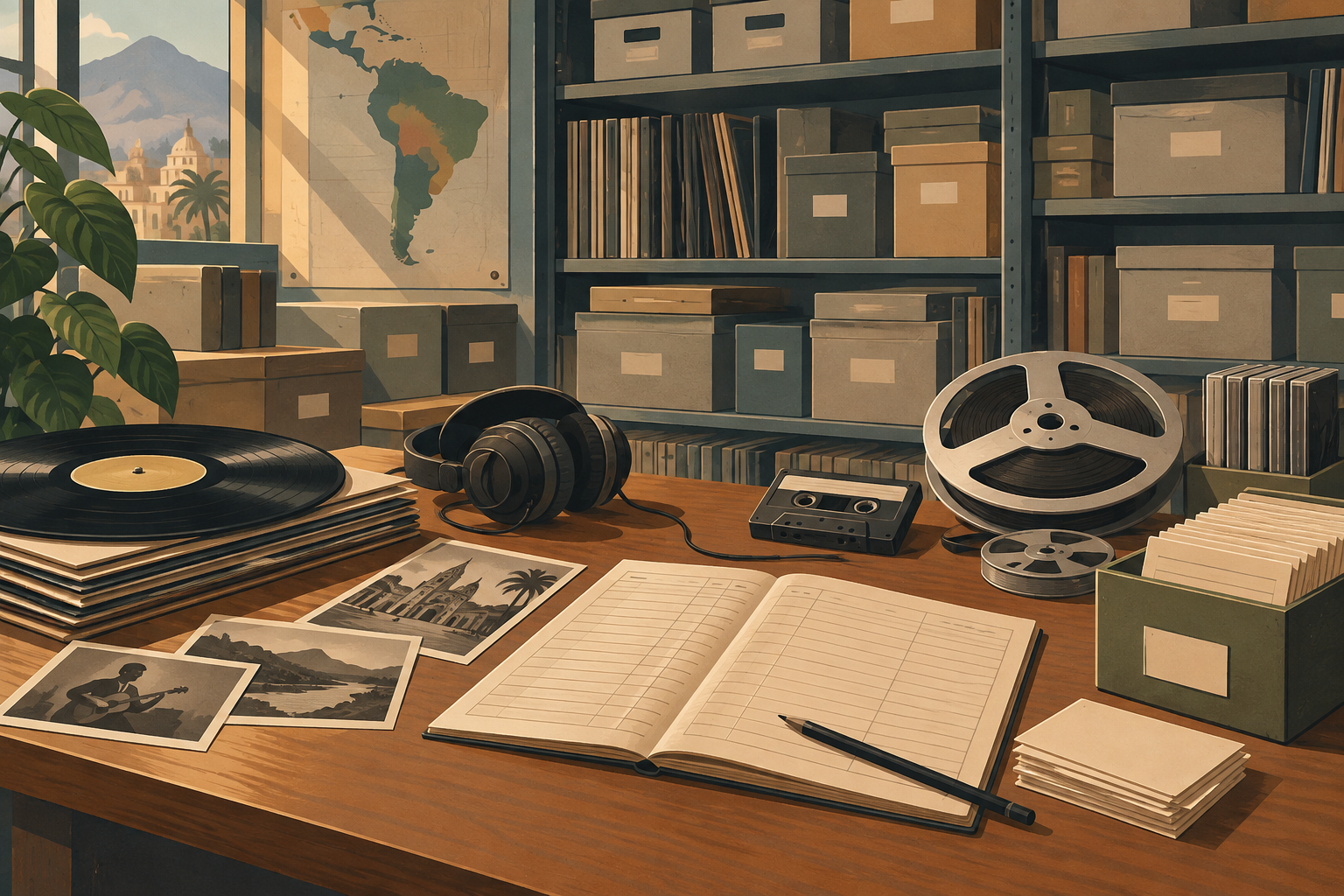
The past does not return unchanged
Contemporary retro is not simply about preserving old objects or literally repeating an aesthetic. The available evidence instead describes a commercial and cultural movement in which companies and designers recover products, forms, or references that had lost prominence and turn them into present-day propositions. Transformation is the key point: what is remembered does not necessarily return with its original function, materials, context, or audience.
Puromarketing suggests that certain models became embedded in collective memory before losing relevance through changing trends and new launches. This helps frame retro as an act of selection. Not every part of the past is recovered: recognizable features are chosen because they can condense an era or a consumer experience. The outcome may be a reissue, a product inspired by an earlier one, or a new item using familiar visual signals.
Nostalgia, but also distinction
The Open University of Catalonia provides a particularly useful sociological explanation: a taste for recovering fragments of the past may answer present needs, including the desire to stand out. From this perspective, choosing a retro-looking object does not necessarily mean wanting to live as people did before. It may distinguish its user in markets full of similar products, make a personal taste visible, or create an emotional link with a shared cultural reference.
Nostalgia should therefore not be treated as an automatic or universal force. It is one possible reading of products, while people may approach them for different reasons: form, texture, perceived simplicity, association with familiar technology, or a wish to escape an overly uniform digital look. The academic source refers both to products inspired by earlier times and to proposals returned from store shelves; that breadth advises against reducing the phenomenon to one generation or one kind of object.
Current function, evocative appearance
One central tension in contemporary retro lies between morphology and use. Infonegocios summarizes the combination by noting that colours, lines, and textures may retain a retro style while functionality aims to meet contemporary needs. This does not establish that every product achieves such a balance, but it identifies a recurring ambition: to preserve an evocative appearance without abandoning features expected today.
This formula should be distinguished from historical reproduction. A replica seeks closeness to a previous object; a contemporary retro product may use only a few codes, such as a button-filled front panel, an old-fashioned case proportion, or a palette associated with another decade. Its function may be entirely different. Analysis should therefore ask which part belongs to the reference and which part has been redefined for the present.
A market of recognizable symbols
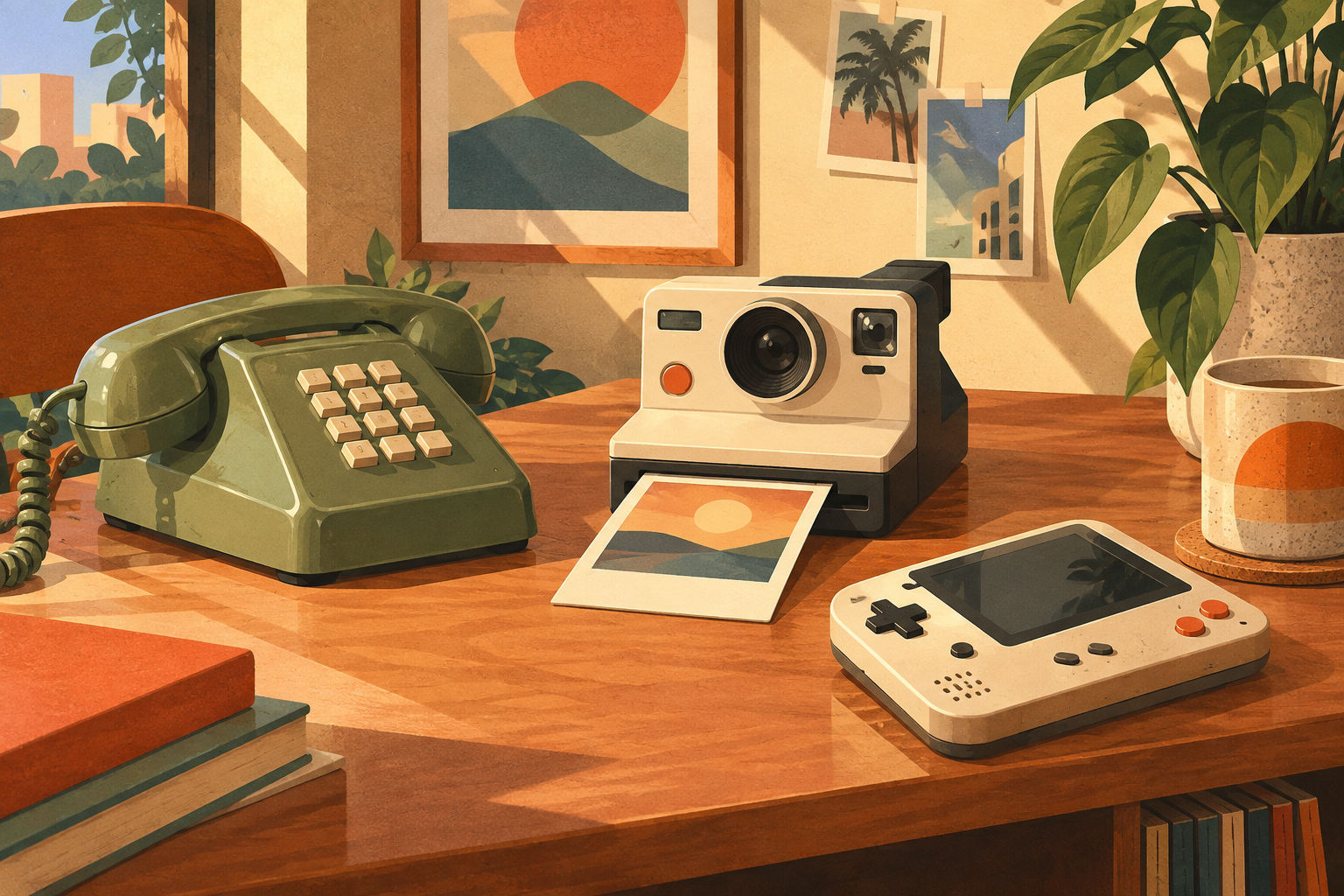
El Periódico linked the relaunch of updated iconic products with consumer recovery, nostalgia, and the purchasing power of an adult generation. Its examples include clothing, familiar snacks, telephones, 16-bit video games, and instant photography. This is not a closed taxonomy, but it shows that contemporary retro crosses very different sectors. Its unity lies not in a single technology, but in the recognition value of particular forms, brands, or rituals of use.
Recognition has limits. A reference readable to people who lived through an era may not be legible to other audiences. Its meaning may also change when it circulates through social media, shop windows, or brand campaigns. Retro does not preserve an object’s social context by itself; it often retains a simplified image selected by design and commercial communication.
Historical object and inspired product
For a publication devoted to retro culture, this distinction matters. A historical object can be studied through documented dates, manufacture, distribution, accessories, and use. A contemporary product inspired by the past requires another question: which past does it invoke, and for what purpose? The answer should not be assumed. Button aesthetics, colourful cases, or references to physical formats can work as homage, sales strategy, or both.
The assembled evidence does not support a claim that there is one industrial definition of contemporary retro, nor that all companies share identical intentions. It does support the view that the past is used as a repertoire of signs adapted to current circumstances. Form may suggest continuity; use, price, production, and audience may belong wholly to another era.
Conclusion: examine the reinterpretation
The interest of contemporary retro lies in the distance between reference and result. The issue is not whether a product is old enough, but how it constructs its relation to what is old. The available sources point to an intersection of collective memory, distinction, design, and market. Reading it carefully means avoiding two simplifications: that every retro appearance is faithful to the past, and that every recovery is empty nostalgia.
The most useful editorial question may be simple: which element of the past remains recognizable, and what has changed so the object makes sense now? That is where the analysis of contemporary retro begins.
- Decade
- Contemporary
- Region
- Global
- Level
- Introduction
- Entities
- No linked entities
Sources and references
- El poder de la nostalgia y por qué las empresas bucean en sus archivos para lanzar nuevos productoswww.puromarketing.com · 2026-09-20
- Crece la fiebre por los productos del pasado | UOCwww.uoc.edu · 2026-09-20
- El negocio de lo 'retro'www.elperiodico.com · 2026-09-20
- Essential Retro: una guía de la tecnología Vintage – di-conexioneswww.di-conexiones.com · 2026-09-20
- Ay, qué nostalgia: retro-tecnoinfonegocios.info · 2026-09-20