Restoration Does Not End with the Object
An intervention on cultural property creates a visible result, yet its most lasting part may be less spectacular: the set of decisions, observations and reports that makes it possible to understand what was done and why. Documentation is not an administrative extra. It is what allows an action to be reviewed, connected to an object’s earlier condition and passed on to future custodians.
The available institutional evidence supports this idea from several directions. The National Museum of Natural Sciences (MNCN-CSIC) describes sustained work on documentary collections; the Prado Museum explains the systematic ordering of intervention reports; and the Spanish Cultural Heritage Institute (IPCE) places preventive conservation and disaster management among the responsibilities of archives, libraries and museums.
From Lists to Reports
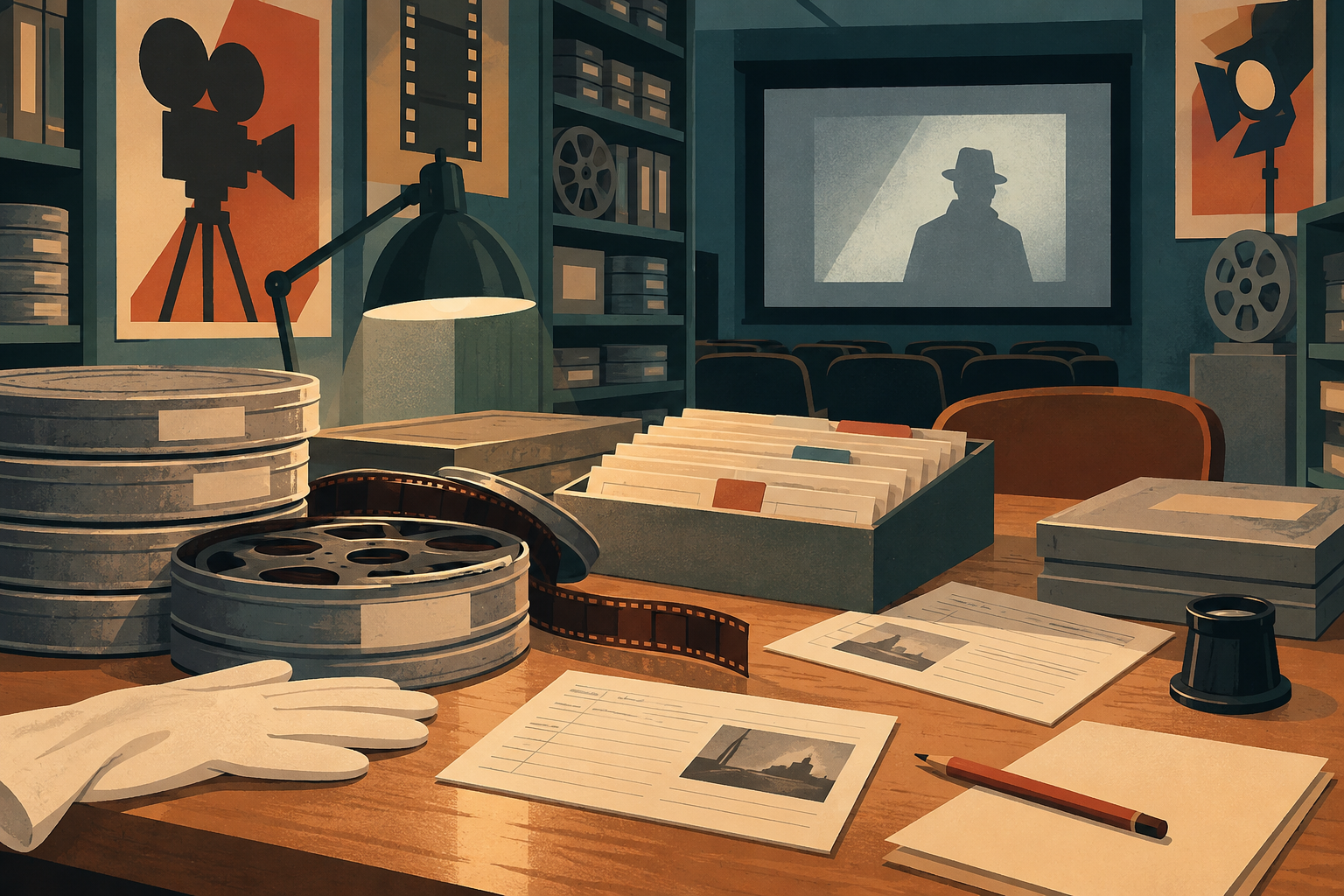
The Prado states that, at a point associated with the creation of its Boletín in 1980, systematic reports began to be written for every treated work, moving beyond simple lists. It also notes that these reports were arranged in a dedicated archive. This is consequential. A list can show that work happened; a report can preserve the object’s condition, the technical reasoning and the operations carried out.
María Concepción García Cabarcos’s History of Restoration at the Prado Museum is presented as a study based primarily on archival documentation concerning the museum’s restorers since its foundation as the Royal Museum of Paintings. That reliance on archives conveys a useful lesson: restoration history can be reconstructed more reliably when the work left organised records.
Principles That Set Limits
MNCN-CSIC lists the international ICOM criteria guiding its occasional restoration of damaged documents: documentation, reversibility, minimum intervention and stability of the products used. These principles shift attention away from immediate appearance and toward long-term responsibility.
Minimum intervention does not mean neglecting an object. It means that the extent of an action must be justified. Reversibility expresses the need not to foreclose future professional choices. Material stability recalls that a solution that works today may create difficulties if it ages unpredictably. In this framework, documenting and treating are inseparable: records preserve the limits, materials and decisions involved.
Prevention: the Less Visible Side of Care
Occasional restoration is only one part of care. MNCN describes tasks including control of photodeterioration through periodic substitutions, loan-condition reports, display advice, staff procedures and maintenance of storage and exhibition areas. IPCE states that every archive, library or museum should establish a preventive-conservation programme and a disaster-management plan suited to its collections, resources and needs.
This changes the central question. Rather than waiting for damage to become obvious, institutions seek to reduce the conditions that encourage it. Documentation again matters: protocols turn knowledge held by one person or department into procedures others can consult and apply.
What a Home Collection Can Learn
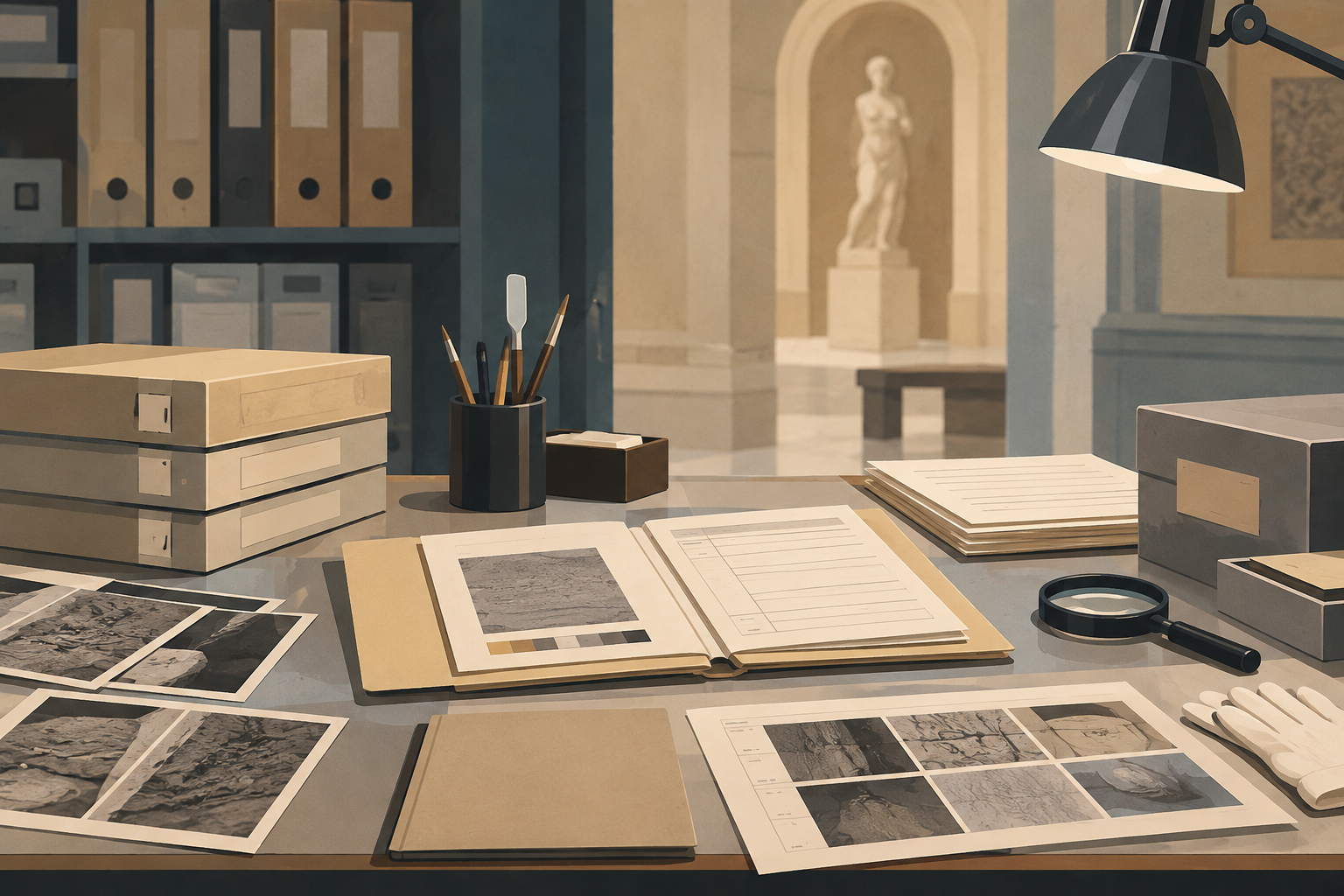
These sources concern institutional heritage. They are not a treatment manual for domestic objects, nor do they justify transferring professional techniques outside their context. They do, however, support one careful habit: before changing an item, record its condition, its known provenance and each decision made. Dated notes, photographs and retained removed parts can later help distinguish original state, deterioration and subsequent intervention.
That does not turn a private collection into a museum archive. Nor does it replace a conservator-restorer’s assessment when an item has heritage value, is fragile or requires specialist treatment. Its value is traceability: preventing an object’s history from vanishing during an attempt to preserve it.
What the Evidence Can—and Cannot—Establish
The evidence assembled here documents practices and principles in Spanish institutions, particularly the Prado, MNCN and Ministry of Culture publications. It does not describe a universal method or establish procedures for every material, device or collection. It is also insufficient to judge the quality of any individual intervention.
What it clearly supports is a straightforward editorial conclusion: conservation is not only the transformation of an object. It is also the preservation of the information needed for that transformation to be understood, assessed or questioned later.
Conclusion
Reports, condition sheets, photographs and protocols are seldom the most striking part of restoration. Yet they are what extends its memory. The institutions cited show that documentation, prevention and explicit limits belong to care itself. For anyone looking at a retro collection, the lesson is to value not only the objects that survive, but also the verifiable histories that remain with them.
- Decade
- Contemporary
- Region
- Spain
- Level
- Enthusiast
- Entities
- No linked entities
Sources and references
- Publicaciones sobre Conservación-Restauración y Gestión del Patrimonio - Instituto del Patrimonio Cultural de España | Ministerio de Culturaipce.cultura.gob.es · 2026-09-18
- Historia de la restauración en el Museo Nacional del Prado (edición digital)tiendaprado.com · 2026-09-18
- Los archivos para la historia de la Restauración - Ministerio de Culturalibreria.cultura.gob.es · 2026-09-18
- Restauración de Colecciones Documentales | Museo Nacional de Ciencias Naturaleswww.mncn.csic.es · 2026-09-18
- Restauración en el Museo del Prado. - Museo Nacional del Pradowww.museodelprado.es · 2026-09-18