Food leaves archives too
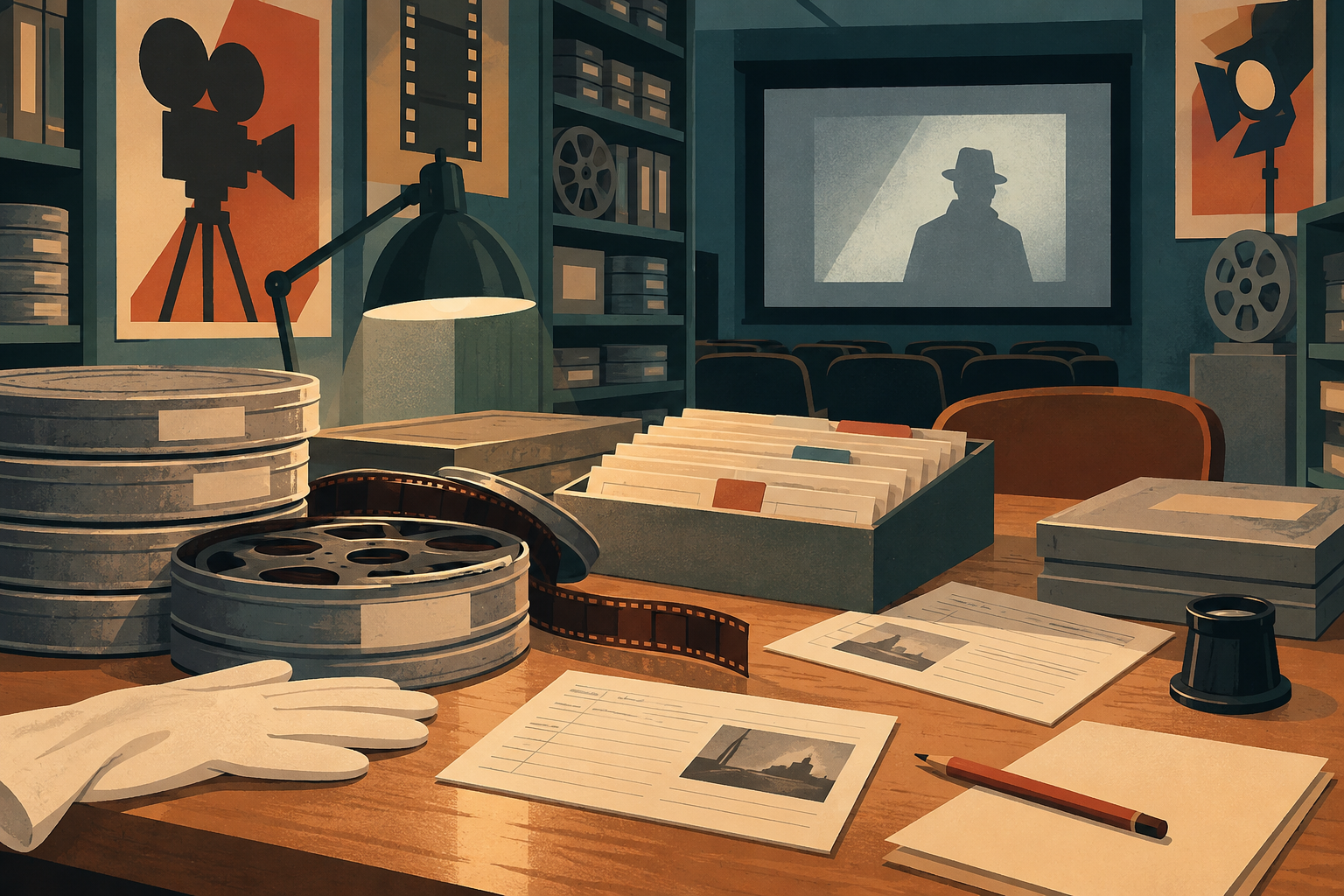
Food history is preserved not only in published recipes or accounts of particular dishes. It may also survive in labels, packaging, documents and cookbooks: objects that record everyday choices and ways of presenting food. The Museo da Conserva, managed by FUNPROMAR, offers a concrete example. Its collection includes original tins, labels, documents and other materials through which the institution aims to reconstruct the history of the seafood-processing industry. In another initiative, the museum presented household recipe books from its collection as records that preserve not only recipes but also visual habits and cultural memory.
Such materials do not speak for themselves. Their value lies in the possibility of relating them to context, to the people who kept them and to the practices they may document. Careful interpretation makes it possible to approach food culture without turning partial evidence into a complete account.
From objects to practices
A tin is a material object and, at the same time, a clue to production and communication. The Museo da Conserva says its collection of tins, labels and documents can help reconstruct the history of the seafood-processing industry. This describes the interpretive role assigned to those holdings; it does not mean that any single item reveals every aspect of production or consumption.
Household recipes offer another kind of evidence. The museum’s #ComidaViejuna campaign recovered recipe books from its collection and presented them as records connected with ways of life, visual habits and cultural memory. Inviting the public to reinterpret or recreate recipes can create a contemporary conversation with those materials. Yet recreating a dish today does not, by itself, prove how it was prepared, who cooked it or how often it was eaten in the past. The available descriptions do not provide enough information to answer those questions.
A sweet in a document
A specific example of a document preserving food information appears in a piece about Christmas archives and tradition. It identifies a document, cited as ALMODÓVAR,C.150, concerning aguinaldo and Christmas sweets consumed in an aristocratic household associated with the Valencia region. The items listed include preserves of lemon, sour cherry, peach and muscat grape, as well as cinnamon, Soconusco cacao, refined sugar and cascas. The source describes cascas as a traditional Valencian and Mallorcan sweet made with almonds and sugar.
The list documents a selection in a particular social setting; it does not represent the diet of the whole Valencian population or of every household of the period. That distinction matters. An archive can reveal striking detail, but the document’s provenance and type set limits on what can be concluded. Here, the account concerns an aristocratic household, not a general sample of homes.
Archives, museums and living heritage
Food museums may bring together objects, accounts and practices, but those dimensions should not be conflated. A thesis held in the Universitat Politècnica de València repository studies museums connected with food and considers intangible heritage and institutional context. Its available summary says the research analysed close to 85% of a set of 209 food museums in Spain. This is the stated scope of that study, not an up-to-date count of every existing venue.
EVE’s museographic discussion of interpretation and gastronomy proposes starting with a collection and its community, then seeking historical references and contextual resources. It also emphasizes that food, its acquisition, preparation and consumption are shaped by cultural, social and personal norms. This is a useful interpretive framework, provided that a general approach is not mistaken for specific evidence supplied by an individual object.
Who preserves and who tells
Personal and household archives raise another question: who writes, keeps and passes on culinary knowledge? A study on popular cooking recipes in Santa Fe proposes examining personal archives through context, subjects, documentary practices and temporalities. Its summary also points to women’s importance in preserving texts of domestic knowledge. This is an analytical perspective, not a conclusion that should automatically be applied to every recipe book or collection.
The FoodCultura Archive describes itself as an organization devoted to food culture through art and research, created by Antoni Miralda and Montse Guillén. This example broadens the idea of an archive: not only a repository of documents, but also a space connected with research and food culture. The available sources, however, do not describe its holdings in detail or support attributing particular objects to it.
What can—and cannot—be claimed
The evidence supports a cautious point: recipes, labels, tins and documents can help investigate and communicate aspects of food culture, but interpretation depends on provenance, context and the questions being asked. The Museo da Conserva states that it preserves materials related to the canning industry and household recipe books; the Christmas document lists sweets associated with a Valencian aristocratic household; and academic and museographic texts provide frameworks for considering food, community and heritage.
The material provided here does not give precise dates for many of these practices, complete inventories, testimony from people who used each object or data to measure representativeness. A rigorous account should therefore resist filling silences with invented memories. A collection can prompt questions about taste, work, appearance, transmission and everyday life. Its strength lies in enabling those questions without pretending that a handful of items contains the whole history of what people ate.
Documentary gallery


- Decade
- Contemporary
- Region
- Spain
- Level
- Introduction
- Entities
- Museum
Sources and references
- Navidad en los archivos, historia y tradición - Xercodexercode.com · 2026-09-23
- Museos, Interpretación y Gastronomía – EVE Museos + Innovaciónevemuseografia.com · 2026-09-23
- Directora Nuria Ramón Marqués Septiembre de 2021 Gerardo Jesús García Olivaresriunet.upv.es · 2026-09-23
- Home - funpromarmuseoconserva.com · 2026-09-23
- Entre recetas, memorias y apellidos - funpromarmuseoconserva.com · 2026-09-23
- (PDF) Las recetas de cocina popular en un archivo del patrimonio gastronómico santafesino: palabras de apertura sobre un proyecto en cierneswww.researchgate.net · 2026-09-23
- Archivowww.foodcultura.org · 2026-09-23