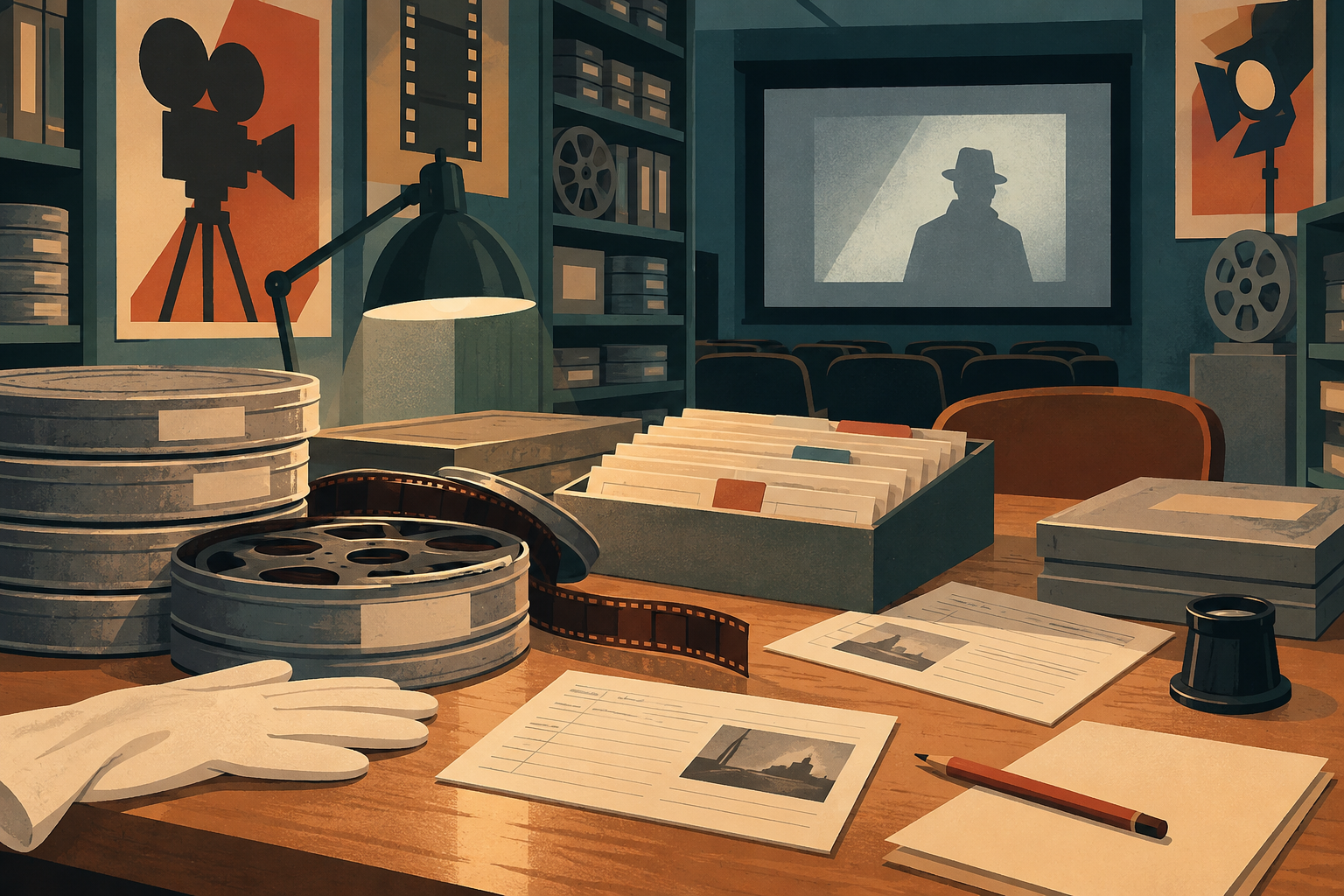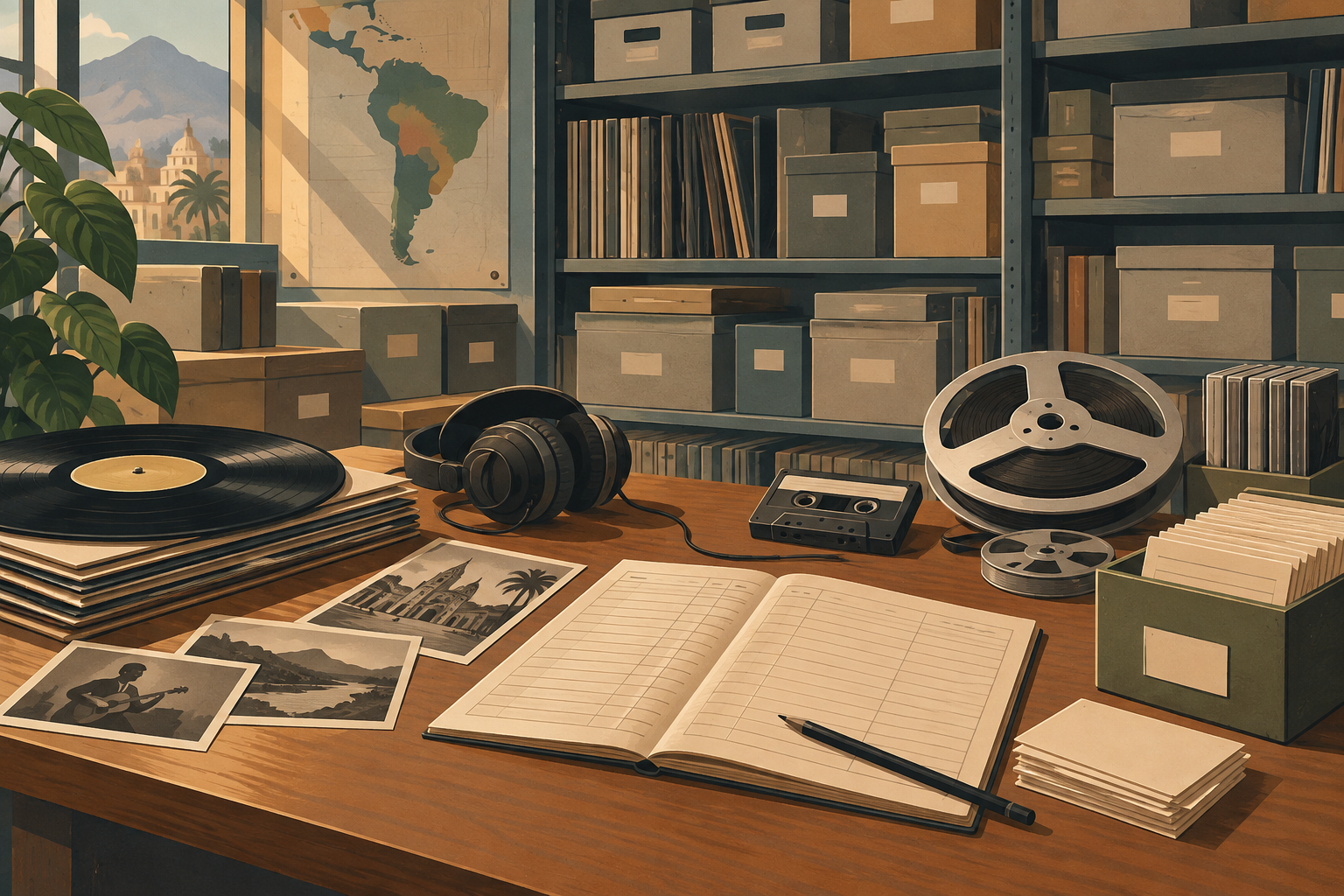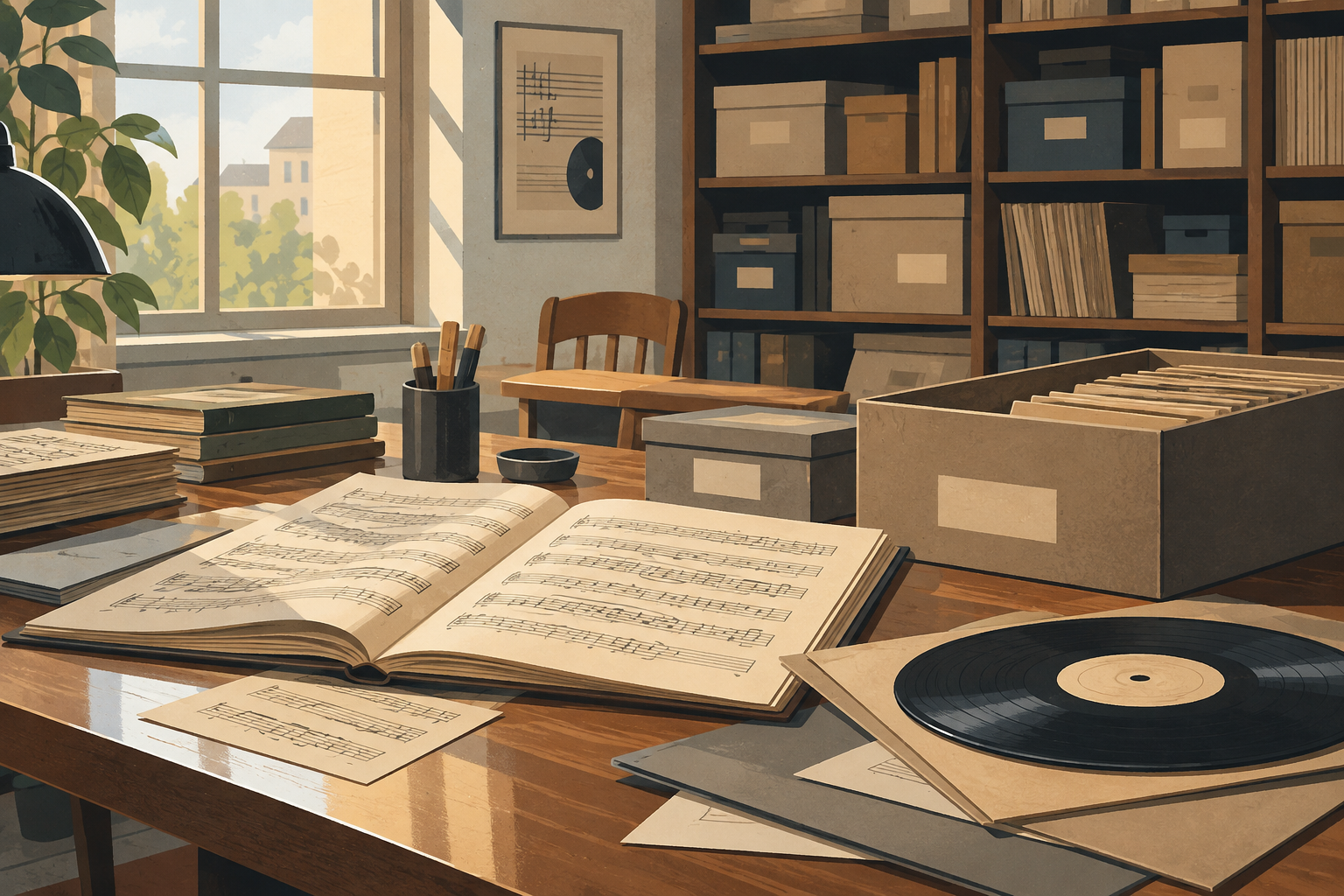
Music does not fit into a single medium
Preserving music is not simply a matter of keeping records. A score, a recording, a document from a musical institution and a practice passed between people offer different traces of a phenomenon that is at once sonic, social and cultural. That diversity is the starting point here: musical heritage is not a box of uniform objects, but a body of materials and meanings whose value also depends on how they were produced, used and transmitted.
An article on musical heritage in Cuadernos de Música Iberoamericana argues for moving beyond rigid divisions between historical musicology and ethnomusicology, and between writing and orality. This does not mean that those distinctions cease to matter. Rather, studying each trace in isolation can limit understanding. Music may leave written records and also exist as social practice and shared experience.
From document to context
Musical documents may be old, modern or digital. A bibliographic review of musical collections describes them as resources for preserving and disseminating musical knowledge, and as testimony to the cultures and societies in which music has different functions. It also cautions that books and notated music are only part of the field: sound and audiovisual materials open up a wider area that cannot be reduced to a single classification.
This approach helps avoid a common confusion: treating the preserved object as music itself. A score records certain musical decisions, but does not by itself contain every condition of performance. A recording fixes a performance on a medium, but does not necessarily represent every way that music circulated or was understood. These are reasoned distinctions between kinds of documents, not claims about any specific work.
Archives still being formed
Preservation is not limited to rescuing old collections. The University of Navarra highlights cataloguing and digitising historical collections, with priorities based on condition and the distinctiveness of sources, as well as preserving recent or still-forming collections. Its examples include contemporary compositions, documentation from choirs, bands, orchestras, theatres, auditoriums and societies, and records generated by musical events that are not always systematically retained.
This has a cultural consequence: material that is not identified and organised may fall outside documentary memory before anyone considers it “historical.” The source also discusses donation policies for the personal archives and libraries of composers and music professionals, and proposes a music documentation centre for Navarre. These are proposals for that context, not evidence of a solution implemented everywhere.
Preserve, describe and make accessible
Preservation involves decisions about what to keep, how to describe it and which priorities to set. An article in the journal PH analyses heritage terminology and identifies Spanish institutions that help safeguard this legacy, including the National Library of Spain, the Basque Music Archive and the Andalusian Musical Documentation Centre. The Government of Catalonia, meanwhile, describes Barcelona’s Museu de la Música as an institution devoted to preserving, studying and disseminating musical heritage. Its collection includes instruments, and its exhibition route addresses different periods and technologies.
Preservation and dissemination are not opposing aims. The Navarre source discusses digitisation alongside cataloguing and prioritisation, rather than presenting it as an automatic replacement for every other preservation task. Likewise, access alone does not explain who created a document, the context in which it circulated or its limitations. Description and context are part of making it intelligible.
The social dimension of sound memory
Julio Mendívil’s text on music preservation links recording media to the ability to fix and reproduce sound. It also highlights questions of circulation, diversity and relationships with the communities from which material originates. It mentions sound archives’ publishing initiatives and, in some cases, heritage repatriation. Its argument encourages us to see preservation not merely as accumulation, but as a practice that can open channels of dissemination and attend to musical diversity.
The scope of this perspective must remain proportionate to the evidence: the examples do not establish that all archives work in the same way, or that a uniform policy exists. They do, however, suggest an essential question for any project: who describes a musical tradition, who can access it, and which cultural relationships are acknowledged when it is preserved?
What can be said, and what remains open
The sources brought together here agree on the breadth of musical heritage: it encompasses written documents, sound and audiovisual collections, instruments, institutional archives and practices connected with social contexts. They also identify cataloguing, preservation, digitisation and dissemination as related tasks. They do not, however, provide a universal formula or allow a systematic comparison of different institutions’ results.
The conclusion is simple, though its implications are not: preserving music means caring for its traces without mistaking them for the whole musical experience. An archive can keep documents; a museum can preserve and interpret instruments; a community can sustain practices and memories. Understanding heritage means connecting these dimensions, explaining decisions about selection, and ensuring that preservation does not end up removing from the world what it sought to keep alive.
- Decade
- Contemporary
- Region
- Global
- Level
- Introduction
- Entities
- Museum
Sources and references
- El patrimonio musical en la convergencia entre musicología y ...revistas.ucm.es · 2026-09-23
- Acervos de Documentos musicales - Bibliopos: Biblioteca de recursos para Bibliotecarios y Opositoreswww.bibliopos.es · 2026-09-23
- Año 10, No. 10, 2014 bibliotecas anales de investigacióndialnet.unirioja.es · 2026-09-23
- El patrimonio musical: de la conservación a la difusión - Cátedra de Patrimonio y Arte Navarro - Universidad de Navarrawww.unav.edu · 2026-09-23
- Museo de la Música | Patrimonio Cultural. Generalitat de Cataluña.patrimoni.gencat.cat · 2026-09-23
- 48 artículoswww.iaph.es · 2026-09-23
- La conservación de la música - SUBURBANOsuburbano.net · 2026-09-23