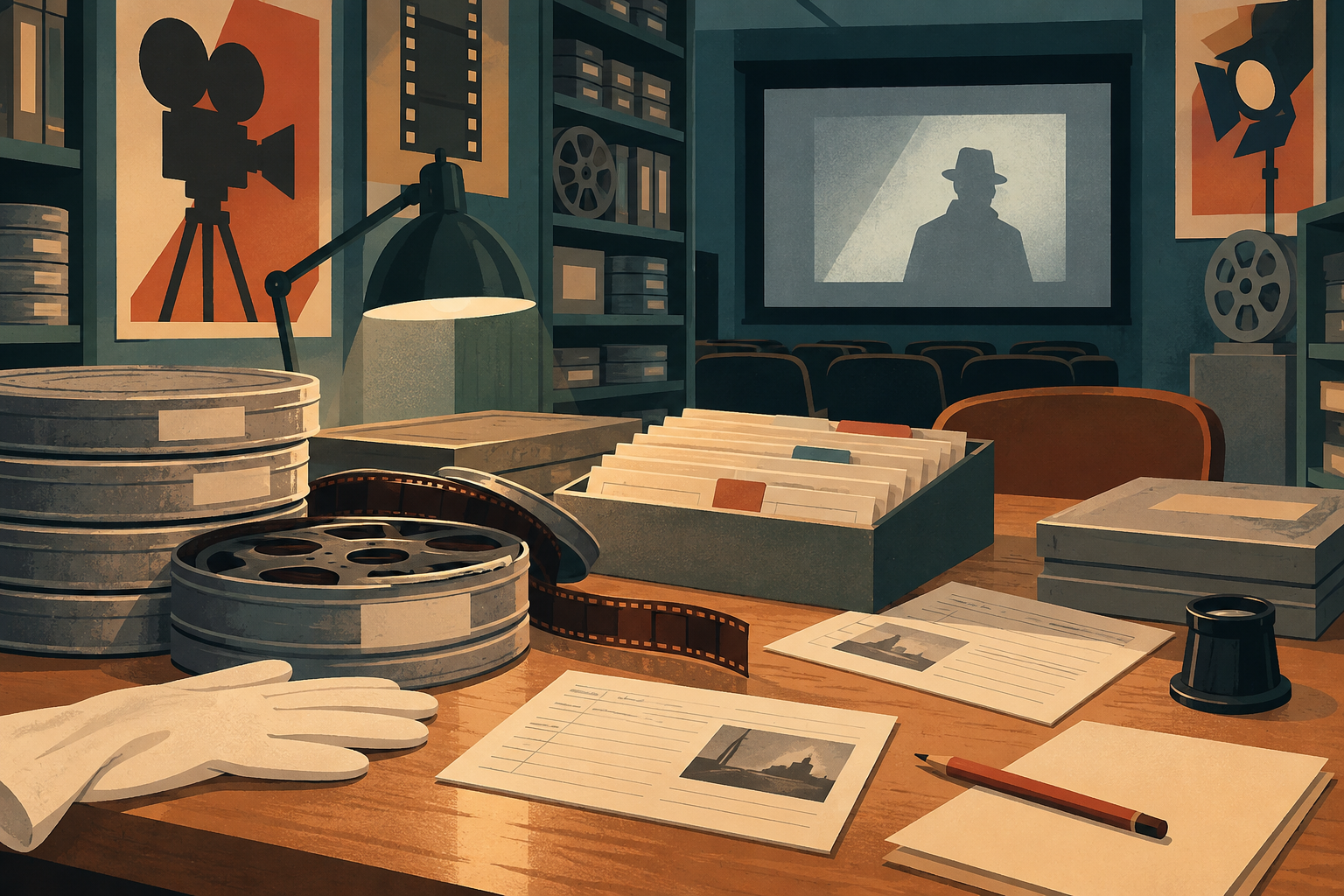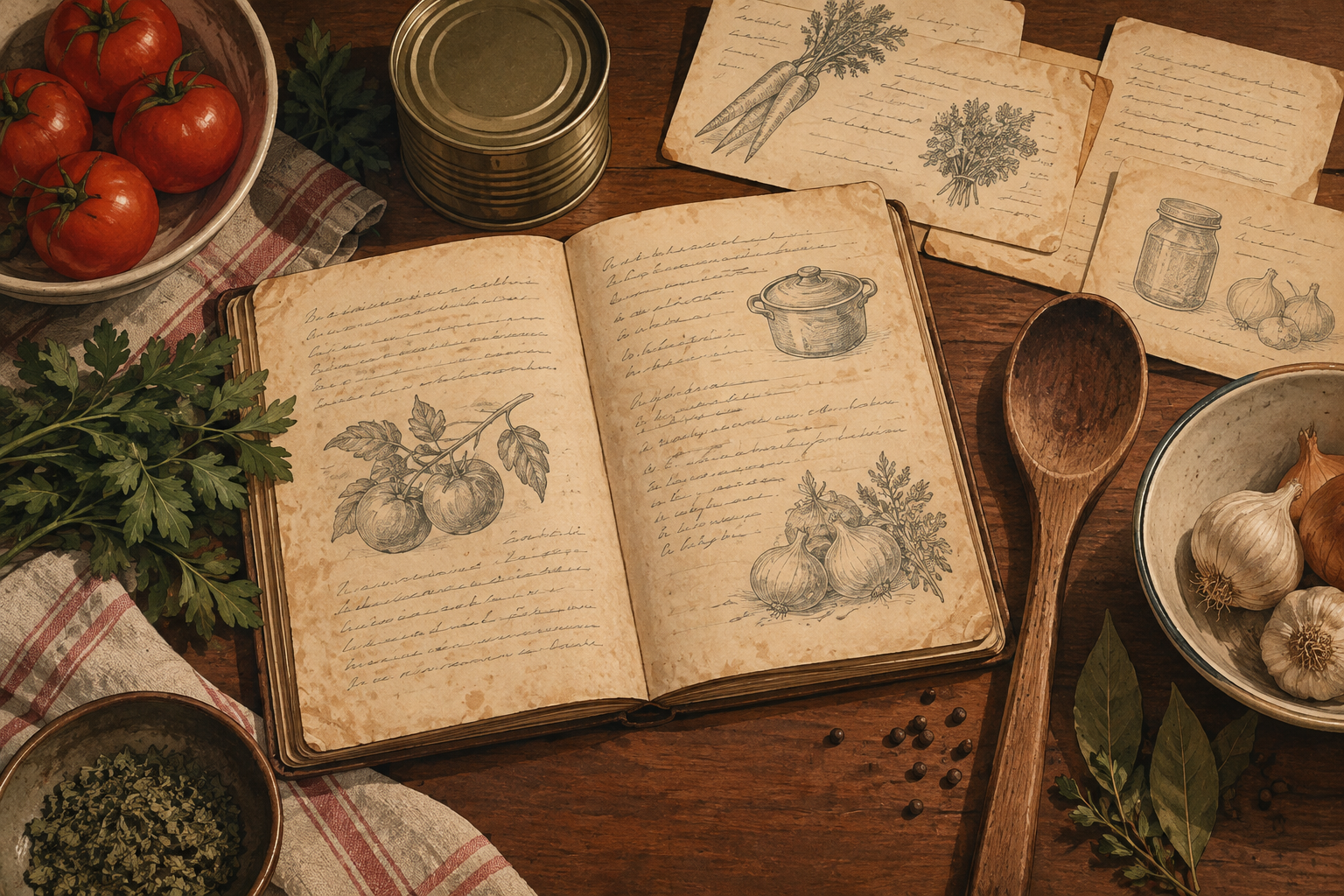
A domestic recipe book is not merely a set of cooking instructions. It may contain an ingredient list, but also recognisable handwriting, a stain, a correction, a pasted clipping or someone’s name. Such material invites us to look beyond the dish and see food as everyday practice, visual language and situated memory. The Museo da Conserva’s #ComidaViejuna campaign starts precisely from domestic recipe books in its collection and presents them as supports capable of preserving recipes, visual habits and cultural memory. It is a useful starting point, but one that calls for care: an intimate document may suggest much, yet it does not by itself represent an entire generation, city or period.
Food leaves documents, not only flavours
Food survives unevenly. Ingredients are eaten or decay; shopping lists, packages, recipe books, labels, photographs and kitchen papers may remain. Their value is not limited to allowing a recipe to be repeated. They also record choices: what was written down, omitted, measured, bought ready-made or considered worth keeping.
The National Archaeological Museum conveys the breadth of this field by linking diet and cultural evolution in its programme “From Neanderthal to the supermarket”. This does not make every culinary object heritage by definition, but it does remind us that eating joins material and social dimensions. EVE Museos + Innovación makes a compatible point: the foods people consume and the ways they obtain, prepare and eat them are shaped by cultural, social and personal norms. A recipe book can be small evidence of that intersection, not a shortcut to explain all of it.
An object needs context
Preserving a notebook without provenance limits what can be claimed. Who wrote it? Where was it used? For how long? Were the recipes regularly made, copied from a publication or received from somebody else? Where the record provides no answer, the responsible approach is to describe the object and identify the unknowns.
This boundary matters especially in retro content. Familiar typography, a photograph or a dish can trigger powerful memories, but emotion does not date a document or prove a widespread practice. Nostalgia may guide useful questions—such as why certain visual forms feel familiar—but it should not replace attribution and comparison.
EVE’s advice on gastronomic interpretation is practical: begin with one’s own collection and community, then widen the search towards specific contextual resources. For a recipe book, this means recording its physical features, retaining accession information, connecting it to other documents only when a verifiable link exists, and refusing to fill gaps with overly certain stories.
From notebook to collection
The Museo da Conserva collection presents the issue at another scale. The institution states that it preserves materials allowing the history of the seafood-processing industry to be reconstructed, including original tins, labels and documents. Its foundation also defines its work in relation to the sector’s cultural, industrial, artistic and bibliographic heritage. The interest here is not only a recipe: graphic design, commercial information, industrial processes and the circulation of objects also matter.
This kind of group makes it possible to compare different supports without confusing them. A label may inform us about product presentation; a tin about material form; a document about a recorded activity; and a recipe book about a written domestic practice. No single item exhausts the meaning of the others. Together, where provenance and relationships are documented, they provide a firmer framework.
Gerardo Jesús García Olivares’s study of museums and food heritage notes the many Spanish spaces connected with food and examines their management and context. Its usefulness here is straightforward: food heritage can involve museums, archives and collections with different aims. The key question is not only what is kept, but how the reason for keeping it is explained.
Preserving is not freezing
FoodCultura’s archive belongs to an organisation devoted to food culture through art and research. That perspective helps avoid a merely utilitarian view of culinary documentation. A kitchen document may support the study of a practice, inspire an artistic reading or prompt public conversation; it need not become decorative relic alone.
Activating a collection, however, does not mean treating it as a pantry of certainties. Recreating an old recipe, as the Museo da Conserva campaign invites people to do, can be an engaging approach if it is presented as reinterpretation. Available ingredients, utensils, quantities and the present-day cook’s context may differ from the original ones. A contemporary experience can converse with a document, but cannot automatically reproduce the past.
Preservation is intellectual as well. It means keeping object and information together whenever possible: provenance, known or approximate date, authorship where documented, later interventions and links to other material. Without such data, a notebook can still be evocative, but it becomes less able to support precise statements.
A less automatic retro reading
The retro appeal of domestic recipe books does not require pretending that they were universal or reducing them to decoration. It rests on acknowledging their double nature. They are visual objects, with paper, colour, handwriting and traces of use; and they are incomplete documents, shaped by personal choices and gaps.
Xercode’s discussion of Christmas sweets shows how archives can provide information about products and customs associated with a particular date, even when the evidence concerns an aristocratic household linked to Valencia. At the same time, the example establishes a limit: that document speaks of a specific setting. Its candied fruits, cocoa, sugar or cascas cannot be extended to every table or every territory.
Conclusion: preserve relationships, not objects alone
A culinary collection gains value when it preserves verifiable relationships among its pieces: who wrote a recipe when known, how a tin reached a museum, the date of a document and the context supporting a label. Domestic recipe books can open a rich conversation about food, design, memory and everyday life. Their cultural strength grows when they are accompanied by context and carefully stated uncertainty.
Attending to these materials does not require idealising the past. It allows us to understand that food culture leaves fragile, partial traces, and that a museum, archive or collection can make them readable in the present without promising more than the evidence supports.
- Decade
- Contemporary
- Region
- Spain
- Level
- Enthusiast
- Entities
- Museum
Sources and references
- Navidad en los archivos, historia y tradición - Xercodexercode.com · 2026-09-20
- Museos, Interpretación y Gastronomía – EVE Museos + Innovaciónevemuseografia.com · 2026-09-20
- Directora Nuria Ramón Marqués Septiembre de 2021 Gerardo Jesús García Olivaresriunet.upv.es · 2026-09-20
- Archivowww.foodcultura.org · 2026-09-20
- Entre recetas, memorias y apellidos - funpromarmuseoconserva.com · 2026-09-20
- Home - funpromarmuseoconserva.com · 2026-09-20
- Del neandertal al supermercado. Dieta y evolución cultural - | Ministerio de Culturawww.man.es · 2026-09-20