A notebook is more than a recipe
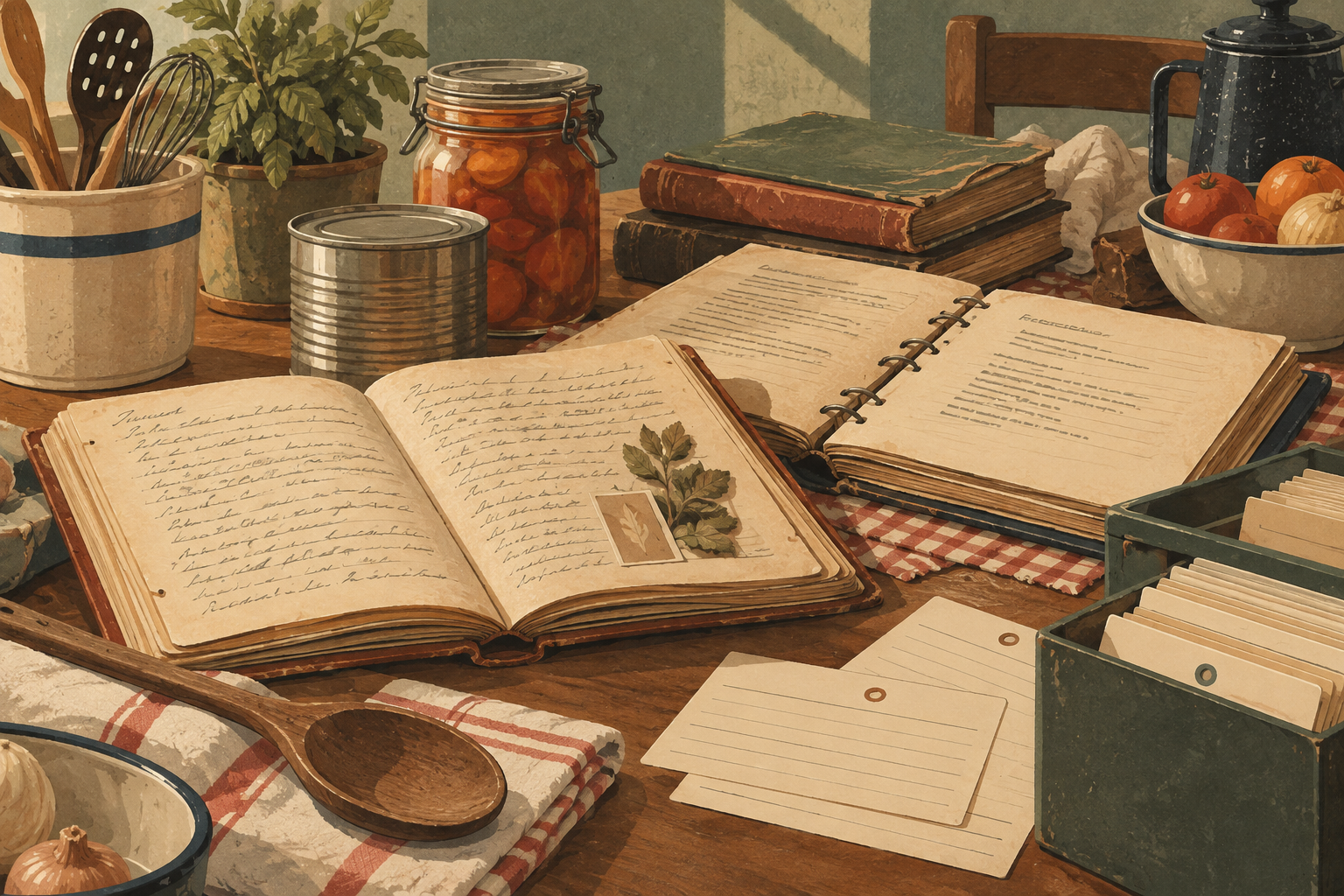
A domestic cookbook may initially look like a strictly practical object: a notebook for ingredients, quantities and instructions. Yet the Museo da Conserva has presented the domestic cookbooks in its collection as materials that preserve not only recipes but also “ways of life, visual habits and cultural memory.” That wording is useful because it moves attention from cooking as an outcome to the document as a trace.
This does not mean that every page can reconstruct an entire period on its own. It means something more precise: a cookbook may contain clues about how someone organized culinary information, what they chose to retain, what they corrected, copied or considered worth using again. Reading it rigorously requires preserving both the text and its material context, while acknowledging the limits of inference.
Food is a cultural practice
The starting point is not nostalgia but culture. EVE Museos + Innovación notes that what people eat, how they obtain food, prepare it and consume it are shaped by cultural, social and personal norms. Spain’s National Archaeological Museum likewise frames food as a way to understand cultural evolution, from prehistory to the present.
A cookbook is therefore a partial entry point into such norms. An ingredient list may record a culinary habit; page layout may reveal a way of ordering domestic knowledge; a stain or correction may indicate use. None of these features permits a complete collective story to be assigned to one household or notebook. They do allow documented questions about the particular object.
The importance of material form
A transcribed recipe loses part of the original’s information. Its support, binding, handwriting, page order, inserted papers and signs of consultation all belong to the document’s biography. Contemporary discussion of everyday objects stresses that understanding them requires attention to their maker, purpose, sensory history, geography and users, including users who remain poorly visible in archives.
For a cookbook, that biography must be built cautiously. It is useful to record what can be seen—loose sheets, annotations or distinct hands, for instance—without automatically turning it into a finished family story. When provenance, date or attribution are undocumented, those absences are data as well. An honest catalogue record does not fill gaps with assumed memories.
From archive to display
Museums are not defined solely by displaying objects. The museological material in the supplied evidence emphasizes their permanence, the conservation of collections and their stable relationship with surroundings and community. Within that framework, a cookbook needs more than a display case: it needs description, provenance where possible, consultation conditions and an interpretation explaining why it is present.
The Museo da Conserva connects its cookbooks with public recovery and reinterpretation. That approach shows that a culinary archive can encourage contemporary conversation while remaining a collection. Participation, however, does not replace documentation. Recreating a recipe can be a valuable cultural experience, but it does not by itself confirm the recipe’s date, circulation or original meaning.
Sweets, celebrations and historical restraint
Archives can also place foods within particular occasions. Xercode cites a document connected with an aristocratic household and the Valencian region that records, for Christmas dates, lemon, cherry, peach and Muscat grape preserves, alongside cinnamon, cacao, sugar and cascas. The example shows the document’s potential: it links a selection of sweets to a specific context.
Restraint is essential. That document does not establish that every Valencian household ate the same things, nor that those sweets alone defined Christmas in a whole period. It can instead describe what this source records and invite comparison with other holdings. Food history becomes more precise when the scale of each testimony remains visible.
Preserving the ability to ask
A food archive need not promise final answers to matter. FoodCultura describes itself as an organization devoted to food culture through art and research; the UPV study examines food museums in Spain and intangible food heritage. Together, these approaches show that preserving recipes is not merely preserving paper. It keeps questions available about practices, identities, work and transmission.
The conclusion is simple but methodical. Domestic cookbooks deserve treatment as cultural documents: identified, described, contextualized and read alongside other sources. Their strength does not lie in turning every dish from the past into a nostalgic postcard. It lies in preserving material evidence from which the present can carefully ask how food formed part of everyday life.
- Decade
- Contemporary
- Region
- Spain
- Level
- Enthusiast
- Entities
- No linked entities
Sources and references
- Navidad en los archivos, historia y tradición - Xercodexercode.com · 2026-09-19
- Museos, Interpretación y Gastronomía – EVE Museos + Innovaciónevemuseografia.com · 2026-09-19
- Directora Nuria Ramón Marqués Septiembre de 2021 Gerardo Jesús García Olivaresriunet.upv.es · 2026-09-19
- Archivowww.foodcultura.org · 2026-09-19
- Entre recetas, memorias y apellidos - funpromarmuseoconserva.com · 2026-09-19
- Home - funpromarmuseoconserva.com · 2026-09-19
- Del neandertal al supermercado. Dieta y evolución cultural - | Ministerio de Culturawww.man.es · 2026-09-19