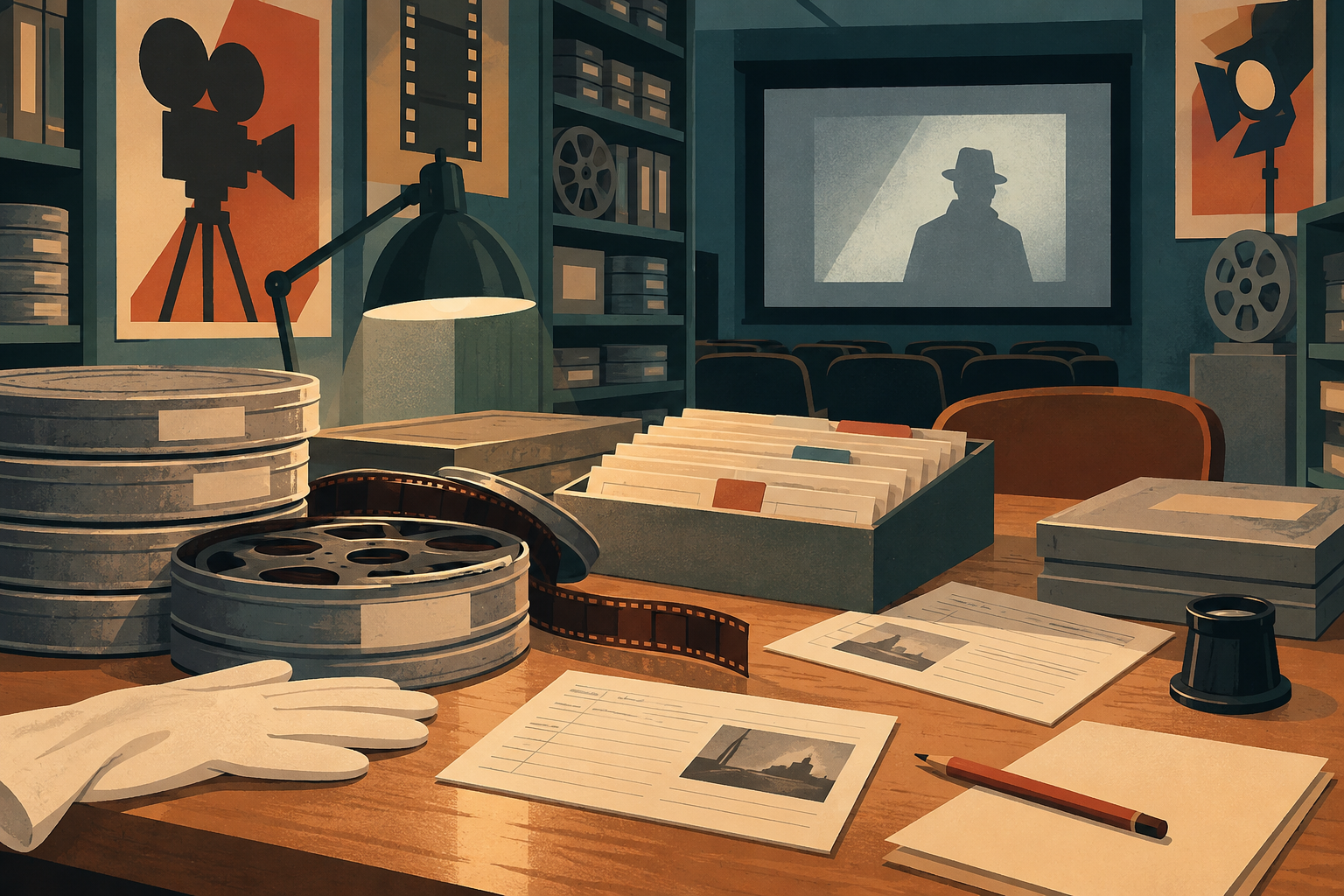
Restoration also means keeping a record
Restoration often becomes visible when a work returns to display. But the work leaves another kind of trace: reports, reference images, publications and files that record what an institution knows about its interventions. In the case of the Museo del Prado, institutional sources describe the development of documentary records connected with restoration. Reading them lets us examine not only objects, but also how a museum organizes and communicates knowledge about their care.
Documentation is not the same as a complete account of every treatment. It does, however, offer a starting point for understanding why recording an intervention can be an important part of conservation: it organizes information and makes it available for later consultation.
From lists to reports
The Prado’s encyclopaedia explains that, during a period the available extract does not date precisely, the museum began systematically preparing reports for each work treated. The source contrasts this practice with earlier lists. It also says that the reports were organized in a dedicated archive, which Felícitas Martínez was responsible for.
The difference between a list and a report matters because it affects the kind of information that can be retained and consulted. It is reasonable to interpret a series of individual reports as making it easier to follow works’ documentary histories in greater detail than a simple list. However, the supplied source does not specify the contents of each report or establish that they all used the same fields. The distinction should be kept clear: the existence of a system is documented, but its precise scope is not established by the available material.
Photographs as reference material
The Prado also notes that José Bueno may have considered certain photographic examples useful as an image archive for the restoration workshop. According to the institutional encyclopaedia, the images could help train students or interns and serve as references for particular interventions.
The qualification matters: the source presents this intention as an interpretation—“he must have thought”—rather than as a direct statement by Bueno. Even so, the example suggests an important possibility. A photograph kept for consultation is not merely an illustration; it can support training and visual comparison during work. The passage does not establish which images were used, for which restorations, or with what results.
Publishing to share the work
The same source says that the Boletín del Museo del Prado, founded in 1980, became a channel for publishing articles about restoration and studies by the museum’s Technical Department. The publication links internal records with public communication: knowledge associated with caring for works can move beyond the archive and become material for study and discussion.
The existence of a bulletin does not prove that every treatment was published or that every article followed a uniform documentary model. It does support the narrower claim that the museum had an editorial platform for disseminating some of its work and research. Archival records and publication serve related but distinct purposes: one preserves institutional documentation; the other selects material for circulation.
Writing restoration history from archives
A digital edition of María Concepción García Cabarcos’s book, published by the Museo del Prado Chair in 2017, presents a history of the museum’s workshops from its creation in 1819 and says that it draws mainly on archival documentation. The publisher identifies García Cabarcos as an art historian and conservator-restorer. This underlines the value of records: they can be source material for studying institutional practices over time, not merely administrative tools.
The Ministry of Culture, meanwhile, lists a conference series on archives for the history of restoration, held at the Archivo Histórico Nacional between October and November 1981. Its existence confirms that archives and their historical use were receiving attention in that context, although the supplied record does not describe the papers or their conclusions.
What we know—and what remains open
The sources support a specific picture: the Prado systematized reports, organized a dedicated archive, considered photographs as reference resources, and disseminated work through an institutional publication. A published history also draws on archival documentation. The material does not, however, identify individual files, reconstruct technical procedures, give an exact date for the start of reporting, or assess the results of particular restorations.
That caution does not diminish the interest of the records. It helps us read them for what they are: evidence of practices of documentation, study and communication. A collection’s history is written not only by looking at its works. It is also written by following the documents that show how an institution has observed, described and communicated the work of conserving them.
Documentary gallery


- Decade
- Contemporary
- Region
- Spain
- Level
- Introduction
- Entities
- Museum, Archivo Histórico Nacional
Sources and references
- Publicaciones sobre Conservación-Restauración y Gestión del Patrimonio - Instituto del Patrimonio Cultural de España | Ministerio de Culturaipce.cultura.gob.es · 2026-09-25
- Historia de la restauración en el Museo Nacional del Prado (edición digital)tiendaprado.com · 2026-09-25
- Los archivos para la historia de la Restauración - Ministerio de Culturalibreria.cultura.gob.es · 2026-09-25
- Restauración en el Museo del Prado. - Museo Nacional del Pradowww.museodelprado.es · 2026-09-25
- La importancia de la conservación y restauración del patrimonio cultural. ¿Qué es la restauración? | Portal de Cultura de Castilla-La Manchacultura.castillalamancha.es · 2026-09-25