Everyday Life Is Not a Set Dressing
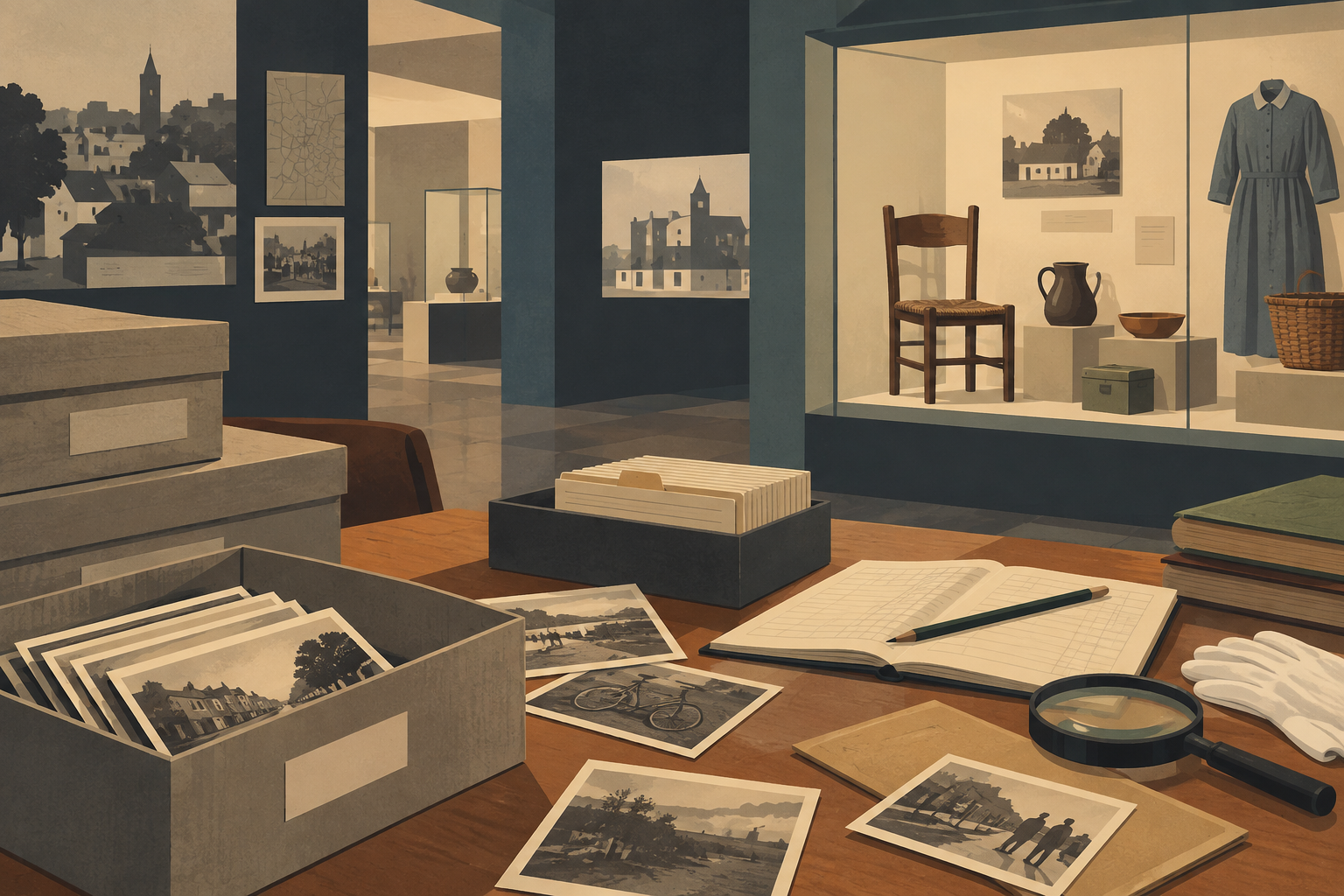
When a museum addresses everyday life, the challenge is not merely to gather familiar objects. A cup, a photograph, or an administrative document may be evocative, yet each explains little on its own. Meaning depends on knowing where it came from, who produced it, what it was used for, what other materials it relates to, and how it entered a public collection. That contextual information is part of the memory a museum preserves.
Available evidence shows that museum archives bring together documents created by individuals, families, or organisations during their activities. EVE Museos + Innovación describes these records as selected for permanent preservation because of their historical or cultural value and linked by common provenance or a related origin. The focus therefore shifts from an isolated item to the relationship among documents, people, and institutions.
The Archive as a Record of Activity
A museum archive is not simply an accumulation of old papers. It can include administrative documentation connected with objects, correspondence, personal records, or photographs; its value depends on content and provenance alike. The Historical Archive of Spain’s National Archaeological Museum describes its documentation as a reflection of the people who shaped the museum, the history of its collections, and its intellectual and cultural activity. Preserving records therefore helps us understand both an object and the processes through which it became heritage.
The Archive of the Museum of the Americas provides an institutional example of this everyday growth. The Censo-Guía states that, after the museum’s definitive installation in its current building in 1965, daily management expanded its archival holdings. It also notes a later distinction between a closed Historical Archive and a Management Archive that continues to grow. An institution preserves traces of its past while constantly creating new traces of its present.
Photographs, Ways of Life, and Human Scale
Images are especially useful for approaching daily practices, but they are neither transparent nor complete. The Archive of the National Museum of Anthropology holds a photographic collection of nearly 7,000 items, including negatives and prints in different techniques and formats. The Censo-Guía says it ranges from the late nineteenth century to the present and is related to social and cultural anthropology, showing scenes, ways of life, and customs of different ethnic groups.
Such holdings can reveal details often absent from inventories: spaces, clothing, gestures, tools, and ways of gathering. Yet a photograph is also a selection: someone chose the frame, the moment, and the subject. Responsible interpretation therefore requires dates, series information, attribution, and production conditions whenever available. An image can open questions about everyday life; it cannot always answer them on its own.
Local Museums and Situated Memory
Everyday life gains depth when connected to a specific place. According to its census record, the Municipal Historical Museum and Archive of Rufino, created in 1992, holds objects and documents on the railway, telegraphy, the city’s founders, and different historical periods of everyday life. The same record mentions permanent rooms on the railway, the city’s foundation, and everyday life. It demonstrates an approach in which technical change and social experience appear within the same local narrative.
A comparable connection appears in holdings at Mexico’s National Museum of Mexican Railways. Its census description says the documentary heritage is important for studies of railways and railway workers, and identifies records including payrolls and administrative material. This does not permit a complete reconstruction of every worker’s life, but it does identify a documentary route for studying how technical infrastructure related to people, jobs, and communities.
Preservation Does Not Produce One Single Story
The wish to represent an era through interiors, objects, and photographs can create an immediate sense of recognition. That familiarity is also a risk. Preserved holdings depend on selection decisions, institutional resources, access conditions, and historical trajectories. What survives is not everything that existed; what is exhibited is not all the available evidence.
In its description of the MAN historical archive, Spain’s Ministry of Culture stresses conservation, organisation, and document management alongside public knowledge of the museum. The order matters: before materials become a public narrative, they need identification, arrangement, and a maintained relationship to context. Reproduction policies can also shape access. In the Mexican railway archive, the record notes that some reproductions require authorisation and that its conservation and restoration department authorises reproduction according to the material’s condition.
A Memory of Use, Not a Collection of Clichés
The strongest contribution of such archives is not to guarantee a perfect postcard of the past. It is to support more precise questions: which activities an institution documented, which practices appear in a photographic series, and what relationship exists between a technology and records of those who worked with it. This protects objects and their meaning alike.
For RetroPause, viewing everyday life through archives means refusing to turn every old thing into a universal symbol. An object may trigger memories, but its verifiable history depends on the documentation around it. Museums and archives show that everyday heritage is made of things, images, files, and absences. Preserving context does not erase those absences; it helps us acknowledge them rather than fill them with invention.
- Decade
- Contemporary
- Region
- Global
- Level
- Introduction
- Entities
- Museum
Sources and references
- Introducción a la Gestión de Archivos en Museos – EVE Museos + Innovaciónevemuseografia.com · 2026-09-20
- Archivo de la Municipalidad de Rufino (Argentina)censoarchivos.mcu.es · 2026-09-20
- Censo-Guía de Archivos de España e Iberoaméricacensoarchivos.mcu.es · 2026-09-20
- Archivo del Museo Nacional de Antropología (madrid ...censoarchivos.mcu.es · 2026-09-20
- Archivo histórico - | Ministerio de Culturawww.man.es · 2026-09-20
- Archivo del Museo de América (Madrid, España)censoarchivos.mcu.es · 2026-09-20