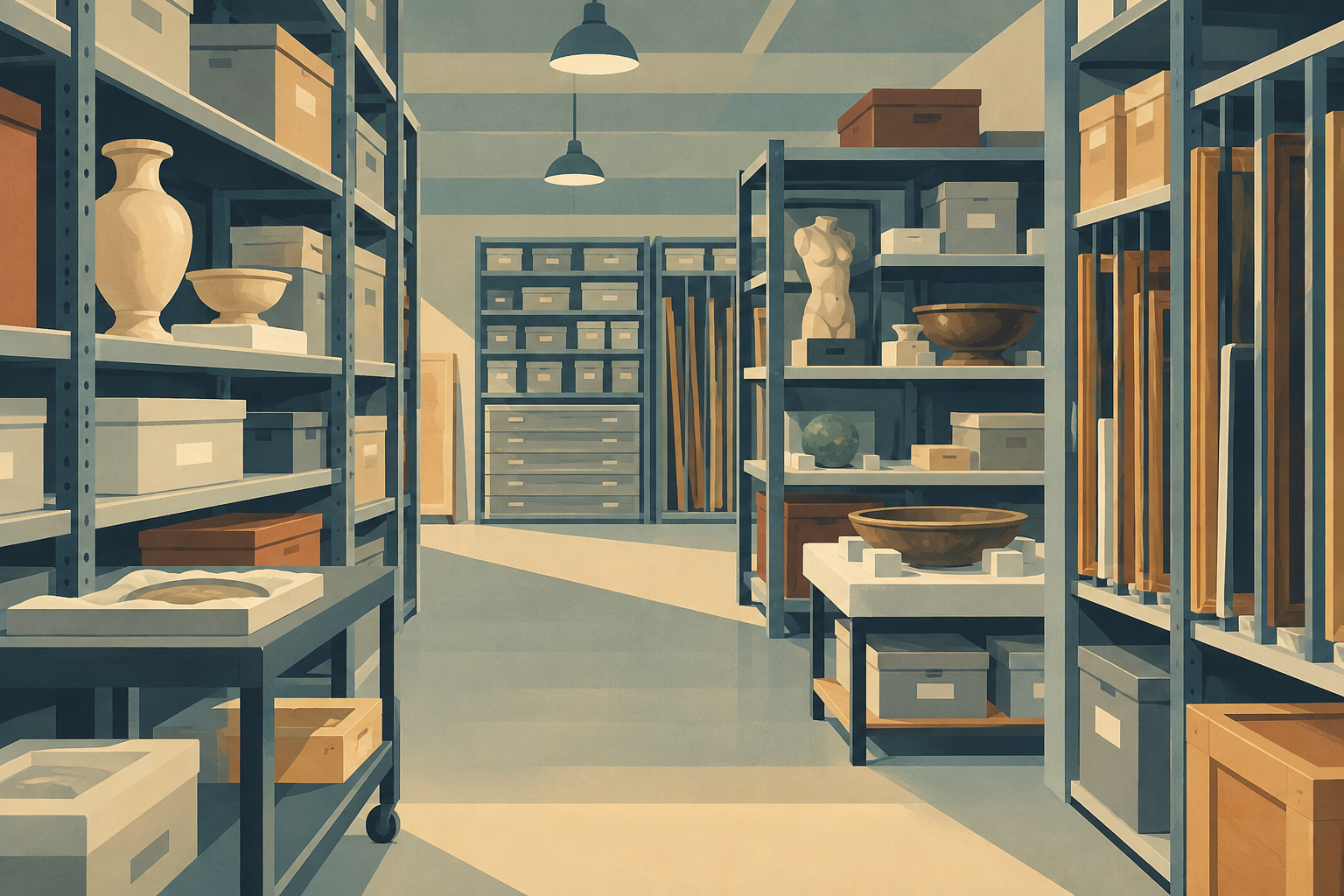
In a museum, a decorative object is more than a shape, a material or a detail to admire. It is also a collection item whose history, physical condition and documentation need to remain connected. Information from Spain’s National Museum of Decorative Arts shows that conservation, accessibility and study belong to the same task: caring for objects while preserving the conditions that make it possible to understand and consult them. This challenges the idea that preservation means only repairing an object after damage appears.\n\n## Preserving the object and its information\n\nThe National Museum of Decorative Arts describes conservation as an integral part of the institution’s work. Its aim is to preserve both the physical integrity of collections and the historical and artistic information they convey. That wording matters: an object kept in good condition but detached from information about its history or state loses part of what a museum is responsible for safeguarding.\n\nDocumentation is not a bureaucratic extra. The museum says that continuous review and documentation are needed to ensure preservation. Condition reports are accompanied by photographs that make it possible to observe changes or new alterations and, whenever possible, by condition maps. Analytical techniques can provide information about materials, construction methods, alterations and additions. These are ways of learning more about an object, not an invitation to intervene without specialist assessment.\n\n## Storage is part of care\n\nThe way a collection is stored affects whether it can be handled safely. The museum’s information says that large, heavy objects should be placed in low areas where a ladder is unnecessary; small, fragile pieces can be placed on special supports, trays or pull-out boxes so they can be moved more quickly and with better safeguards.\n\nThese criteria show that storage is not a neutral space outside the museum’s account of its collections. Arranging objects also means organizing access: who can find them, how they are moved and which conditions reduce risks during those operations. The museum also reports work to review collections and optimize storage, both to accommodate their growth and to improve preservation and accessibility. The source does not prescribe a universal layout or a scheme suitable for every institution; it does make clear that decisions about placement and support are part of conservation.\n\n## Prevention rather than a late response\n\nThe preventive-conservation publication from Museum International, made available by Ibermuseos, describes prevention as a policy and systematic practice, not a spontaneous reaction. It characterizes it as an ongoing process of maintenance and improvement. This broadens the focus: caring for a collection does not mean waiting for a problem before acting, but continuously reviewing the conditions and procedures that affect its preservation.\n\nThe publication also places prevention within a professional ethical framework. The available excerpt does not offer a household recipe or specific environmental parameters. Applying its principles directly to the care of objects at home would therefore go beyond the evidence. In a museum context, however, it supports the view that conservation depends on sustained policy and coordinated decisions, not a single intervention.\n\n## Knowledge shapes intervention\n\nA piece’s materials, construction and history cannot be taken for granted. Information from the National Museum of Decorative Arts emphasizes that analytical techniques can help identify materials and construction methods, as well as detect alterations or additions. Periodic review makes it possible to observe changes against the object’s previously documented condition.\n\nThe preventive-conservation guide published by Museos de Tenerife presents the preservation of cultural property as work requiring different disciplines to be brought together. The Castilla-La Mancha Culture Portal, meanwhile, links the conservation and restoration of movable objects and decorative elements to the social valuation of heritage, and notes that specialization depends on the materials involved. Taken together, these sources support a cautious conclusion: there is no single intervention suitable for every decorative object. Understanding the object and having appropriate expertise are part of the decision.\n\n## An important distinction: care is not always restoration\n\nThe sources consulted distinguish, with differing levels of detail, between routine conservation, documentation, prevention and restoration. Francisco Javier Zubiaur Carreño’s museology chapter lists conservation, documentation, research, communication, outreach and education among a museum’s functions. It describes the catalogue as a tool for documenting and studying collections, including information on condition, treatments and related events. This perspective avoids reducing a collection’s life to the moment of repair.\n\nThe available sources do not allow us to reconstruct how each particular museum object is managed or to establish specific materials, dates or interventions. Nor do they offer universal instructions for preserving decorative objects at home. What can be verified is more general and still significant: preserving a collection requires documentation, review, thoughtful storage arrangements and sustained preventive policies.\n\n## Conservation as part of the museum experience\n\nDecorative and applied arts are often appreciated for their physical presence, but the care that makes that presence possible does not take place only in galleries. Decisions about storage, access, documentation and analysis maintain the connection between an object and the information accompanying it. A collection is not protected only when it is on display, or only when it receives treatment: the quieter tasks that allow staff to locate, examine and move it safely also matter.\n\nSeen this way, conservation is not a separate chapter in the history of decorative objects. It is part of how museums study them and keep them available for the future. The evidence consulted supports this institutional framework, but not a restoration recipe or an account of procedures for every individual object. That caution is itself a form of care: recognizing what is known, what must be assessed case by case and what cannot be claimed from the available documentation.
- Decade
- Contemporary
- Region
- Spain
- Level
- Introduction
- Entities
- Museum
Sources and references
- Conservación - Museo Nacional de Artes Decorativas | Ministerio de Culturawww.cultura.gob.es · 2026-09-24
- Museum Internacional No 201 (Vol LI, n° 1, 1999) Conservación preventivawww.ibermuseos.org · 2026-09-24
- Estudio y documentación - Museo Nacional de Artes Decorativas | Ministerio de Culturawww.cultura.gob.es · 2026-09-24
- LA CONSERVACION PREVENTIVA EN LOS MUSEOS Teoría y prácticawww.museosdetenerife.org · 2026-09-24
- Capítulo 10 - El museo como centro de investigación. La necesidad de documentar las piezas en el museo. Tendencias documentales actuales. Normalización y gestión integral del museo. - Fco Javier Zubiaur Carreñowww.zubiaurcarreno.com · 2026-09-24
- La importancia de la conservación y restauración del patrimonio cultural. ¿Qué es la restauración? | Portal de Cultura de Castilla-La Manchacultura.castillalamancha.es · 2026-09-24