An object does not end with its material form
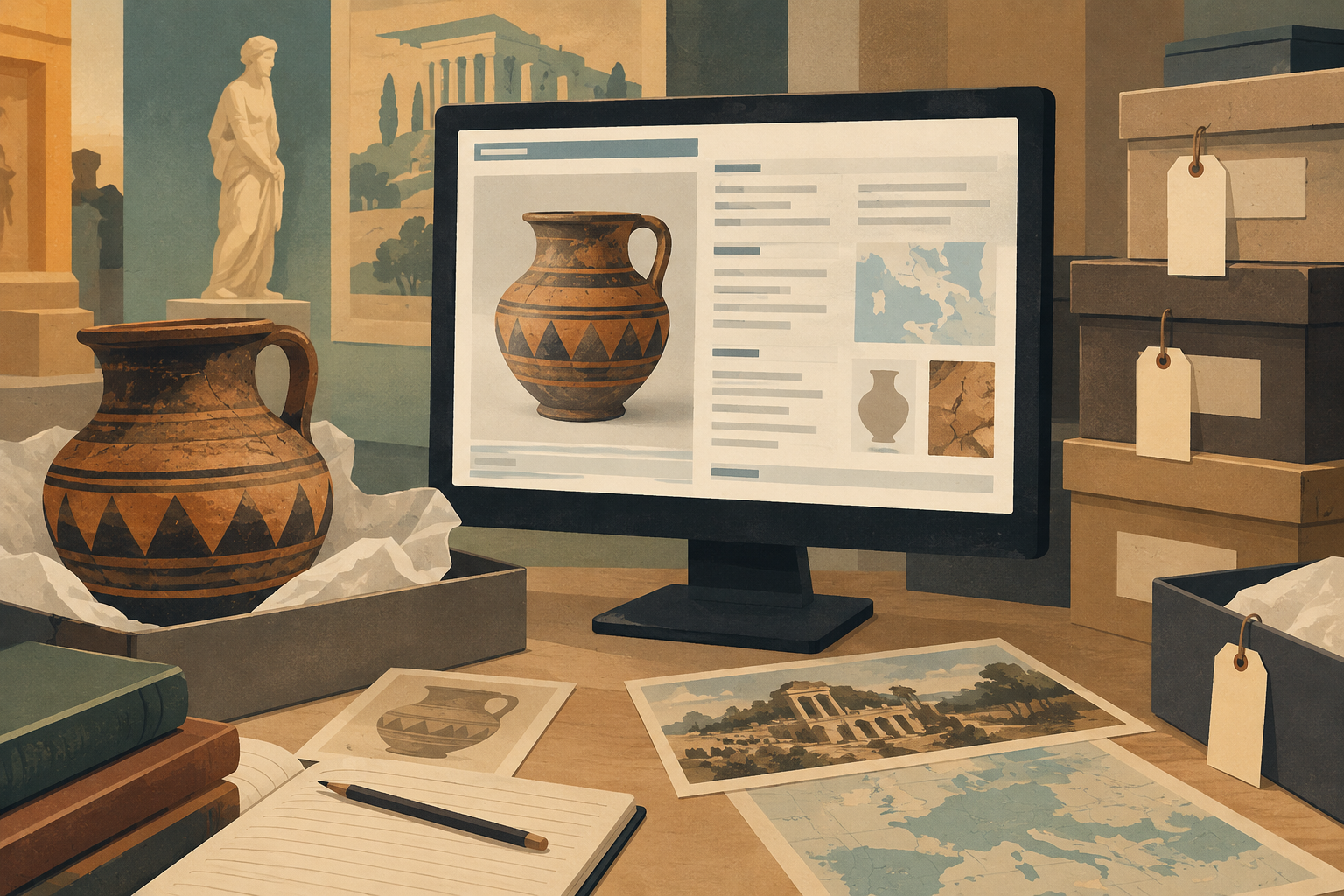
A computer can make a collection searchable, connect record fields, and bring together images, reports and movement histories. It cannot, by itself, turn an accumulation of objects into public knowledge. That distinction lies at the heart of museum documentation: preserving an item also requires preserving the information that explains where it came from, how it entered the institution, what has been done to it, and how it relates to other objects and records.
Francisco Javier Zubiaur Carreño’s museology course makes the point plainly: preserving an object without the documentation that records the circumstances of its discovery and its history turns a museum into a storehouse. This is not an objection to computers. On the contrary, it defines what computers can contribute when they are part of documentary practice. Technology can order, retrieve and connect data. The meaning of that data depends on whether it has been created, described and maintained consistently.
What a documentation system records
The Universitat de València page on computing in museums lists practical tasks: maintaining documentary files for each object, including biographies, bibliographies, chronologies and conservation-condition reports; maintaining a graphic archive; and managing loans, movements, acquisitions and restorations. The list usefully avoids an abstract idea of digitisation. A computer system is not merely a database of names or a picture gallery. It can bring together different forms of evidence concerning the same cultural asset.
In use, a structured record can retrieve an object by identifier, provenance or condition; an image makes it recognisable; a report follows its conservation circumstances; and movement records place it within a chain of management. The Universitat de València source notes that many museums have database-management systems covering, to differing degrees, structured and documentary information. That qualification matters: having a database does not ensure complete processes or equally reliable descriptions.
Context: the information that prevents isolation
Documentation extends beyond the immediate file of an individual object. Zubiaur Carreño stresses the need to document the world outside the museum in order to understand the context from which cultural assets come and to defend heritage more effectively. Archival guidance published by the Government of Navarre makes a closely related point: archives hold documentation about objects that is inseparable from them and should remain in the institution.
For a collection connected with computer history, this warning is a method rather than a claim about any particular machine. A device, medium or peripheral would be only one part of the evidence; associated documentation might include images, acquisition records, condition reports, descriptions and the institutional history of its arrival. If those materials are dispersed or lost, the object remains, but the ability to explain what it represents and why it was kept is diminished.
From graphic archive to public access
Computing can widen interpretation without replacing custody. The Universitat de València describes interactive kiosks as computers installed in galleries to complement visits with information about works, access to stores, consultation of closed exhibitions, or institutional history. This shows how records that support internal work can also support public experiences, provided that they are organised and suitable for consultation.
Digitisation, however, is not the same thing as quickly photographing material and publishing it afterwards. The SEDIC text warns that a digitisation plan needs prior arrangement, appropriate conservation conditions and contextual metadata that allow digital images to be located. The sequence is meaningful: identify and organise first; digitise next; then link the digital file to retrievable descriptions. An image without metadata may be visually appealing, but it is difficult to use in research or to connect securely with the object from which it derives.
The archive also tells the museum’s story
Institutional records do more than support collection cataloguing. EVE Museos + Innovación explains that organisational archives document a museum’s history and development, its collections, exhibitions and programmes, as well as contributions by people and groups connected with it. The Historical Archive of Spain’s National Archaeological Museum expresses a parallel idea: documentation reflects the people who shaped the museum, the history of its collections, and its intellectual and cultural activities.
This requires viewing the computer as documentary infrastructure rather than an end in itself. A system may record an exhibition, a conservation intervention or a movement; those records may become part of the institution’s memory. Conservation, research and public communication leave different documentary traces, and bringing them together allows processes to be reconstructed that a displayed object cannot reveal on its own.
Verifiable limits and a practical conclusion
The assembled sources describe general principles and functions. They do not establish which specific software each museum uses or measure the real degree of digitisation across particular collections. Nor do they justify treating a database as a replacement for physical archives, professional assessment or access policies. They do support one precise conclusion: a computer is valuable when it helps keep object, image, description, conservation condition, movements and context together.
For an institution preserving the material culture of computing, the lesson is especially relevant. Saving a device without saving its file may preserve a case or component; preserving its documentary relationships turns it into historical evidence. The archive is not an administrative afterthought, and a management system is not a neutral store of fields. Together, they are a condition for conserving, researching and explaining a collection responsibly.
- Decade
- Contemporary
- Region
- Spain
- Level
- Technical
- Entities
- Museum
Sources and references
- Capítulo 10 - El museo como centro de investigación. La necesidad de documentar las piezas en el museo. Tendencias documentales actuales. Normalización y gestión integral del museo. - Fco Javier Zubiaur Carreñowww.zubiaurcarreno.com · 2026-09-22
- El museo la informáticawww.uv.es · 2026-09-22
- instrucciones para la gestión y organización de archivos ...www.navarra.es · 2026-09-22
- Clip de SEDIC, Revista de la Sociedad Española de Documentación eedicionsedic.es · 2026-09-22
- Archivos de Museo: Funcionamiento - EVE Museos + Innovaciónevemuseografia.com · 2026-09-22
- Archivo histórico - | Ministerio de Culturawww.man.es · 2026-09-22