The promise of a digital museum is often described in terms of access: a collection that can be consulted without being physically present in its galleries, a screen that brings objects beyond the exhibition closer, or a tool that supports internal work. The supplied sources support these possibilities, but they also point to a less spectacular condition: a digital image helps us understand an object only when it can be connected to reliable information about it. Digitising, by itself, is neither preservation nor explanation.
From image to documentation
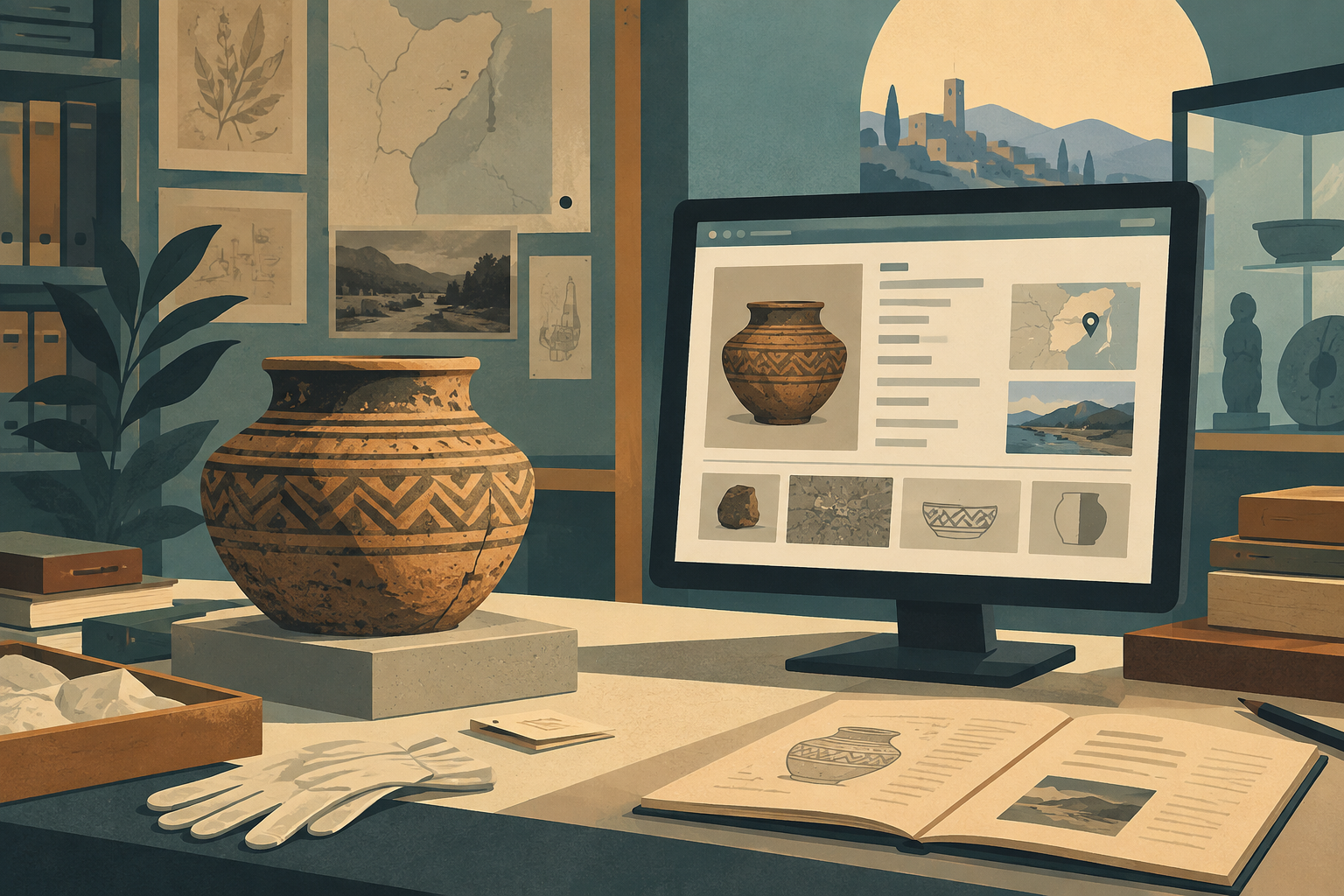
A digital representation can broaden the ways a collection is consulted. EVE Museos + Innovación describes digital transformation as a process that may include computerised inventories, communication with the public and digital tools integrated into museum functions. It also cites a definition of digitisation as the creation of a digital representation of an object. The distinction matters: creating a representation is a specific operation; keeping it findable, described and connected to its context requires documentary organisation.
Documentation is not decorative material added to an image. Navarra’s guidance on museum archive management says that records relating to objects form part of their context and should remain connected to them. Spain’s Ministry of Culture notes that state museum archives preserve documentation about objects in their custody from the time they are deposited. These are reminders that an object and the records needed to reconstruct its history are not interchangeable resources.
Broader access, a limited promise
Digital narratives can present information through text, images and interactive elements. EVE Museos + Innovación suggests that such tools can support dissemination, education and accessibility. In a separate article on digital transformation, it describes possibilities ranging from visitors using phones or tablets during a visit to digitised collections being made available online and museums communicating with people before or after a visit.
These possibilities describe channels and functions; they do not establish that every institution has adopted them or that every digital experience automatically improves understanding. A screen can bring an image closer to someone unable to visit a gallery, but access to a reproduction does not necessarily explain provenance, conservation conditions or curatorial decisions. A tool’s value depends on which data it provides, how it connects them and whether it makes clear what is known and what is not.
Context is part of the collection
Archival documentation can make visible what an isolated image cannot show. Navarra’s guidance says that archives contain varied materials and that the context of objects is inseparable from them. The Ministry of Culture offers a concrete example of why records matter historically: for certain objects connected with the Civil War and the Franco period, state museums may hold documentation about deposits made by the National Artistic Heritage Defence Service after 1939. The source does not make this circumstance a general description of all objects, but it does show why records of accession and custody matter.
The available extract from SEDIC’s Clip journal stresses that digitised materials need contextual metadata to be found. A copy without sufficient identification risks becoming a file that is difficult to locate or interpret. Descriptive information, identifiers and relationships between records are part of the access infrastructure, even if they are less visible than the interface.
Preserving digital records also takes work
The available sources do not establish that a digital copy guarantees long-term preservation. They support a more limited point: records management needs to address maintenance, organisation, preservation and access. EVE Museos + Innovación describes archival responsibilities that include policies for creating, maintaining and preserving records, including electronic systems. The editorial caution follows: creating files is not enough; institutions must also be able to manage them and connect them to the collections they describe.
Nor should a digital copy be confused with the original object. Digitisation can facilitate consultation and, according to EVE’s article on digital narratives, may help protect fragile objects by reducing some handling needs. But the supplied information gives no methods, technical standards, costs or comparative results. It cannot measure how much a digital copy extends an object’s life or guarantee that a representation captures every characteristic.
A transformation that needs institutional memory
The sources present museum digital transformation as gradual rather than instantaneous. EVE describes a lengthy process and different ways of incorporating computing and the internet into museum work. A university study by Bellido Gant and Ruiz Torres on new-generation museums adds a critical reflection: screens open new ways of relating to heritage, but not everything is an advantage. Their framing invites consideration of what is gained and what is lost when mediated experience takes a central place.
The most cautious conclusion is that digital tools can extend a museum’s reach and make information more accessible, but they do not replace material conservation, archives or interpretation. An institution that digitises without preserving documentary links risks presenting images stripped of context. One that treats records, metadata and access as parts of the same work can help keep an object understandable beyond the gallery. The sources support that general direction; they are not sufficient to assess particular projects or establish a universal technical model.
- Decade
- Contemporary
- Region
- Spain
- Level
- Introduction
- Entities
- Museum
Sources and references
- ARCHIVOS DE LOS MUSEOS ESTATALES - | Ministerio de Culturawww.cultura.gob.es · 2026-09-24
- Conservación del Patrimonio Cultural y Narrativas Digitales - EVE Museos + Innovaciónevemuseografia.com · 2026-09-24
- Breve Historia de la Transformación Digital en Museos - EVE Museos + Innovaciónevemuseografia.com · 2026-09-24
- Clip de SEDIC, Revista de la Sociedad Española de Documentación eedicionsedic.es · 2026-09-24
- instrucciones para la gestión y organización de archivos ...www.navarra.es · 2026-09-24
- MUSEOS DE NUEVA GENERACIÓN: LA PANTALLA ...www.ugr.es · 2026-09-24