A vehicle does not end with its bodywork
A historic automobile may first appear to be a design object or a machine made to travel. Yet motor institutions also present it as evidence for studying technology, labour, mobility, consumption and visual culture. Turin’s National Automobile Museum, MAUTO, describes its collection through the automobile’s relationship with fashion, trends, scientific research and technological change. The point is not merely to identify a make or admire a body line, but to ask what each object can document.
Spain’s Torrejón de Ardoz Automobile Museum Collection brings together automobiles, motorcycles, engines and components connected with the evolution of military vehicles. This is a useful reminder that a motor collection is more than complete vehicles. An engine, gearbox, manual or component can illuminate technical processes and institutional uses that would be missed if attention remained fixed on the most spectacular exhibits.
Collecting, research and context
A collection’s history partly shapes the story it can tell. MAUTO links the oldest core of its holdings to Carlo Biscaretti di Ruffia, who began gathering cars, chassis and engines in 1933. The museum opened to the public in 1939 beneath the stands of Turin’s municipal stadium, with 181 objects dated from 1854 to 1939. These facts do not automatically create a complete narrative, but they show why inventories, provenance and documentation matter alongside the object itself.
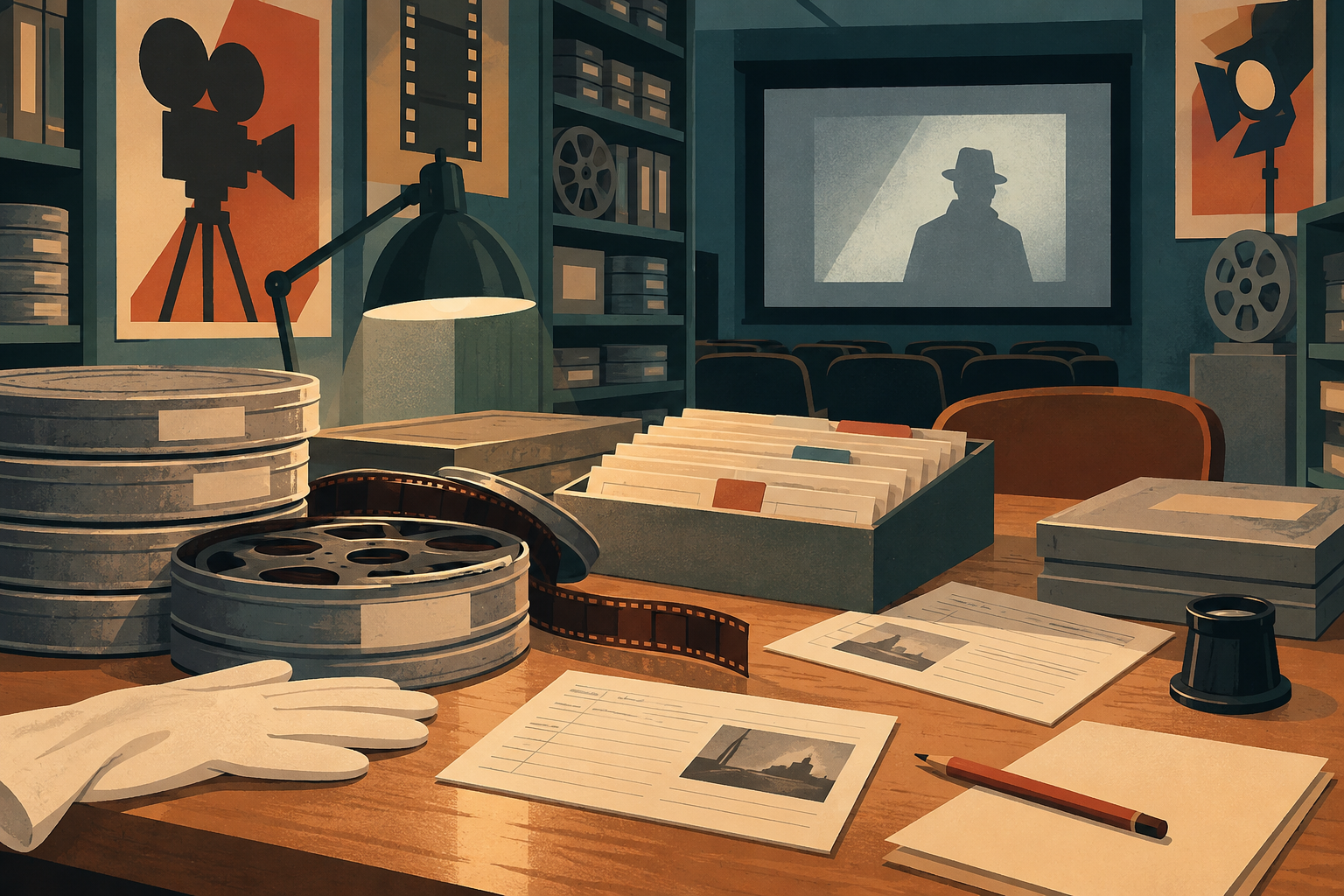
A museum is not simply storage. MAUTO says that its documentation centre supports cultural production, specialist training and collaborations. MAHI, the Museum of Motoring and History, likewise defines its project as educational and places twentieth-century motoring beside historical, economic, technological, social and cultural milestones. In both approaches, the exhibition is an interpretation supported by objects and records, rather than a neutral line of vehicles.
Conservation is not the same as making everything pristine
Conservation raises a familiar tension: protecting material authenticity while allowing visitors to understand and enjoy the object. MAUTO’s conservation and restoration centre states that it combines traditional techniques for period cars with advanced methods used for works of art, directing its work towards preventive conservation and authenticity.
This matters when viewing a classic from the outside. A shiny finish may be appealing, but it is not in itself proof of a better historical reading. The Costa Blanca Motor Museum makes a similar point by noting that traces of a vehicle’s previous life may be retained when they do not compromise structure, operation or conservation. Patina is therefore neither automatically a virtue nor a flaw; it needs context, professional assessment and explanation.
The work done by display
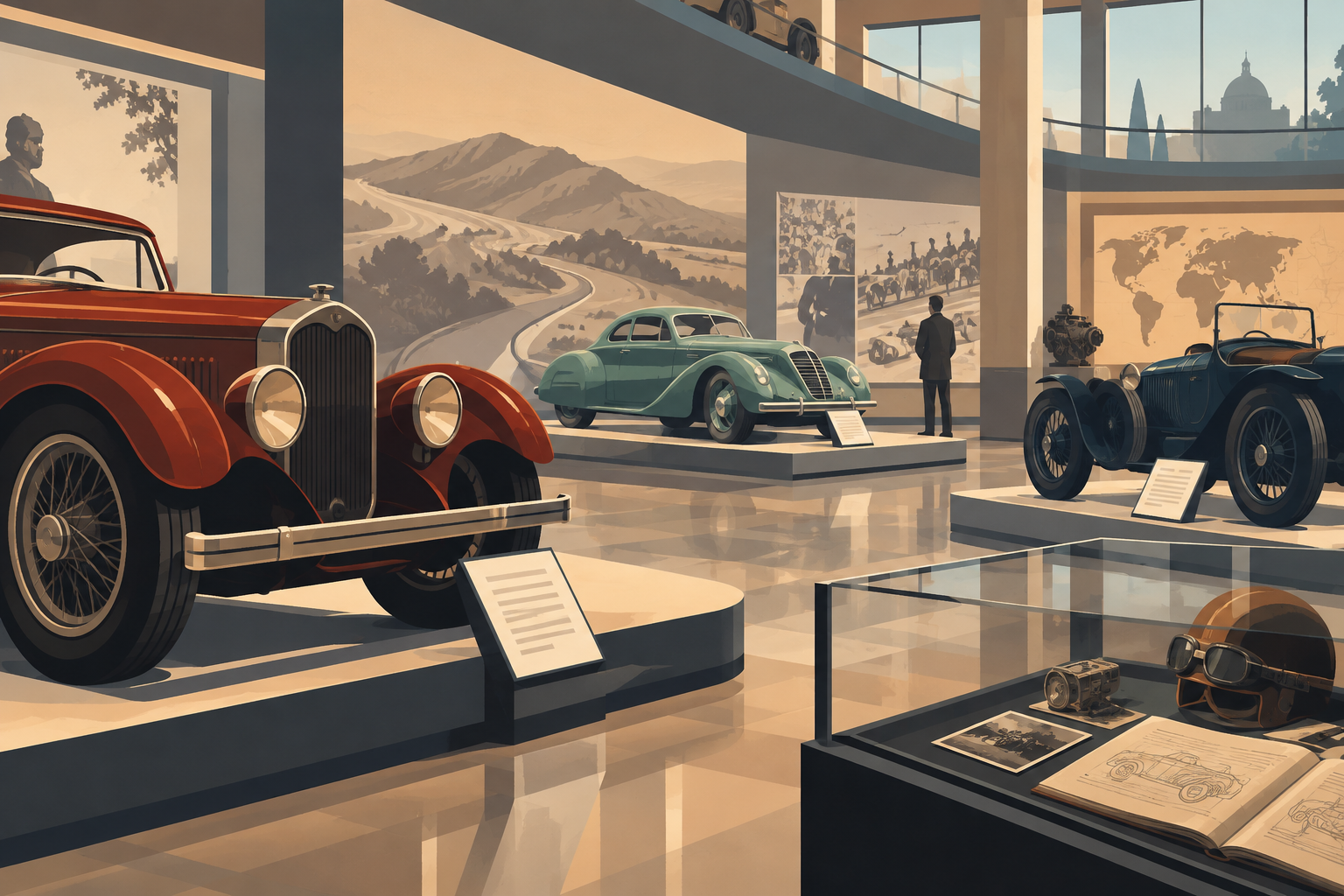
Museography determines how objects relate to one another. MAUTO refers to a scenographic presentation intended to guide visitors through historical moments, cultural and social movements, technical advances and scientific discoveries. MAHI proposes a didactic, interactive route. Both positions acknowledge that a car does not speak for itself: it needs labels, sequence, relationships and mediation.
That mediation is particularly valuable in mixed collections. Torrejón’s holdings originated in material from the former Spanish Army Driving School, created in 1931, and include vehicles, motorcycles, manuals and mechanical parts. Such a group can be read through technology, logistics, education or institutional history. None of these readings should be imposed without evidence, but the coexistence of different materials permits richer questions than one isolated automobile can provide.
Heritage for different audiences
Motor museums are also spaces for education and leisure. Fundación Jorge Jove presents MAHI as an exhibition, cultural, artistic, training, social and customary project, committed to recovering historical, industrial and cultural heritage. According to Spain’s Defence Cultural Heritage service, the Torrejón collection was inaugurated in 2007 and established visiting hours in 2013. Public access is part of the present life of such collections.
Accessibility, however, need not mean simplification. A vehicle may appeal through its silhouette while also prompting discussion of industrial production, maintenance, circulation, institutions or design. The strongest display does not require every visitor to be a specialist; it provides enough layers for an initial glance to become a more precise inquiry.
What remains to be verified
The available sources describe institutional missions and selected facts, but they do not establish a general history of every motor museum or the material condition of every vehicle. Nor do they provide complete biographies for individual objects. A museum’s stated mission must be distinguished from conclusions demonstrated through inventories, restoration records, archives and specialist scholarship.
Conclusion
Seeing a motor museum as an archive changes the visit. The automobile becomes more than an icon of speed, status or nostalgia: it is material evidence subject to selection, documentation, conservation and interpretation. Cars, motorcycles, engines, manuals and components become shared heritage when displayed in context and when the limits of knowledge are explained honestly. That is the difference between preserving objects and preserving their ability to tell history.
- Decade
- Contemporary
- Region
- Spain
- Level
- Enthusiast
- Entities
- Museum
Sources and references
- El MAUTO - MAUTOwww.museoauto.com · 2026-09-19
- Folleto de la Colección Museográfica del Automóvilpatrimoniocultural.defensa.gob.es · 2026-09-19
- MAHI, Museo de Automoción e Historia - Fundación Jorge Jovewww.fundacionjorgejove.com · 2026-09-19
- Museo del Motor - Costa Blancawww.museodelmotor.com · 2026-09-19
- Portada de la Colección museográfica del Automóvil | Patrimonio Cultural de Defensapatrimoniocultural.defensa.gob.es · 2026-09-19