Design begins before the gallery panel
When museum design is discussed, people often think first of a display typeface, an exhibition poster or a social-media campaign. The available evidence points to a wider field. Design affects how documents are ordered, how objects are described, how relationships between items are established and how context becomes understandable. It is not merely a finishing layer. It can shape the information that accompanies an item, the route taken by visitors and the story that becomes visible.
Research on museum graphic design in Valencia puts this plainly: graphic design is part of every museum’s visual context and also defines its promotion and advertising. This is useful because it avoids an artificial division between exhibition-making and communication. A label, visual identity, leaflet or interface may have different functions, yet all belong to a system mediating between institution, collection and public.
The archive as narrative infrastructure
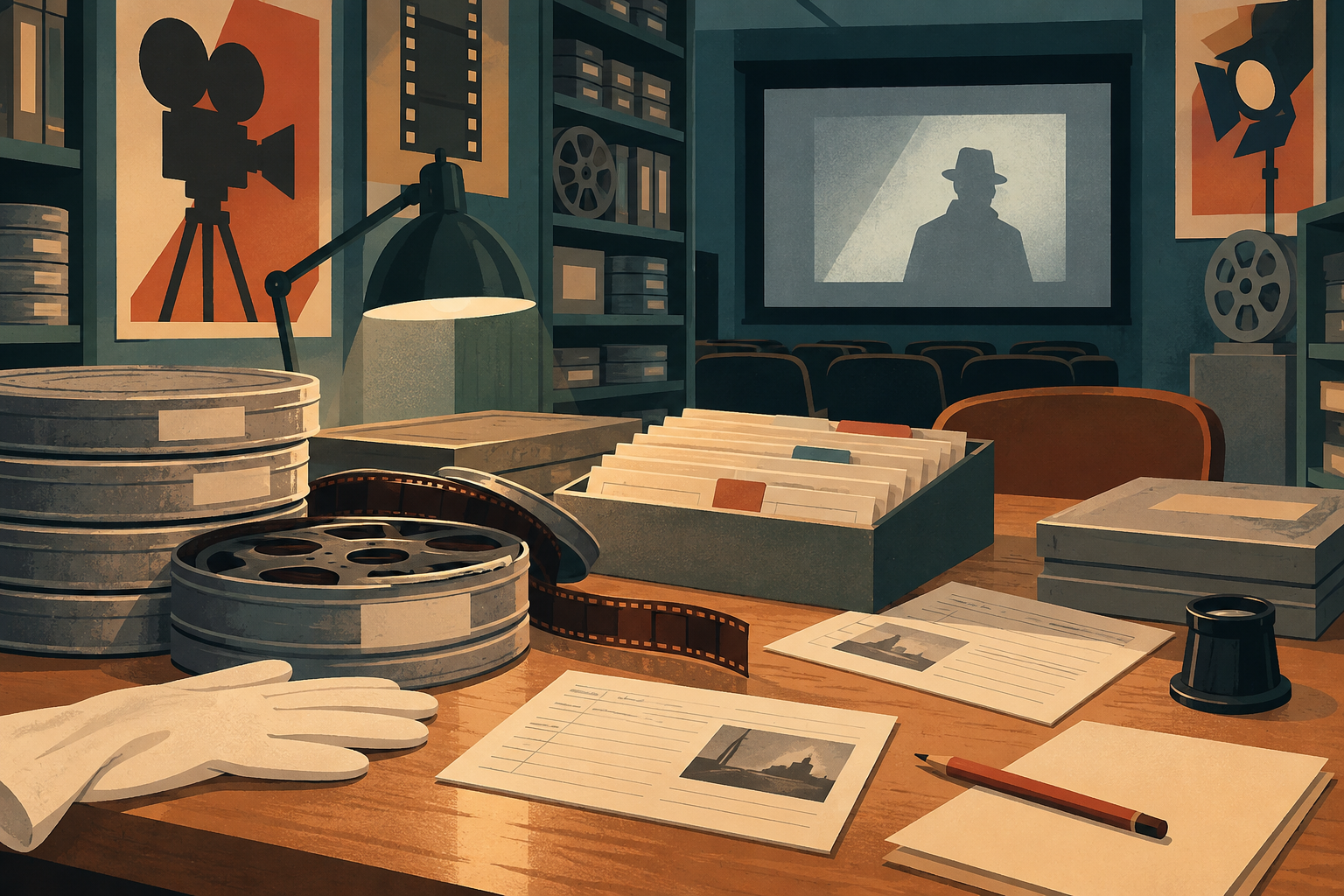
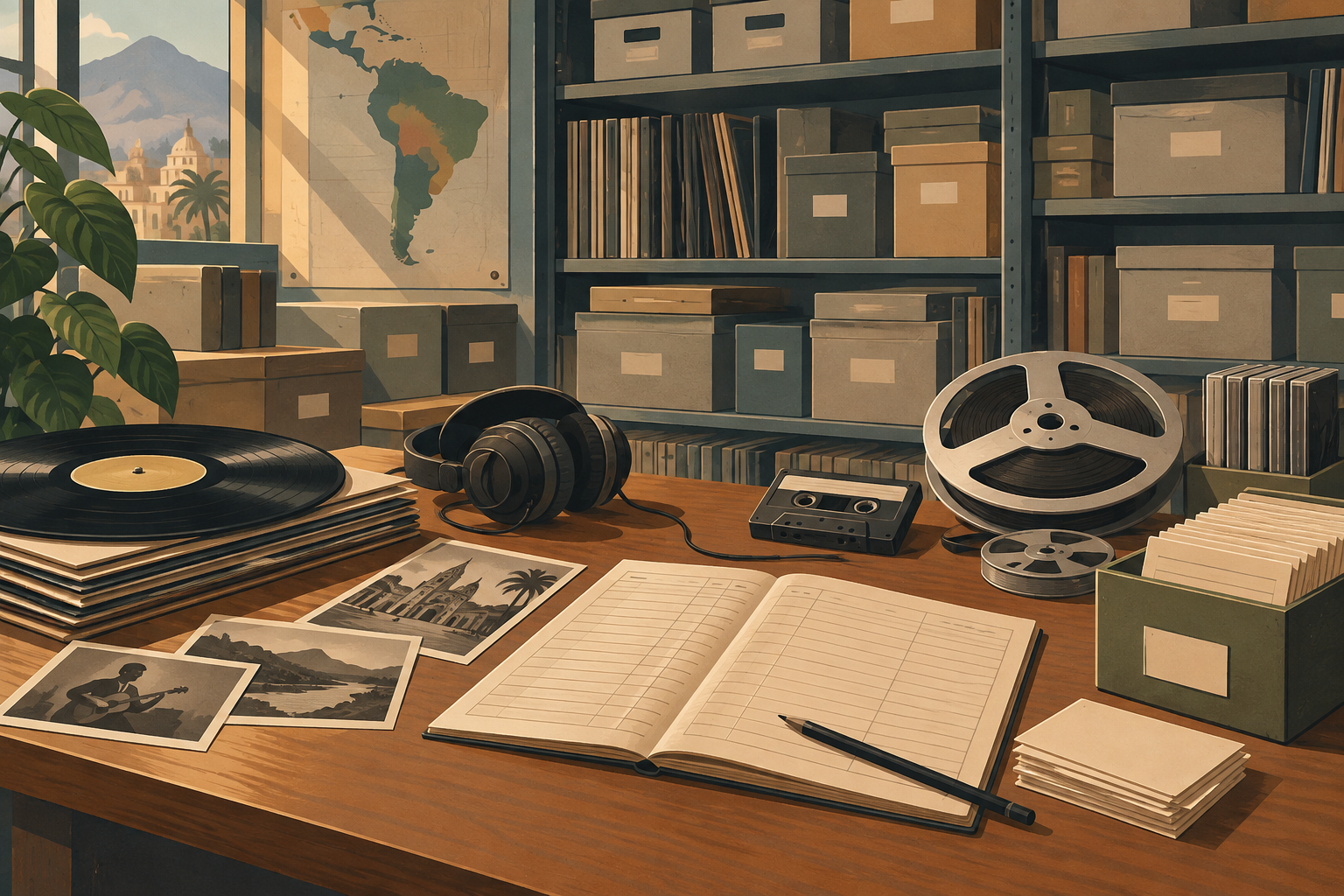
Museum records are not a neutral store of papers and images. The archival-management guidance consulted states that every museum should identify the document types it produces, have a classification scheme or series catalogue, use metadata that records the context of production, and maintain a schedule for appraisal and preservation. These are technical tasks, but their cultural consequences are clear. Without provenance, date, authorship, function or links to related records, an advertising image or printed design loses much of its interpretive capacity.
Museum documentation serves conservation, exhibition and public dissemination. That threefold purpose prevents the archive from being treated as an invisible appendix. A catalogue record does not replace an object, but it can retain details that an exhibition cannot fully present. Likewise, image digitisation can enrich cataloguing and make dissemination easier, while never removing the need to describe what has been digitised accurately.
Advertising: a document, not mere decoration
Advertising may enter the museum in several ways. It can be collected material, evidence of communication media, graphic matter attached to an exhibition, or a means of promoting the institution itself. The Museum of Advertising History presents advertising through print, radio, television, outdoor media, digital media and popular culture, and connects its preservation with education and cultural outreach. This does not establish how every campaign must be catalogued, but it supports a central point: advertising has formats, timeframes and social contexts that call for historical reading.
The risk arises when advertising is displayed only for visual appeal. An advertisement may matter as composition, but also as evidence of a medium, an imagined audience, a communication strategy or a particular circulation. Without provenance and without acknowledging documentary gaps, a museum may turn a historical record into a nostalgic surface.
Exhibition design arranges meaning
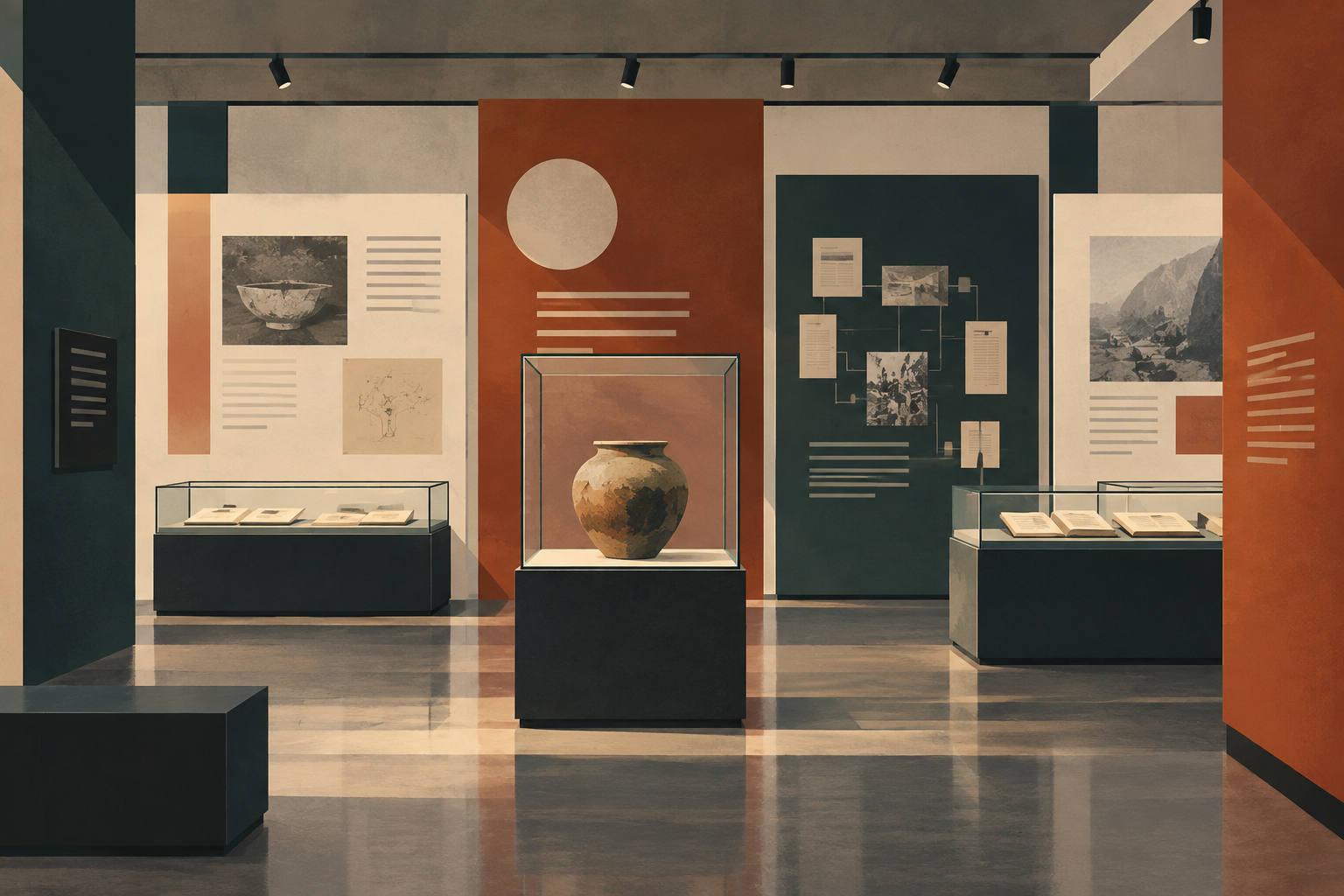
Museography does more than protect and position objects. The evidence on museum semiotics argues that artefacts are arranged according to criteria intended to convey narratives and build relationships, while museum space mediates between past, present and future. This requires attention to apparently minor choices: proximity between items, text scale, headline hierarchy, lighting, colour codes and the distinction between an original, a reproduction and interpretive material.
An exhibition can state that a poster belonged to a campaign without claiming more than its records support. It can also reveal missing information. Making uncertainty visible does not weaken the argument; it honestly marks what can be verified. For visitors, that transparency is part of learning how heritage knowledge is made.
Institutional promotion and critical looking
A museum’s graphic design affects its promotion, but promotion should not impose a single reading of collections. The academic analysis of Valencian museums notes that audiences receive particular impacts through design and that the visit can become a process of understanding the communicative possibilities of space. Graphic language directs attention; it is not harmless.
This creates an editorial responsibility. An effective identity can improve orientation and widen access for different audiences. It can also simplify, spectacularise or detach material from its context. The balance is not achieved by abandoning visual clarity, but by using it to distinguish documented facts, curatorial interpretations and mediation tools.
Preserve, describe, communicate
The sources agree that preservation requires continuity, organisation and access. Texts on museum archives recommend keeping holdings updated, preparing inventories, descriptions and guides, and applying basic preservation measures. The SEDIC article also notes that historical archives in state museums may still be little known and stresses accessibility to documentary heritage.
For design and advertising, the lesson is practical. Before turning an image, leaflet or campaign into a visual icon, ask what is known about it, how it has been described, what context remains and what interpretation the display adds. Design can make heritage more legible; the archive helps ensure that legibility does not become invention.
Conclusion
Design, advertising, archives and exhibition-making form a continuum. Advertising can be heritage; design can support orientation and thought; archives can sustain or correct an exhibition narrative. None of these layers is entirely neutral. Their value therefore increases when museums explain their criteria, preserve contexts and carefully distinguish the document, its interpretation and the public image being built.
- Decade
- Contemporary
- Region
- Spain
- Level
- Enthusiast
- Entities
- Museum
Sources and references
- Clip de SEDIC, Revista de la Sociedad Española de Documentación eedicionsedic.es · 2026-09-21
- instrucciones para la gestión y organización de archivos ...www.navarra.es · 2026-09-21
- Museo de la Historia de la Publicidad — Descubriendo la huella de la Publicidadmuseohistoriapublicidad.org · 2026-09-21
- Diseño Museográfico y Semiótica – EVE Museos + Innovaciónevemuseografia.com · 2026-09-21
- Diseño gráfico del museo como estímulo creativo en educación patrimonial | i2 Investigación e Innovación en Arquitectura y Territorioi2.ua.es · 2026-09-21
- Capítulo 10 - El museo como centro de investigación. La necesidad de documentar las piezas en el museo. Tendencias documentales actuales. Normalización y gestión integral del museo. - Fco Javier Zubiaur Carreñowww.zubiaurcarreno.com · 2026-09-21