An Image Is Not an Explained Object
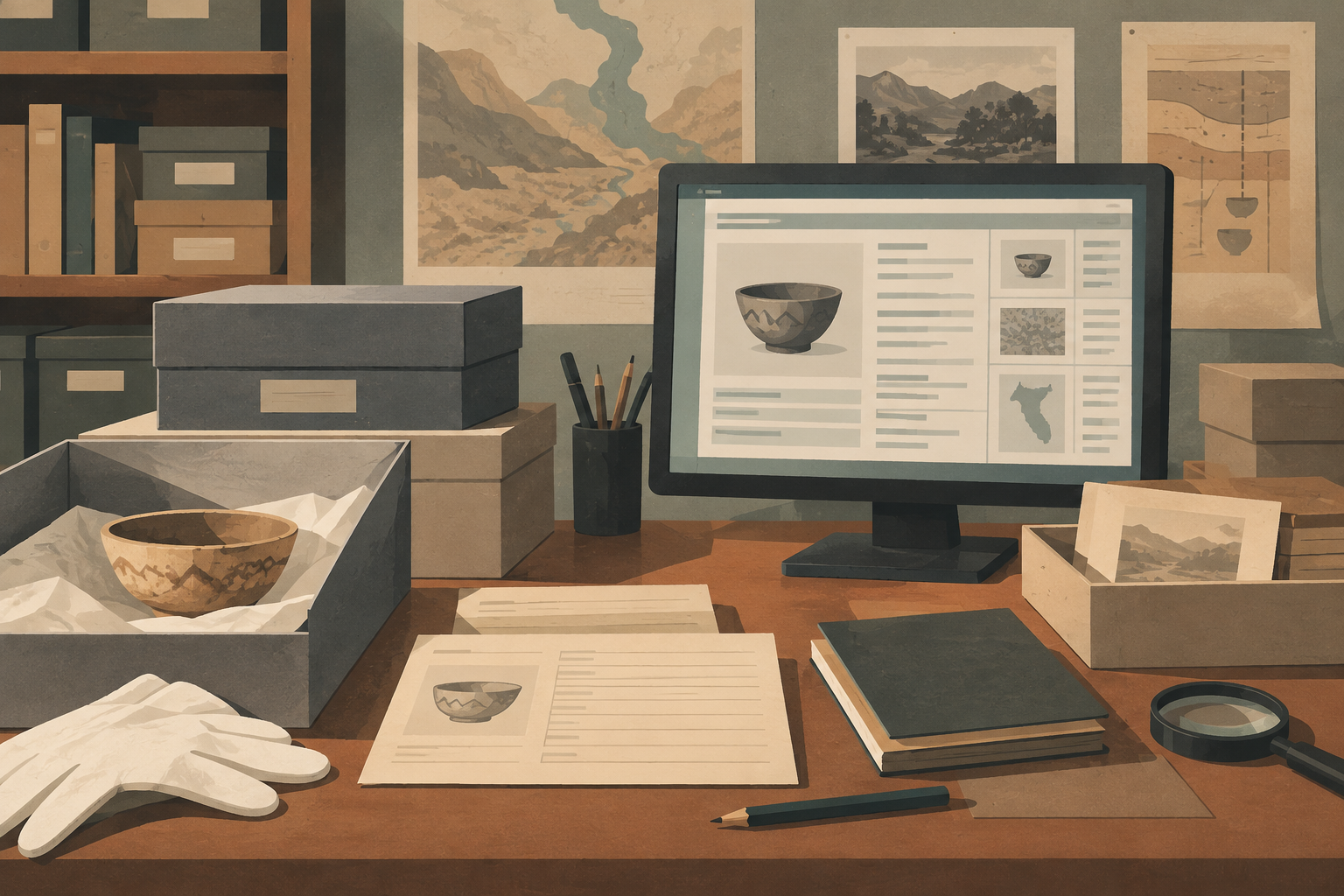
Digitising a collection is often understood as producing an image, scan, or record that can be consulted online. That is an essential part of the work, but it does not exhaust its purpose. Museum digital transformation is described as a gradual process involving internal management, inventory, public communication, and digital tools in an institution’s core functions. A digital copy creates genuine possibilities for consultation and dissemination; an isolated image, however, may become a record that is hard to interpret.
For a technology collection, this distinction matters. A device may retain its shape while losing what makes it understandable: who used it, the setting in which it circulated, the documents that accompanied it, whether it is complete, or what alterations it has undergone. An object does not speak for itself. Its ability to tell a story depends on the information connected to it.
Context Is Part of the Object
Navarra’s museum-archive management guidance states that archives hold documentation about objects and that this context is inseparable from them. The implication is straightforward: preservation is not merely keeping a physical support. It also means protecting the documents, data, and relationships that make identification possible.
In practice, a useful record must distinguish one item from similar ones. Archival literature cited by SEDIC stresses an unambiguous designation—such as a reference number, identifier, or control number—so each document can be located and differentiated. It also highlights contextual metadata: without it, a growing set of digital files can become difficult to retrieve and interpret.
This does not mean turning every item into an exhaustive biography or filling gaps with unverified recollections. Good documentation does the opposite: it separates what is known, what is cautiously attributed, and what remains unknown. For technological heritage, that honesty is especially useful when boxes, manuals, receipts, or records of use are absent.
Wider Access, Not Replacement
The consulted sources agree that digitisation can improve access to collections and contribute to the conservation of fragile originals. A record available online can support research or teaching without requiring an object to be handled for every consultation. Digital representations can also describe, compare, and share holdings that would otherwise receive limited visibility.
Access, though, is not equivalence. A photograph does not necessarily preserve reverse sides, materials, dimensions, wear, or relationships with other documents. Nor does it ensure that a description will survive a platform change, unstable terminology, or an unmaintained database. Digital value relies on sustained processes of updating, organisation, preservation, and access.
Digitisation should therefore be understood as a layer of preservation and mediation, not as a final release from responsibility for the original. The physical object, its archive, and its digital representation serve different purposes and need to remain connected.
From Catalogue to Digital Narrative
Digital narratives can bring together text, images, audiovisual material, and interaction to make a collection’s cultural setting more understandable. EVE Museos notes that such tools have expanded possibilities for education, access, and visitor experience, while community participation can enrich digital archives with testimonies and multimedia material.
That possibility requires editorial judgement. An appealing interface does not replace documented provenance, and a participatory story does not automatically turn every contribution into a verified fact. The challenge is to present layers: the catalogue datum, the available source, the curatorial interpretation, and, where appropriate, a clearly attributed testimony. The screen then does not erase uncertainty; it makes it readable.
Research on new-generation museums also warns that these technologies are not an unqualified benefit. That caution is useful. A digital display can bring a collection closer to its audience, yet it should not let browsing speed flatten the nuances retained by an archive.
A Framework for Retro Collections
For devices, formats, and software in a retro collection, a sound starting point joins three levels: the object, its stable identification, and its preserved context. Images and descriptions should be accompanied, where evidence exists, by information about provenance, condition, associated components, documentation, and links to other holdings. Gaps deserve recording as well.
Mediation follows: a digital selection can explain why a device matters without treating it as a decontextualised icon. The outcome is not a total replica of the past—no database can promise that—but a more responsible route to the traces that have reached the present.
Conclusion
Technology can strengthen a museum’s preservation mission, but it does not automate it. Digitisation creates new routes of access and reduces some handling needs; archiving, identification, and contextualisation ensure that such access retains meaning. In technology collections, where everyday use and accompanying documents often disappear before the device itself, the difference is fundamental: preserving the object is necessary; preserving the relationships that explain it is what makes it understandable.
- Decade
- Contemporary
- Region
- Global
- Level
- Enthusiast
- Entities
- Museum
Sources and references
- ARCHIVOS DE LOS MUSEOS ESTATALES - | Ministerio de Culturawww.cultura.gob.es · 2026-09-20
- Conservación del Patrimonio Cultural y Narrativas Digitales - EVE Museos + Innovaciónevemuseografia.com · 2026-09-20
- Breve Historia de la Transformación Digital en Museos - EVE Museos + Innovaciónevemuseografia.com · 2026-09-20
- Clip de SEDIC, Revista de la Sociedad Española de Documentación eedicionsedic.es · 2026-09-20
- instrucciones para la gestión y organización de archivos ...www.navarra.es · 2026-09-20
- MUSEOS DE NUEVA GENERACIÓN: LA PANTALLA ...www.ugr.es · 2026-09-20