A copy does not replace the record
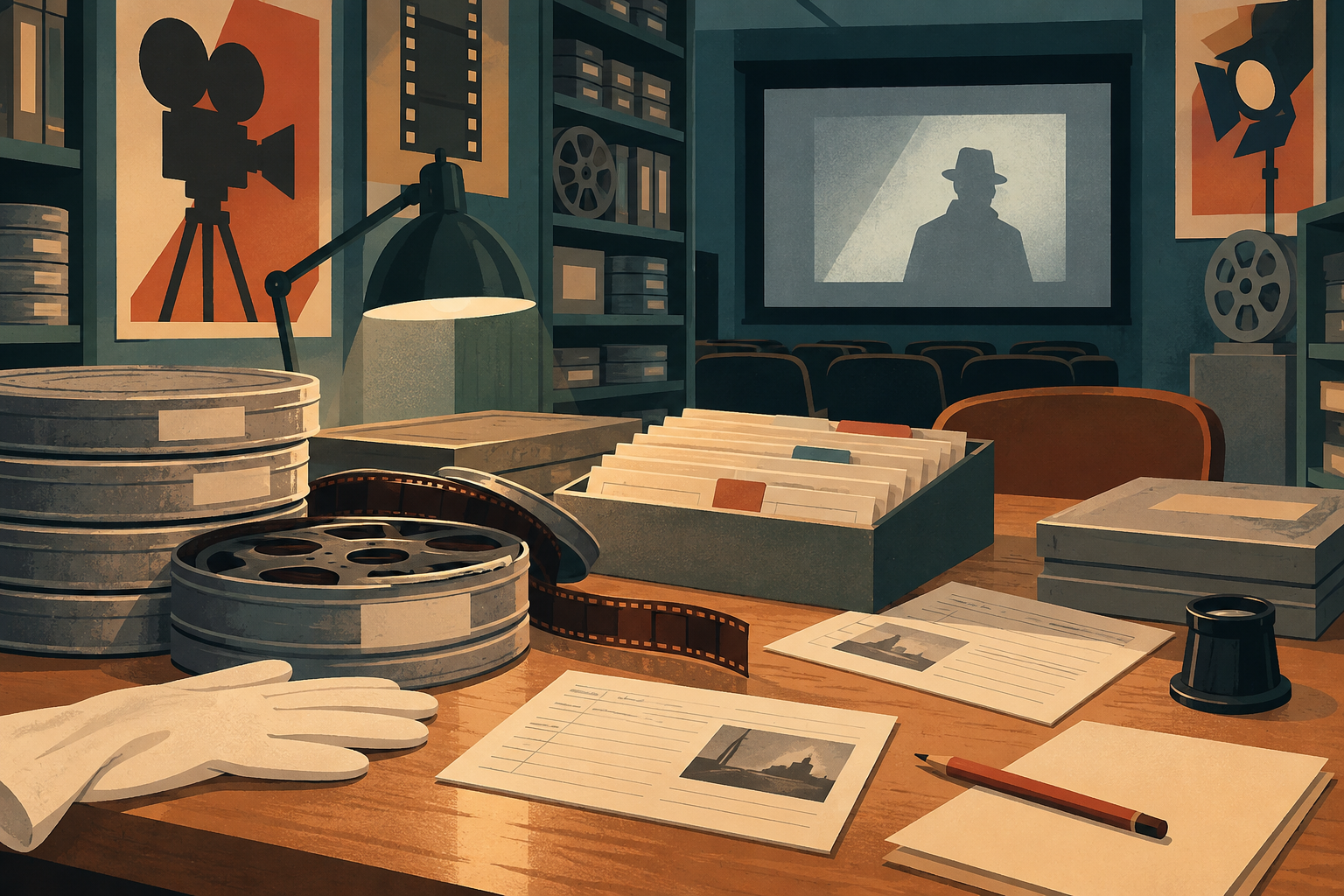
Digitisation often evokes a high-resolution photograph, a three-dimensional scan or a database that can be consulted from anywhere. These are valuable tools, yet none of them, on its own, is equivalent to preserving an object or explaining why that object matters. Archival documentation linked to a piece—its identification, origin, movements, decisions made about it and relationships to other materials—is part of what makes it intelligible.
Guidance on museum archives from Navarra states this especially clearly: archives hold documentation on objects that forms their context and is inseparable from them. This challenges a common simplification. There is not a wholly self-sufficient object on one side and a dispensable administrative record on the other. If they are irreversibly separated, the future ability to interpret the item is weakened.
The verifiable curiosity is therefore less spectacular than a virtual reconstruction but more decisive: in digital preservation, an image without context can remain visible while becoming difficult to use as cultural evidence.
First finding: digitisation creates a representation
EVE Museos + Innovación defines collection digitisation as the creation of a digital representation of an object, document, image, idea or concept. The wording matters. A representation is not the original, and it does not necessarily remove the need to care for it. It also requires asking what, precisely, has been represented: the front of a photograph, one view of an object, a group of documents, a catalogue description or a technical record?
That distinction is particularly useful for historic devices and technologies. An image may show a device’s casing but fail to document its accessories, operating condition, markings underneath, earlier repairs or place within a collection. An inventory may name the device but not preserve its appearance. The two records complement one another; neither should be presented as an automatic substitute for the other.
The process is not merely technical, either. EVE Museos notes that museums’ adoption of computing and the internet was long and gradual rather than instantaneous. This is a reason to question accounts in which digital tools appear as a complete, sudden solution. Institutions transform inventory, research, exhibition and communication procedures at different speeds and with different resources and priorities.
Second finding: an identifier makes return possible
SEDIC’s journal highlights an apparently modest operation: assigning each archival document a unique designation—a number, shelfmark, identifier or control number—so it can be located and differentiated. It is quiet infrastructure, but it supports essential tasks: preventing confusion, linking digital copies to physical materials and recovering information later.
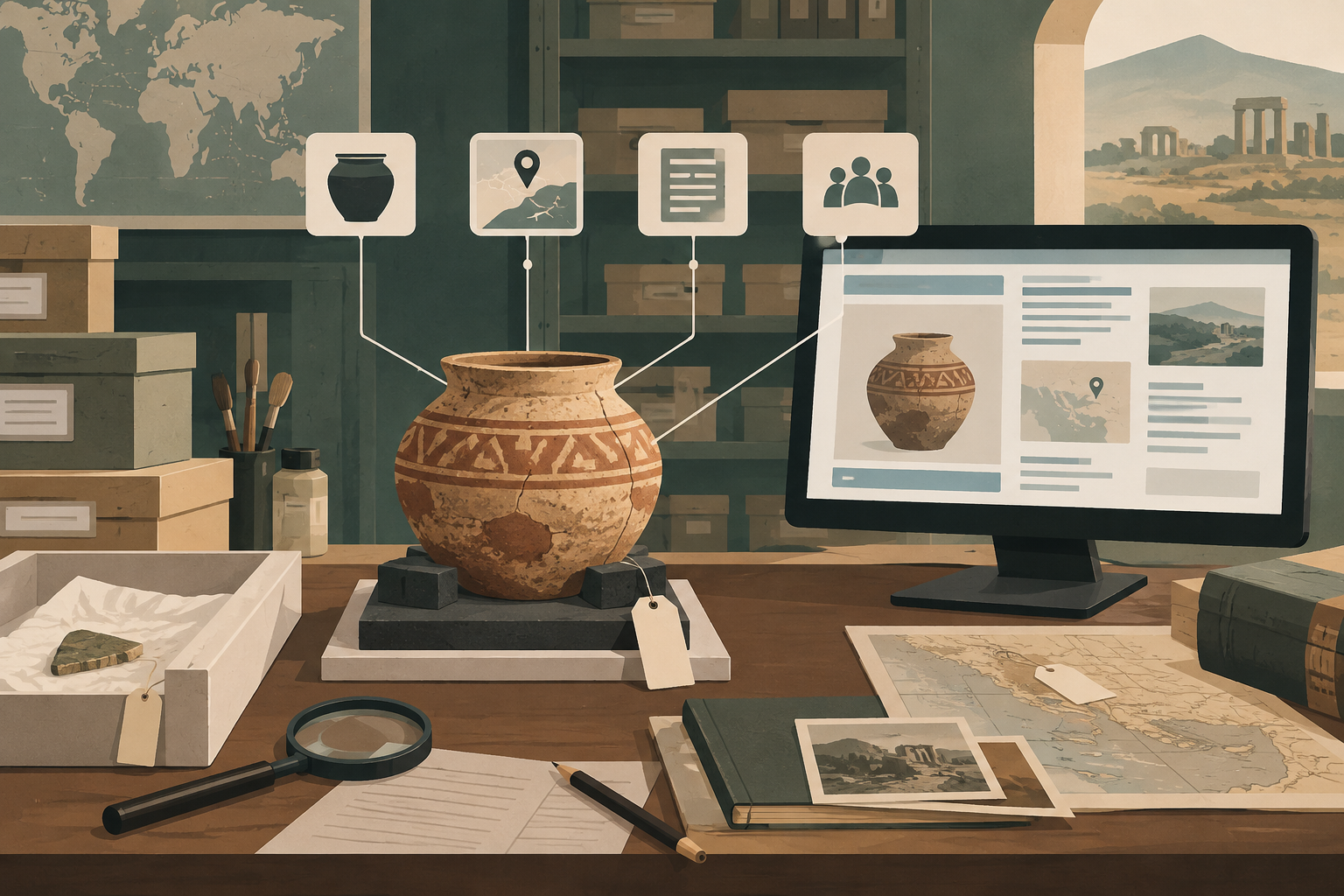
The requirement is especially apparent in a technological collection. Objects can look alike, have closely related versions or contain interchangeable components. An informal name or an isolated photograph may not be enough to establish what is being seen. An identifier does not solve every descriptive problem, but it provides a stable anchor for connecting images, reports, locations and acquisition documentation.
SEDIC also stresses the value of contextual metadata for finding digital images in the future. The lesson is not that every imaginable datum must be recorded. It is that minimum data must answer a practical purpose: making material distinguishable, retrievable and connected. A digitisation project that produces thousands of files without this structure may increase short-term visibility while creating a tangle that is hard to interpret.
Third finding: access and conservation are related, not identical
Several supplied sources connect digitisation to conservation and broader access. EVE Museos says that a digital museum can integrate digital tools into collection, conservation, research, exhibition and communication functions. Diario de Pozuelo argues that databases can store history, conservation and context, and that digital copies may help protect fragile pieces from unnecessary handling.
Those claims call for an important distinction. Making a copy available for consultation may reduce the need to handle an original; that differs from claiming that a digital file preserves every property of the original by itself. Physical documents, objects and material traces retain values that a reproduction can describe but cannot wholly absorb.
Sound editorial practice does not set the two goals against each other. Digital access can broaden research and public interpretation; material conservation seeks continuity for original supports; documentation connects both tasks. When a platform presents an image with an identifier, description and collection links, it is not adding pointless bureaucracy. It is providing the conditions for a more responsible reading.
Fourth finding: archives produce knowledge too
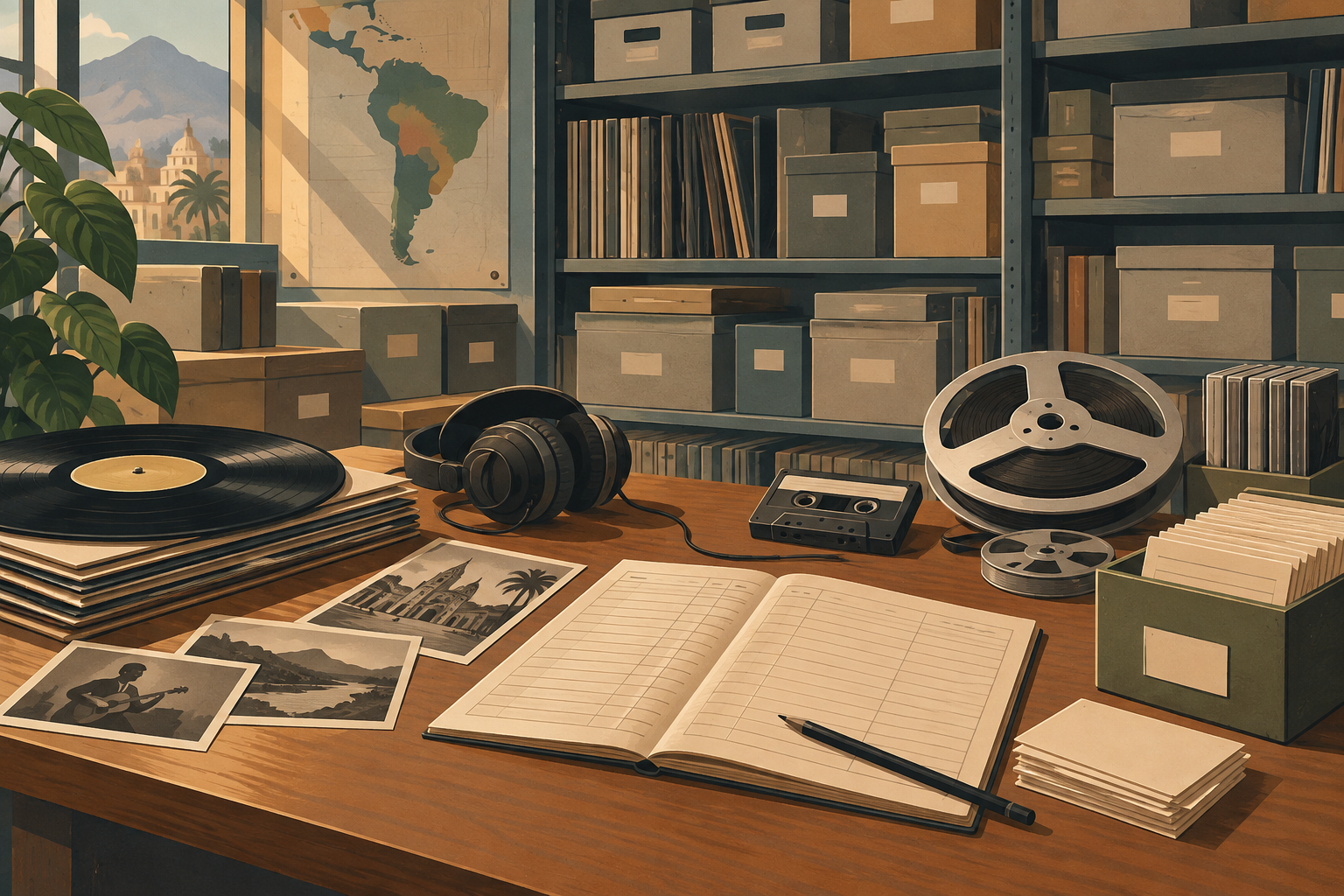
The Censo-Guía de Archivos de España e Iberoamérica describes the Arkheia Documentation Centre, linked to MUAC-UNAM in Mexico City, as a hub conceived for preservation, collection, study and dissemination. Its remit includes paper, moving image, photography, electronic technologies and evidence of material culture. That wording is revealing because it does not reduce an archive to a passive store.
The same record mentions identification, organisation, description, automation and dissemination. These verbs describe a chain of work. Keeping material is insufficient if it cannot be recognised; recognition is insufficient if it cannot be related; relationships lose part of their public value if access is not considered. Automation appears as a planning stage, a reminder that digital infrastructures have schedules, limits and institutional choices.
For RetroPause, this view makes it possible to consider an old device without turning it only into a nostalgic icon. The device may be an item of material culture, but its manual, a photograph of its use, an accession note or a connection to audiovisual records can substantially change what can be said about it. Context does not cool memory; it makes memory testable.
Fifth finding: interfaces should narrate without erasing uncertainty
Digital narratives can combine text, graphics, audiovisual material and interaction. EVE Museos argues that such forms can aid understanding of cultural context and widen access. These are genuine possibilities, but they do not authorise filling gaps with an appearance of certainty. An appealing interface can make an insufficiently documented story highly persuasive.
It is therefore useful to distinguish on screen between recorded facts, attributions, hypotheses and unknown data. It is also useful to retain the reference that allows users to return to the record and, where appropriate, the original material. Visual appeal and traceability are not enemies: a clear digital experience can explain why data are missing, which identification is provisional and which documentation supports a claim.
The conclusion is straightforward, though it requires sustained work. Digitisation expands the possibilities for consultation, comparison and dissemination. Preserving context ensures that those possibilities do not collapse into detached images or stories with no documentary anchor. For museums holding technology and material culture, the challenge is not to choose between object and screen. It is to design durable links between them through identifiers, metadata, archives and explicit limits on what can truly be verified.
- Decade
- Contemporary
- Region
- Other regions
- Level
- Advanced restoration
- Entities
- No linked entities
Sources and references
- El papel de los museos en la era digital: ¿estamos preservando la historia o perdiendo contexto?www.diariodepozuelo.es · 2026-09-17
- Breve Historia de la Transformación Digital en Museos - EVE Museos + Innovaciónevemuseografia.com · 2026-09-17
- Censo-Guía de Archivos de España e Iberoaméricacensoarchivos.cultura.gob.es · 2026-09-17
- Clip de SEDIC, Revista de la Sociedad Española de Documentación eedicionsedic.es · 2026-09-17
- instrucciones para la gestión y organización de archivos ...www.navarra.es · 2026-09-17