Heritage That Does Not Fit on One Medium
A recording, a score, a concert programme or the files of a musical institution may look like very different objects. Yet all can document musical life. The scholarly and institutional material gathered here converges on a key point: a musical document is cultural and intellectual heritage, but it gains meaning through its connection to a particular society, period and set of practices.
That distinction matters to any retro collection. Keeping an object does not automatically preserve what it meant. An undated sleeve, an unidentified tape or a score detached from its provenance may survive physically while losing much of its power to tell a story.
Documents, Sound and Social Traces
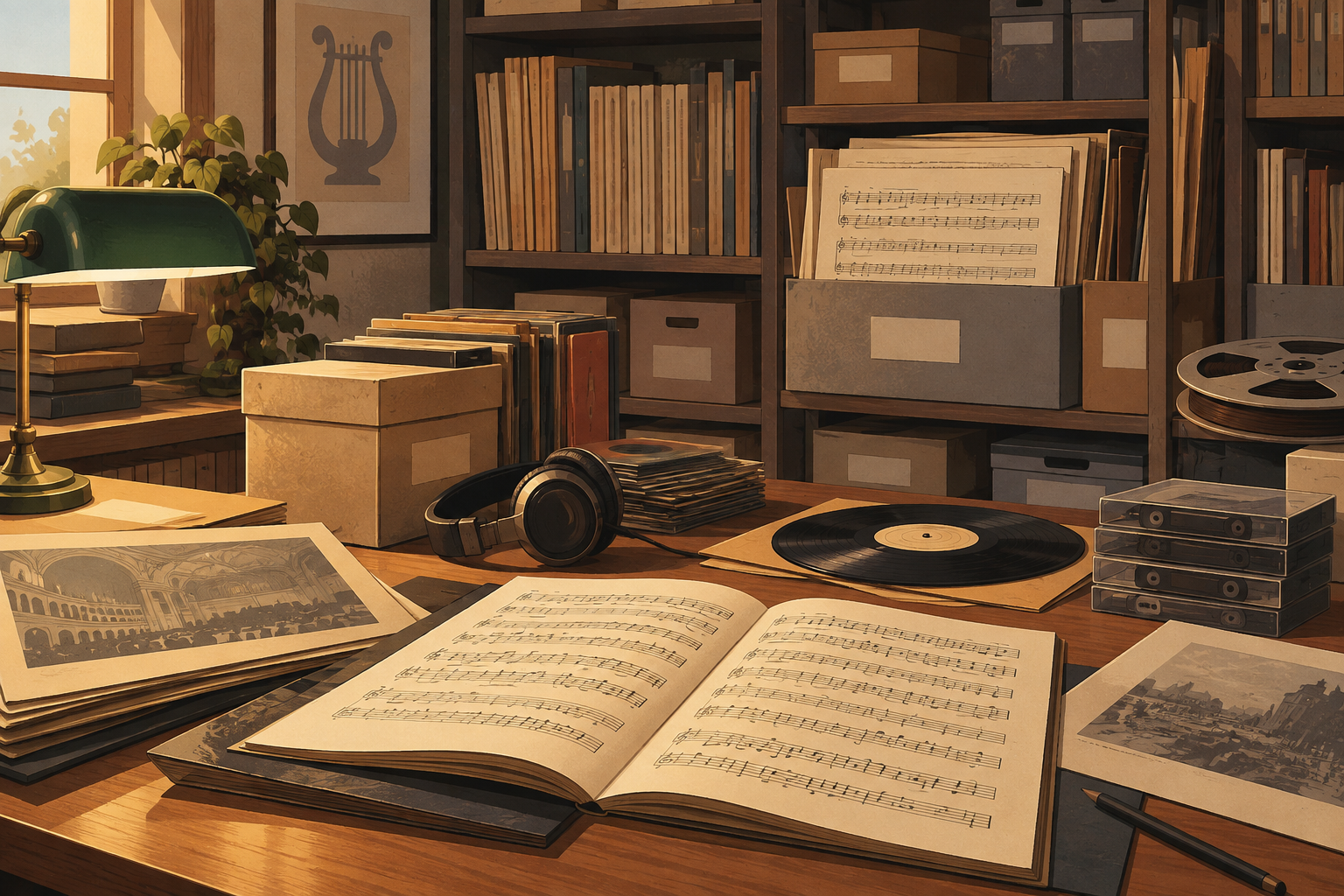
Bibliopos describes the musical document as a means of preserving and disseminating knowledge as well as a written testimony of culture. It also notes that musical materials may be classified through different criteria. Heritage therefore has no single representative object: notated music, book-based documents, sound materials and audiovisual material coexist.
Research in Cuadernos de Música Iberoamericana challenges overly rigid divisions between historical musicology and ethnomusicology, and between writing and orality. Editorially, the implication is straightforward: a song, score or recording should not be presented as though it existed apart from performers, circulation networks, audiences and uses.
Context Must Be Preserved Too
The University of Navarra notes that the contours of musical heritage are not always clearly defined, which complicates preservation and dissemination. Its stated priorities include cataloguing and digitising historical holdings according to condition and singularity, and preserving recent holdings: contemporary compositions and records from choirs, bands, orchestras, theatres, auditoria and musical events.
This calls for a wider view. The archive of a concert is not merely its audio, where such audio exists: it may include posters, programmes, photographs, correspondence, lists and production paperwork. These items do not all have equal value, nor should they be retained without judgement. But fully separating them can erase the connections that explain what happened, who took part and how music circulated.
Institutions and Communities
SIBEtrans describes musical-heritage stewardship as a field made up of libraries, archives, museums, foundations and private individuals. It places cataloguing, digitisation, instruments and oral tradition in the same discussion, while recognising that they require different forms of care.
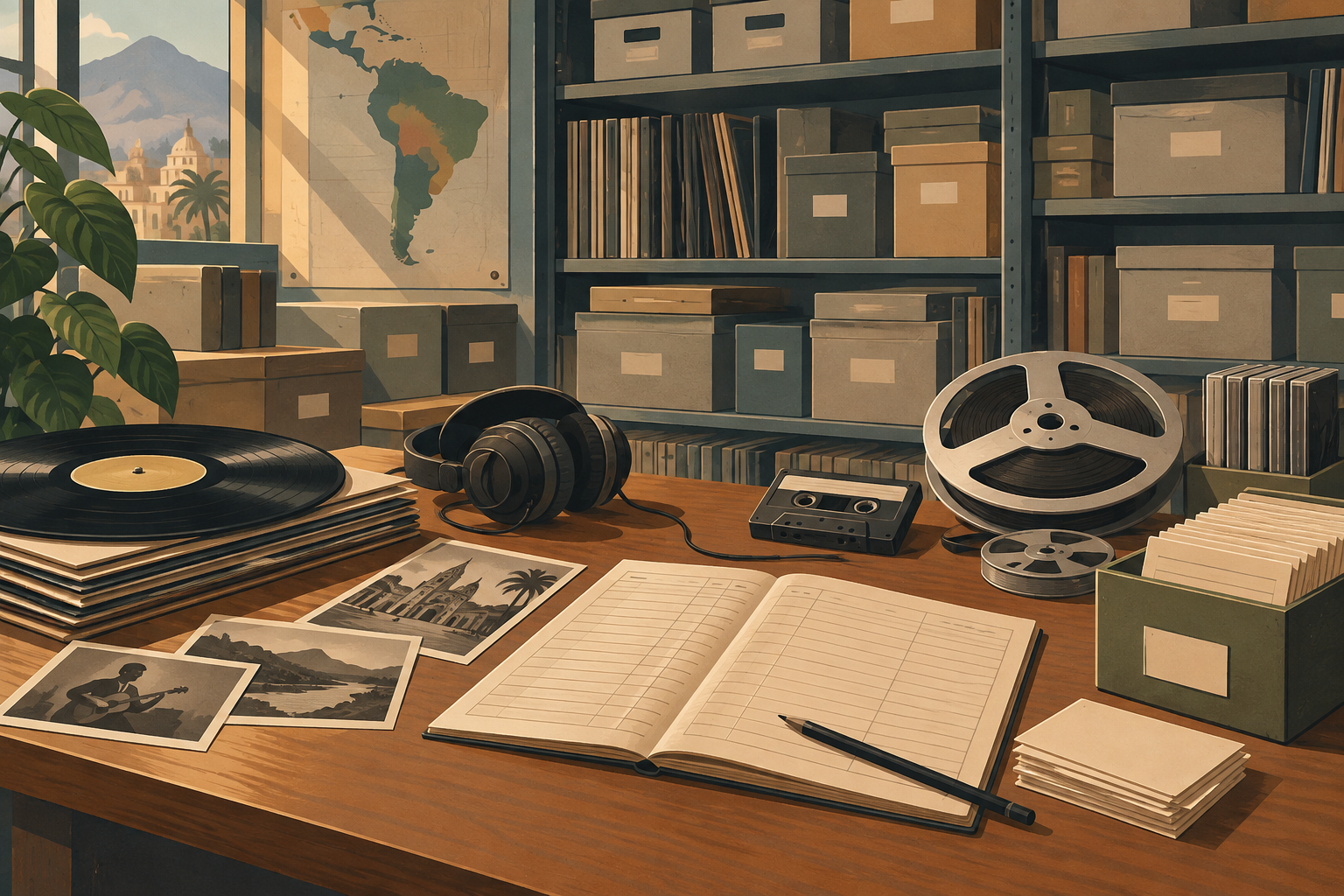
Mexican Censo-Guía entries show why specific institutions belong to the story. The INAH Sound Archive records a history tied to recordings of Indigenous music and languages for research, teaching and dissemination; its entry mentions the creation of the Department of Oral Music and Literature Studies in 1982. The Museo Universitario del Chopo, inaugurated in 1975, documents a trajectory associated with 1980s underground cultures, the Tianguis de la Música, and experimental and alternative practices.
These are not interchangeable examples. They show that an archive may reflect anthropological research, cultural programming, urban sociability or musical circulation according to its origin and purpose.
Cataloguing Makes Material Readable
Cataloguing makes material findable and connectable; it does not, by itself, provide a complete account. The supplied sources stress the relationship between conservation, cataloguing, digitisation and dissemination. Where documented, provenance, dates, people or institutions, carrier type and access restrictions should be recorded. Verifiable information should also be distinguished from recollections, oral attributions and later interpretations.
Digitisation can broaden access and support preservation, but it does not remove the need for description. A digital archive with vague names or no context reproduces the opacity of a physical store room. Nor does digitisation mean that every item may be freely shared: rights and access conditions require case-by-case checking.
Musical Memory, With Clear Limits
The central lesson is less spectacular than a rare artefact, but more useful: preserving music means preserving relationships—between object and use, document and community, institution and period. The material consulted supports that broad view. It does not support a universal formula or the assumption that every musical trace has identical value.
For RetroPause, the music archive can be understood as a cultural technology of memory. Its value lies not only in storing old media, but in keeping them identifiable, consultable and contextualised. When that chain breaks, music may remain as sound or paper, yet the world it helped build becomes far harder to understand.
- Decade
- Contemporary
- Region
- Global
- Level
- Enthusiast
- Entities
- No linked entities
Sources and references
- Acervos de Documentos musicales - Bibliopos: Biblioteca de recursos para Bibliotecarios y Opositoreswww.bibliopos.es · 2026-09-19
- El patrimonio musical en la convergencia entre musicología y ...revistas.ucm.es · 2026-09-19
- Centro de Información y Mediateca del Museo ...censoarchivos.mcu.es · 2026-09-19
- El patrimonio musical: de la conservación a la difusión - Cátedra de Patrimonio y Arte Navarro - Universidad de Navarrawww.unav.edu · 2026-09-19
- por hacer cubierta La gestión del patrimonio musical.www.sibetrans.com · 2026-09-19
- Censo-Guía de Archivos de España e Iberoaméricacensoarchivos.mcu.es · 2026-09-19