An object that has been treated has two histories
A collection does not preserve objects alone. It also preserves the decisions made so those objects can continue to exist, be studied and reach the public in reasonable condition. This may sound administrative, yet it changes how restoration is understood. An unrecorded intervention may improve an item’s appearance for a time; a documented intervention leaves a chain of information explaining what was found, what was decided and what may be reassessed later.
The institutional evidence assembled for this article comes chiefly from Spanish museums and public bodies. It does not describe the restoration of a particular console, home film or toy, so it cannot justify transferring material techniques from one field to another. It does, however, support a broader lesson: preservation is not simply making something “like new.” It means managing change, risk and knowledge responsibly.
From lists to reports
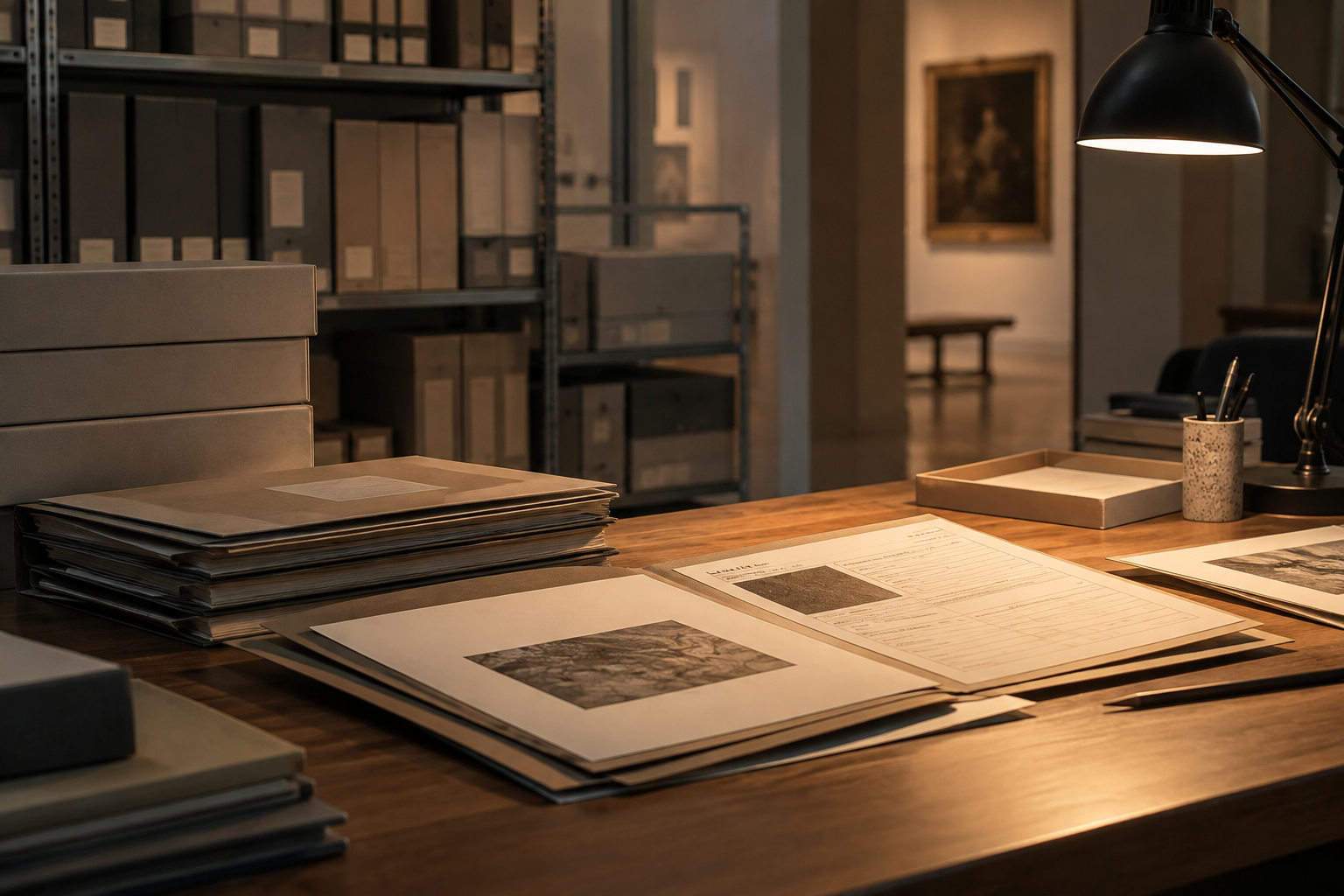
The Prado Museum’s reference text identifies an important administrative shift in its restoration history: reports began to be written systematically for each treated work, going beyond simple lists. It also states that these reports were organised in a dedicated archive, while the Boletín del Museo del Prado, created in 1980, became a channel for restoration work and Technical Department studies.
The distinction matters. A list says little more than that something happened. A report can preserve the work’s identity, its condition on arrival, the nature of the problem, observations made and the scope of the action. The source does not offer a universal form or establish that every museum worked in the same way. It does clearly document an evolution: restoration moved from an activity leaving only a brief trace to one integrated into an institutional memory system.
For anyone interested in material culture, this is crucial. Patina, a label, an older repair or a replaced part may all belong to an object’s biography. Without a record, later generations see only the final result and must guess at the process. With documentation, a collection can distinguish observed information, technical decision and later interpretation.
Preventive conservation: intervene less, understand more
The National Museum of Natural Sciences explains that its work on documentary heritage includes ongoing measures: controlling light damage, preparing loan-condition reports, writing installation protocols, and cleaning and maintaining storage and exhibition areas. Restoration of particularly damaged works is presented as a punctual action prompted by time, handling or the inherent fragility of the support.
The same institution links this work to ICOM-recommended criteria: documentation, reversibility, minimal intervention and the stability of products used. These should be understood as institutional working principles, not a domestic recipe. The evidence provided does not teach treatments or identify materials suited to retro consumer goods. It does establish a hierarchy: observe before intervening; document before altering; and, where possible, limit the extent of alteration.
That logic shifts attention from spectacular repair to everyday care. Replacing materials on display to control light damage, monitoring rooms and stores, or preparing loan reports may be less dramatic than a completed restoration, but they are part of a collection’s real life. Conservation begins well before an item reaches a workshop.
Archives, research and public responsibility
Spain’s Ministry of Culture lists a publication, Archives for the History of Restoration, gathering papers presented during a conference cycle held at the National Historical Archive in October and November 1981. The listing alone cannot reconstruct every paper or assign a shared thesis to them. It does confirm that archives were explicitly treated as a relevant subject in restoration history.
The Prado’s digital book on the institution’s restoration history describes research based chiefly on archival documentation from the museum’s foundation as the Royal Museum of Paintings. The same relationship appears again: documents are not ornamental additions to collection history, but one of its sources of knowledge.
Its public role makes this necessary. The MNCN describes its documentary holdings as scientific heritage, kept, catalogued and managed for research and public communication. When an institution lends, displays, studies or treats an item, information travels with the material. Traceability is not bureaucracy added to conservation; it is necessary if knowledge is not to vanish together with the people who carried out an action.
What this evidence does — and does not — allow us to transfer
The Spanish Cultural Heritage Institute lists subjects including the analytical characterisation of metals and corrosion products, cleaning, corrosion inhibitors and conservation in temporary exhibitions. This scope shows that conservation-restoration includes research, materials, display and planning. It also warns that material problems require analysis and context, not automatic solutions.
It would not be rigorous to turn these references into advice for cleaning, polishing, dismantling or treating collectibles. The supplied sources do not validate specific procedures for electronic devices, audiovisual media, plastics, printed paper or domestic textiles. Nor do they establish that a commercial product is appropriate for a given piece. The limit matters: responsible writing does not fill documentary gaps with risky instructions.
The practical conclusion is more modest and more useful. A first preservation act can be descriptive: identify the object, date photographs of its visible condition, note known provenance, record observable damage and separate facts from assumptions. This does not replace professional diagnosis, but it prevents information from being lost before a decision is even made.
The archive as part of the object
Restoration is often judged by what the eye can see. The institutions cited here invite a fuller view. The Prado demonstrates the value of systematic reports; the MNCN describes conservation combining monitoring, prevention and occasional intervention; the IPCE reflects the field’s technical and scientific range; and publications about archives remind us that professional history is reconstructed through documents.
For RetroPause, the legacy of these sources is not a promise to return every object to an ideal state. It is an invitation to view collections as combinations of material and information. An item preserved without its history may remain appealing; an item preserved with a clear record can also remain understandable. That understanding is a durable form of conservation.
- Decade
- Before 1950
- Region
- Spain
- Level
- Enthusiast
- Entities
- Museum, Archivo Histórico Nacional
Sources and references
- Publicaciones sobre Conservación-Restauración y Gestión del Patrimonio - Instituto del Patrimonio Cultural de España | Ministerio de Culturaipce.cultura.gob.es · 2026-09-21
- Historia de la restauración en el Museo Nacional del Prado (edición digital)tiendaprado.com · 2026-09-21
- Los archivos para la historia de la Restauración - Ministerio de Culturalibreria.cultura.gob.es · 2026-09-21
- Restauración de Colecciones Documentales | Museo Nacional de Ciencias Naturaleswww.mncn.csic.es · 2026-09-21
- Restauración en el Museo del Prado. - Museo Nacional del Pradowww.museodelprado.es · 2026-09-21