An archive is not a storehouse of neutral memories
When everyday life is discussed in a museum, domestic utensils, clothing, toys, or furniture may come to mind first. Yet a decisive part of that history remains in the documents that accompany collections and institutions. The Historical Archive of Spain’s National Archaeological Museum describes its records as written testimony to the museum’s own life since its founding in 1867. This is useful because it shifts the question: an archive tells us about the societies and objects under study, but also about those who gathered, described, displayed, and preserved them.
That distinction matters for responsible interpretation. A document does not by itself reproduce a whole period. It is a trace produced in specific circumstances: by a person, family, company, or institution; for a particular purpose; and later retained or discarded through subsequent decisions. EVE Museos + Innovación describes museum archives as records or documents created during everyday activities and selected for permanent preservation because of their historical or cultural value. Their shared provenance is part of their meaning.
Everyday life in papers, images, and records
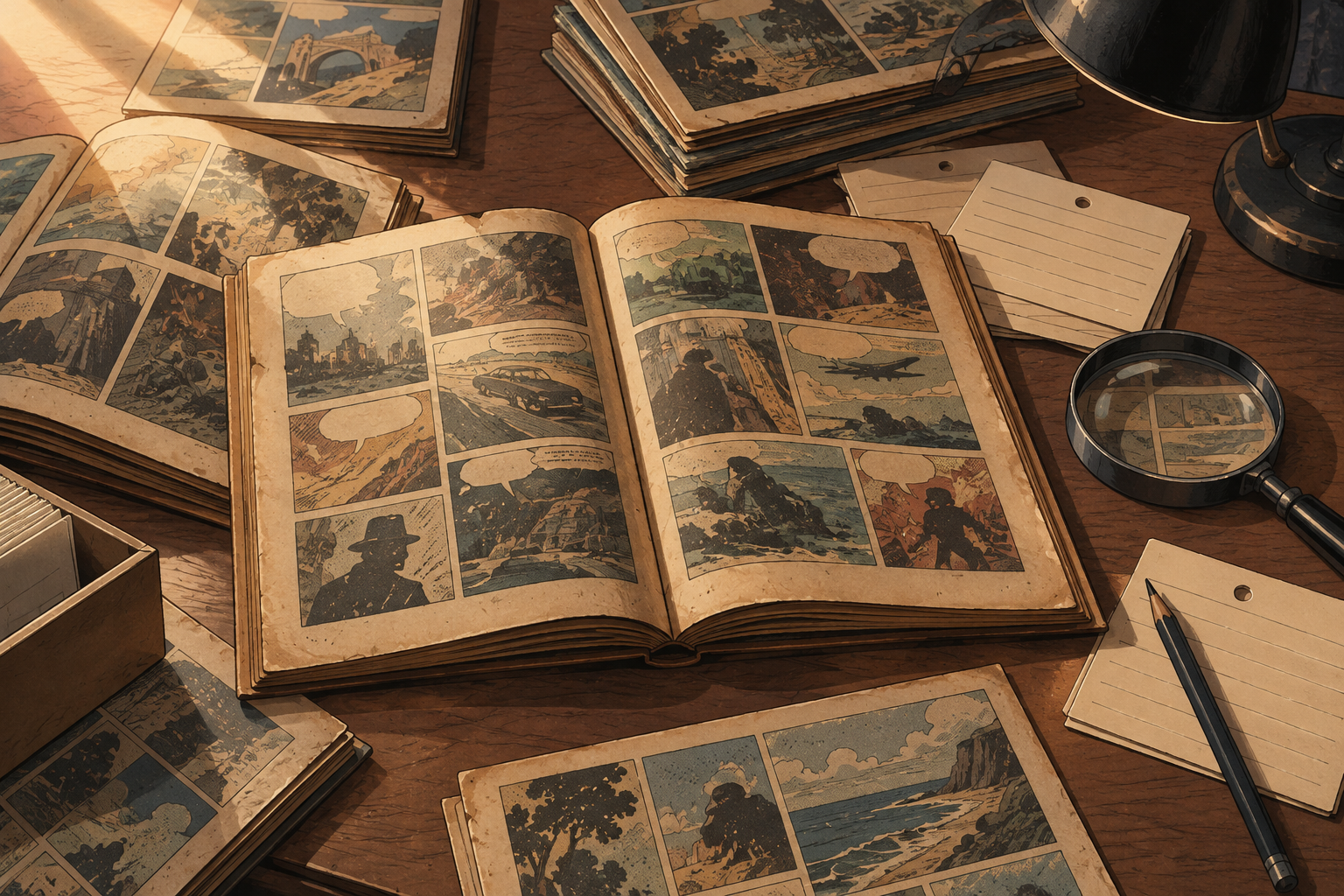
Archival holdings may preserve correspondence, administrative files, collection records, and graphic material. The Archive of the National Museum of Anthropology includes documentation connected with objects and the museum’s history, as well as a photographic collection of almost 7,000 items. Its description says that these images range from the late nineteenth century to the present, come from different parts of the world, and show scenes, ways of life, and customs linked to social and cultural anthropology.
A photograph of an everyday practice is not automatically an explanation of that practice. It may have been taken for scientific, institutional, commercial, or personal purposes that the image does not immediately reveal. Still, the archive’s reference to negatives, positives, and varied techniques shows that material formats are themselves historical: they affect what could be recorded, preserved, reproduced, and consulted.
Local museums, situated histories
Local archives and museums offer another perspective. Spain and Ibero-America’s Archive Census-Guide states that the Provincial Historical Museum of Santa Fe, Argentina, was officially inaugurated in 1943 and that its holdings are organized, among other themes, around everyday life. This description does not establish which individual objects are displayed or how they are interpreted; it does support the narrower claim that everyday life is a declared axis of presentation.
The Historical Museum and Municipal Archive of Rufino, created in 1992 according to the same Census-Guide, reports objects and documents related to railways, telegraphy, the city’s founders, and everyday life in different historical periods. The example shows that the everyday is not an isolated category. Railways and telegraphy shaped work schedules, communication, mobility, and urban organization. An archive can connect these fields, although its holdings may not represent every social experience equally.
Institutional context is also evidence
Museum documentation also records institutional activities and ways of classifying the world. The Museum of the Americas states that routine management expanded its archive after the museum was permanently installed in its current building in 1965. It later distinguished between a closed Historical Archive, ordered according to historical criteria, and a Management Archive that continues to grow with museum activity.
This distinction shows that an archive is not finished when a document enters it. Descriptions, reorganizations, and access rules change research possibilities. The Museum of the Americas itself refers to a review and reorganization begun in 2011 after a documentary diagnosis. When an exhibition or article uses archival material, then, it is worth asking not only what the item shows but how it was retained and under what arrangement it can now be found.
Preservation means preserving material and context
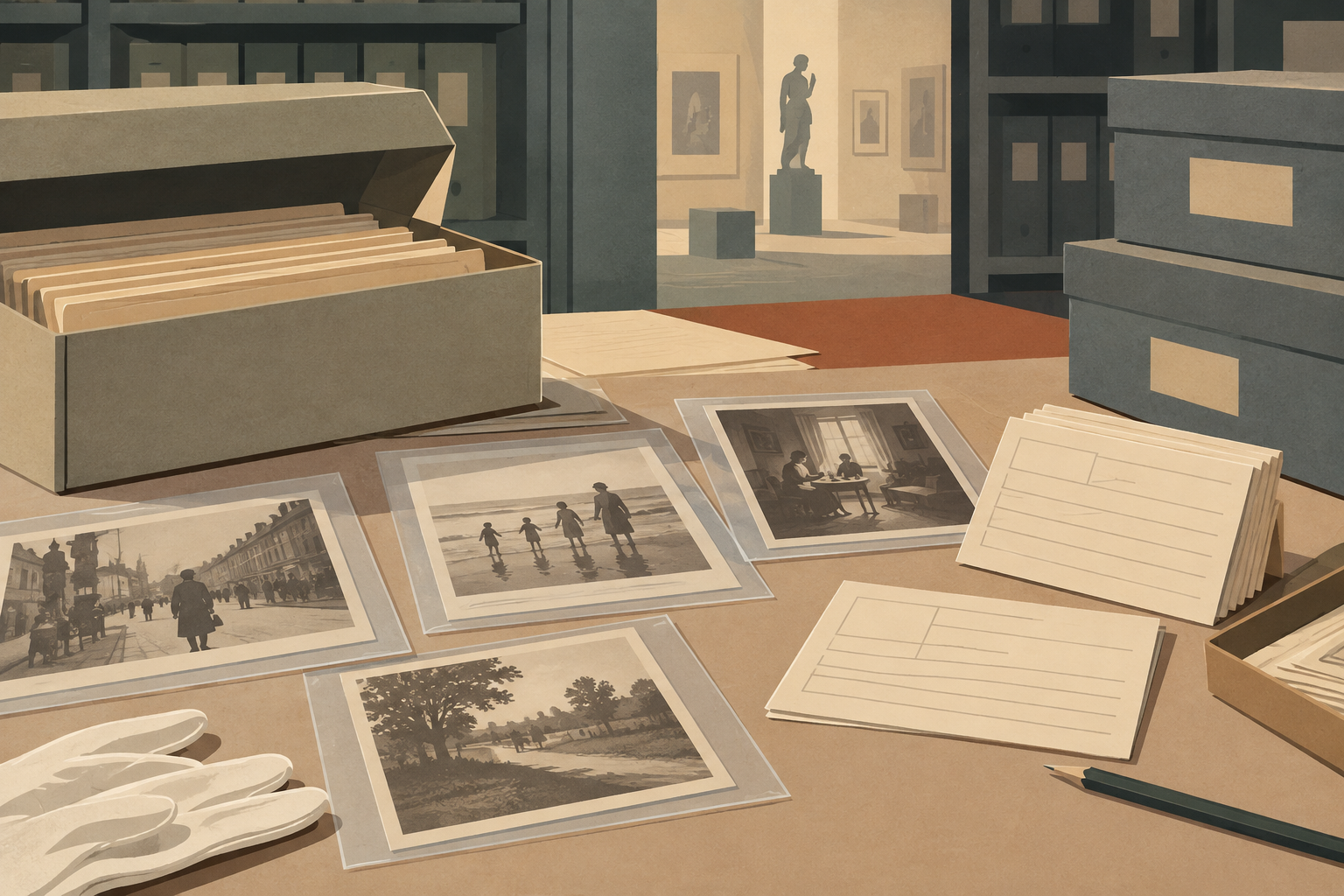
Conservation is not only about keeping photographs and paper physically stable. Spain’s National Plan for the Conservation of Photographic Heritage describes one particular collection treated in its entirety through rehousing in conservation boxes, digitization, and nearly complete description. This does not make that example a universal procedure, but it does show that future access relies on linked material and documentary work.
Digitization does not remove the importance of an original, nor does it automatically solve interpretive problems. Without information about provenance, date, authorship, technique, links to other documents, and conditions of use, a digital copy may lose much of its explanatory power. Contextual preservation is particularly important for everyday life: what seems ordinary can be difficult to understand outside the social, working, family, and institutional networks that gave it meaning.
Useful memory, necessarily incomplete
Archives make it possible to approach gestures, images, institutions, and practices that may not have entered major historical narratives. Their value is not that they promise a transparent window onto the past, but that they offer situated evidence that can be compared, described, and interpreted again. Santa Fe, Rufino, Madrid, and photographic holdings reveal different scales of that work: museum, city, collection, and administration.
The lesson for responsible retro culture is straightforward. Before turning an object, photograph, or document into nostalgia, recover its provenance, function, and silences. Everyday life enters the archive when someone decides to retain a trace; it returns from the archive when research or an exhibition connects that trace with present questions. Between those moments, museum work is about caring for materials and for the conditions that make them understandable.
- Decade
- Before 1950
- Region
- Global
- Level
- Enthusiast
- Entities
- Museum
Sources and references
- Censo-Guía de Archivos de España e Iberoaméricacensoarchivos.cultura.gob.es · 2026-09-21
- Introducción a la Gestión de Archivos en Museos – EVE Museos + Innovaciónevemuseografia.com · 2026-09-21
- Archivo de la Municipalidad de Rufino (Argentina)censoarchivos.mcu.es · 2026-09-21
- Archivo del Museo Nacional de Antropología (madrid ...censoarchivos.mcu.es · 2026-09-21
- Archivo histórico - | Ministerio de Culturawww.man.es · 2026-09-21
- Plan Nacional de Conservación del Patrimonio Fotográficowww.cultura.gob.es · 2026-09-21
- Archivo del Museo de América (Madrid, España)censoarchivos.mcu.es · 2026-09-21