A format, not just a binding
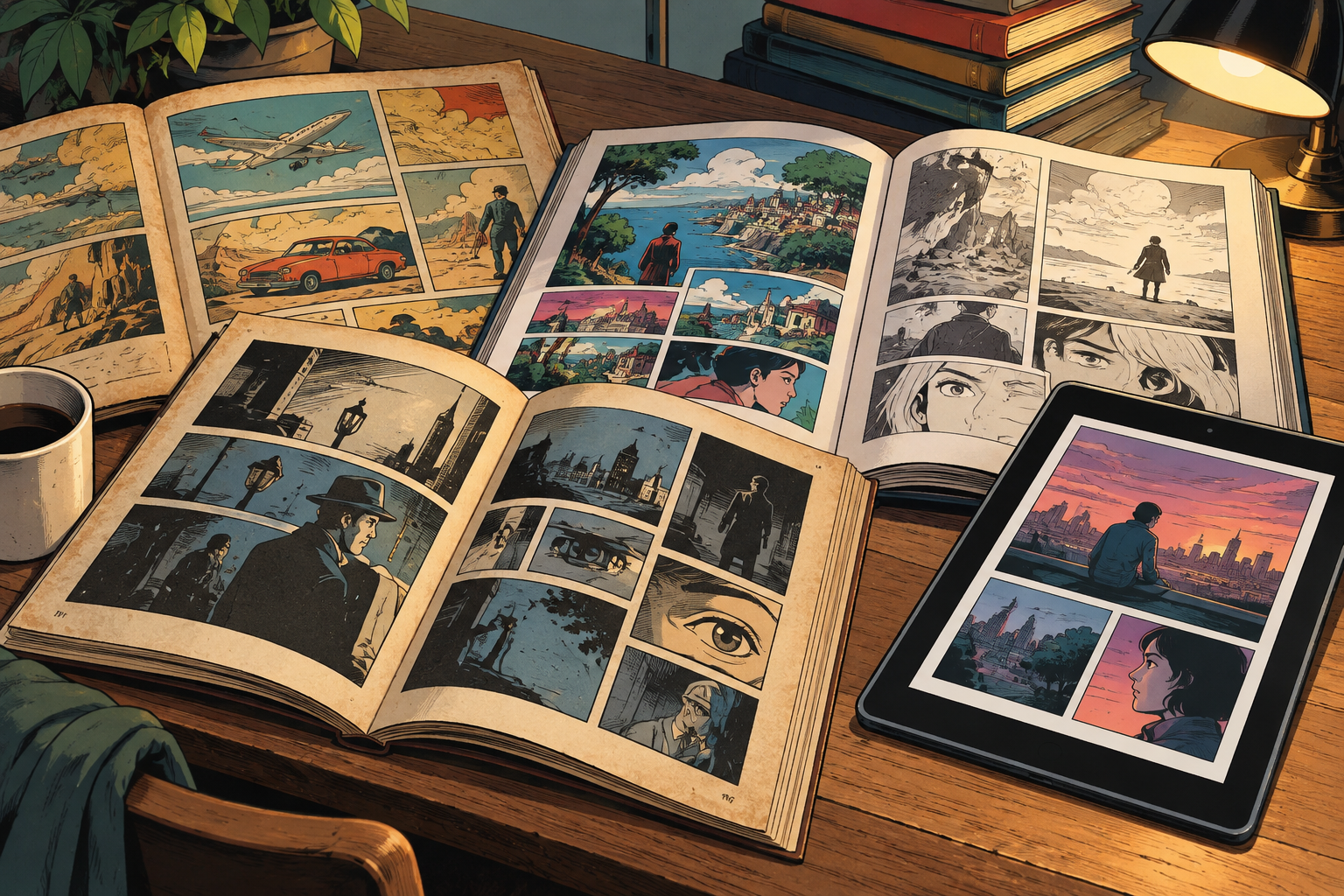
A comics magazine is generally understood as a periodical publication containing comics, but that definition does not fully explain its significance. Periodicity organizes reading into installments; editorial selection brings different works together; and the point of sale shapes how an issue reaches its readers. The format therefore creates an experience distinct from that of an album conceived as a single unit. This is not a hierarchy of media, but a difference in organization and expectation.
Alberto Albarrán’s visual history notes that a comic story could appear in chapters in a magazine and later be collected in an album or graphic novel. It also cautions that dates associated with a work may refer either to its first appearance or to a later collected edition. This matters: discussing a comic without specifying which edition or stage is being dated can conflate different moments in its publishing history.
The installment as a reading experience
A serial publication invites readers to return. They receive one part, interpret it, and wait for the next; the interval between installments is part of the structure, although it cannot be assumed that every title or reader experienced that wait in the same way. A magazine may bring together continuing stories, self-contained narratives, or varied material. There is no single template valid across all eras and markets.
Rubén Varillas’s study, which considers magazines, fanzines, mini-comics, albums and graphic novels, places these formats within a broader discussion of comics’ material and editorial forms. Its framing helps avoid a false opposition: the magazine is not simply an old stage that disappears when the album arrives. They are publishing options with different possibilities, and the same story can move from one to another.
Newsstands and editorial variety
The connection with the newsstand recurs in descriptions of the format. A magazine could offer comics alongside other content and reach readers through periodic distribution. However, the available sources do not establish a universal model of financing, price, print run or distribution; such details would depend on each title, country and period. A general description of the format should be kept separate from the history of an individual publication.
In Spain, histories of tebeos include examples of publications from the early twentieth century and record the appearance of Chiquilín in Madrid in 1924 as a publication connected to the promotion of children’s pharmaceutical products. This case reminds us that the press, comics and advertising could intersect. On its own, it does not describe all children’s periodicals of the era or demonstrate an influence not documented by the source.
The range of magazines can also be seen in the horror-comics examples cited in the entry on comics magazines: titles such as Dossier Negro, Vampus and Rufus are presented within a tradition of specialized publications. These examples show that a magazine could serve particular genres and readerships, although a list of titles cannot replace research into their contents, editorial teams or readers.
From magazine to album, and beyond
The relationship between serialization and collection is central to understanding the publishing cycle. Publishing in chapters can establish a cadence and an initial way of encountering a work; gathering those parts into a volume creates a different reading unit. A collection may preserve the serial structure or change how it is perceived. Without evidence about a particular edition, it should not be assumed that every album is an identical reprint of earlier installments.
Adaptations into other media add another dimension to comics’ circulation, but they should not automatically be treated as evidence of the importance of a particular magazine. Revista Comunicación’s historical reflection discusses comics as both a cultural industry and an artistic expression, and notes their presence across different media. This framework helps us consider how stories travel, but it does not make every adaptation a direct consequence of magazine publication.
The format’s contraction and its limits
Jot Down Cómics describes the magazine’s contemporary position as limited and notes the appearance of Alta Tensión and Planeta Manga in 2019, as well as La Resistencia concluding its run with its tenth issue. These details help show that a format need not vanish all at once: it can change in scale, frequency and function, while coexisting with albums and digital publication. The article is not enough to quantify the entire market or explain the causes of change on its own.
It is also important to distinguish a comics magazine from a digital comic or webcomic. Albarrán’s account reserves those terms for forms of online distribution and reading, including work made for the web and downloadable comics. Digital media can offer a different reading structure, but not every periodical publication thereby becomes a magazine, nor are printed installments and digital files interchangeable.
What the format leaves behind
The comics magazine made it possible to think of comics as periodic reading and as an editorial ensemble, not only as a closed work. Its legacy lies in particular stories and in a mode of circulation combining selection, continuity and encounters with other material. Its relative decline, where observed, does not erase the value of its history: it helps explain why serialization, collection and online publication coexist today.
The available sources support these distinctions and provide examples, but do not offer a complete chronology of every market or universal economic explanations. Studying a particular title would require its issues, publishing records and specific research or testimony. The strongest conclusion is a measured one: magazine, album and digital comic are related formats, but not interchangeable ones; understanding them requires attention both to the work and to how it was published and read.
- Decade
- 2000s
- Region
- Global
- Level
- Enthusiast
- Entities
- No linked entities
Sources and references
- Historia visual del cómic, la novela gráfica, el manga y los tebeos – Alberto Albarránwww.albertoalbarran.com · 2026-09-24
- El cómic. Una interpretación más allá de las masas - Revista Comunicaciónrevistacomunicacion.com · 2026-09-24
- Historia del cómic - Bibliotecas de la Riojabibliotecas.larioja.org · 2026-09-24
- Pasado y presente de las revistas de cómic – Jot Down Cómicscomics.jotdown.es · 2026-09-24
- Revista de historietas - Wikipedia, la enciclopedia librees.wikipedia.org · 2026-09-24
- El cómic, una cuestión de formatos (2): revistas de cómics, fanzines, mini-cómics, álbumes y novelas gráficasdoi.org · 2026-09-24