A format that organized anticipation
A comics magazine was never merely a container for strips. Its periodicity turned reading into a recurring practice: readers returned to the newsstand, recognized a masthead, and waited for the next installment. The definition of a magazine as a specialized periodical helps place this material condition, but does not exhaust it. In comics, the rhythm of publication shaped storytelling, the reader-author relationship, and the way a work could be preserved or vanish.
The available evidence supports the view that comics magazines were a frequent publishing format for much of the twentieth century. It also shows why serialization and collected editions must not be confused: a story could first appear in installments and only later be gathered in an album or volume. That distinction matters when looking back. The object originally read at publication may not be the same book now consulted, collected, or exhibited.
Newsstands, circulation, and access
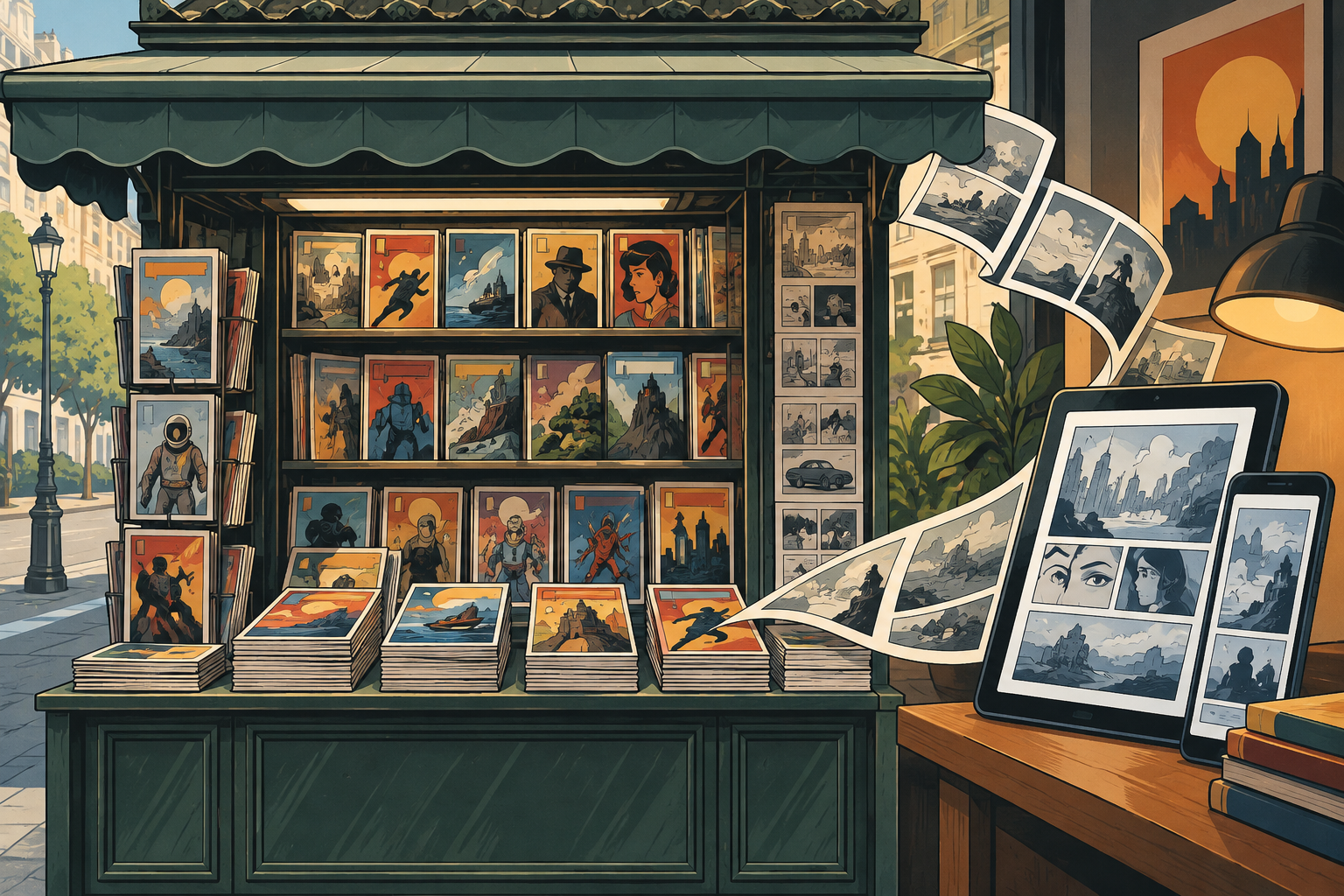
The newsstand was cultural infrastructure as well as a retail point. Newspapers, children’s publications, general-interest magazines, and leisure products shared its space. The Library of Calahorra places the Spanish tebeo’s emergence near the beginning of the twentieth century and documents two Madrid examples: Chiquilín, issued in 1924 as advertising for Federico Bonet, and Pinocho, edited by Saturnino Calleja in 1925. The same source says that major American comics began reaching Spanish readers through Pinocho.
These examples do not justify a linear history or claims about circulation, readership, or sales that the evidence does not provide. They do show that magazines and tebeos took part in different networks: advertising, children’s publishing, cultural importation, and recurring distribution. Format was not neutral. A publication designed to return regularly to its point of sale could foster habit and visibility for characters, series, and creators, even when the physical issue itself was ephemeral.
An installment is not yet a book
Serialized publication creates a distinct narrative experience. Each episode must sustain continuity while providing enough shape for an isolated encounter. Alberto Albarrán notes that dating comics may mean choosing either a character’s first appearance or the later point at which separate parts were collected in a book. This is more than a cataloguing detail: a chronology based only on bound volumes can erase the magazine’s original time.
A magazine should therefore not be treated only as a preliminary stage before a supposedly definitive album. It may be the format for which pacing, chapter breaks, and expectation were designed. A collection produces another reading: it removes waiting, changes pauses, and often stabilizes the object for libraries and collectors. Neither experience cancels the other. They are supports with different uses and temporalities.
From mass product to recognized language
Discussion of comics has changed along with their media. Revista Comunicación summarizes a historiography in which comics remain in print while adapting to different supports, and it notes their consideration as an artistic and cultural expression rather than only a mass product. That shift in status does not remove the industrial dimension. Instead, it requires both perspectives at once: comics can be recurring consumer artifacts and subjects for research, exhibition, and archives.
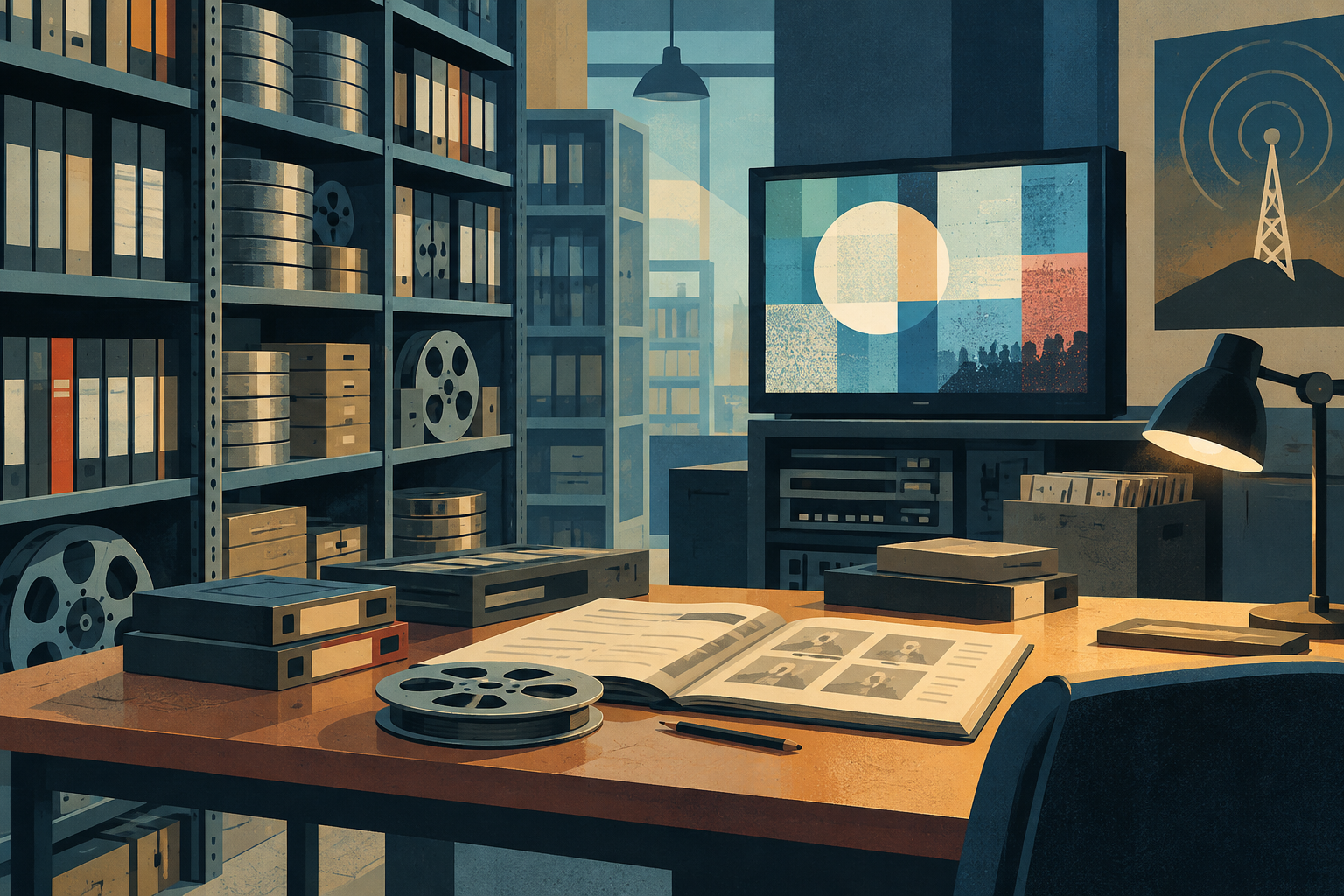
Academic work on comics exhibitions strengthens this point by examining the relationship among comics, art, museums, and modernity. The Museu del Còmic i la Il·lustració says its holdings include satirical press, weeklies, children’s press, booklets, magazines, graphic novels, and original art. The list suggests that institutional preservation does not sharply separate content from its publishing vehicle. Saving a magazine also preserves design, advertising, sections, paper, and a reading context.
A smaller market, more formats
Jot Down Cómics argues that the magazine format now occupies a very reduced market position, mentioning the 2019 arrivals of Alta Tensión and Planeta Manga and the conclusion of La Resistencia with its tenth issue. Those examples cannot measure the entire sector, but they indicate that periodical publishing has not entirely vanished. Its position is narrower and coexists with albums, collected volumes, graphic novels, and digital circulation.
Tebeosfera’s study of Spain in 2020 and 2021 offers another useful caution. It distinguishes commercial comics from magazines and books that contain comics without necessarily being conceived as comics publications. It also records children’s newsstand publications that may act as a bridge to comic reading. The boundary between a comics magazine, a magazine containing comics, and a character-linked editorial product therefore needs case-by-case attention.
The internet does not erase serialization
Digital expansion changes distribution, but does not automatically eliminate serialization. Albarrán distinguishes webcomics, created for online reading and able to develop devices such as vertical scrolling or screen-based reading, from downloadable digital comics intended for offline reading. The distinction prevents “digital” from becoming one undifferentiated category. A support can alter page size, continuity, discovery, and the material basis of collecting.
Print magazines and digital publication nevertheless share a basic question: how to organize the reader’s return. Formerly this could depend on the next issue and its arrival at the newsstand; now it may be structured by updates, platforms, or online archives. Continuity remains, even as the object and reading gesture change.
Conclusion: preserve context, not only pages
The comics magazine remains a useful tool for understanding how comics circulated. Reducing it to disposable packaging hides the experience of installments, the role of the newsstand, and editorial decisions that shaped many readings. Conversely, romanticizing it as a uniform golden age would oversimplify a history made of varied formats, audiences, and circuits.
The gathered evidence points to transformation rather than total replacement: periodical print has lost relative centrality while albums and the internet have expanded routes for publication and reading. When studying or collecting comics, it is worth asking which version lies before us, where it first appeared, and how much of its editorial context remains. That attention makes the magazine more than nostalgia: it is a record of how the medium made its own time.
- Decade
- 2000s
- Region
- Spain
- Level
- Enthusiast
- Entities
- No linked entities
Sources and references
- Historia visual del cómic, la novela gráfica, el manga y los tebeos – Alberto Albarránwww.albertoalbarran.com · 2026-09-18
- El cómic. Una interpretación más allá de las masas - Revista Comunicaciónrevistacomunicacion.com · 2026-09-18
- Las exposiciones de cómics. Historia y contexto global ...ebuah.uah.es · 2026-09-18
- Manuel Barrero (2022): "La industria del cómic en España en 2020 y 2021", Documento en Tebeosferarevista.tebeosfera.com · 2026-09-18
- Historia del cómic - Bibliotecas de la Riojabibliotecas.larioja.org · 2026-09-18
- Inicio - Museu del Comic i la ilustraciónmuseudelcomic.org · 2026-09-18
- Pasado y presente de las revistas de cómic – Jot Down Cómicscomics.jotdown.es · 2026-09-18