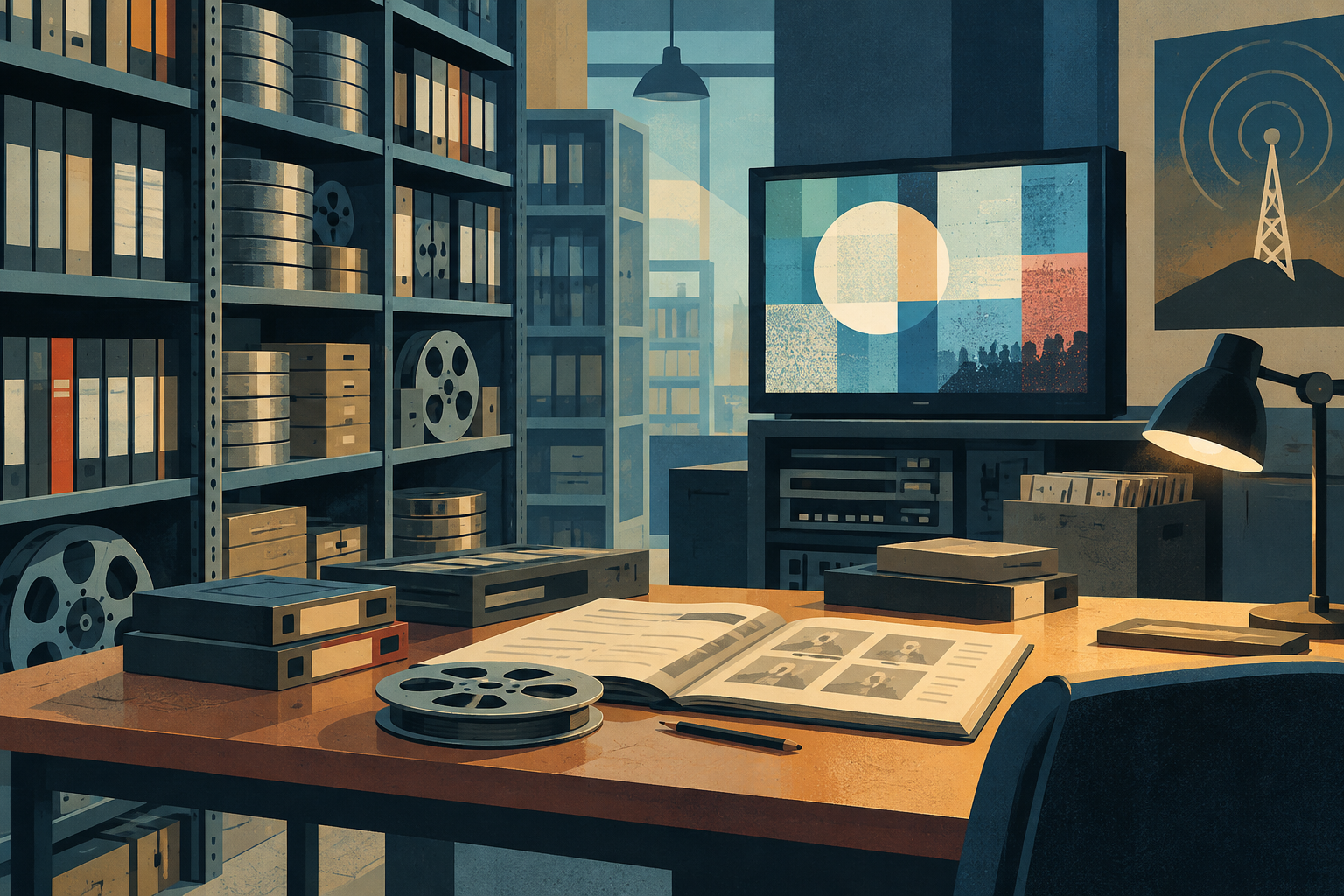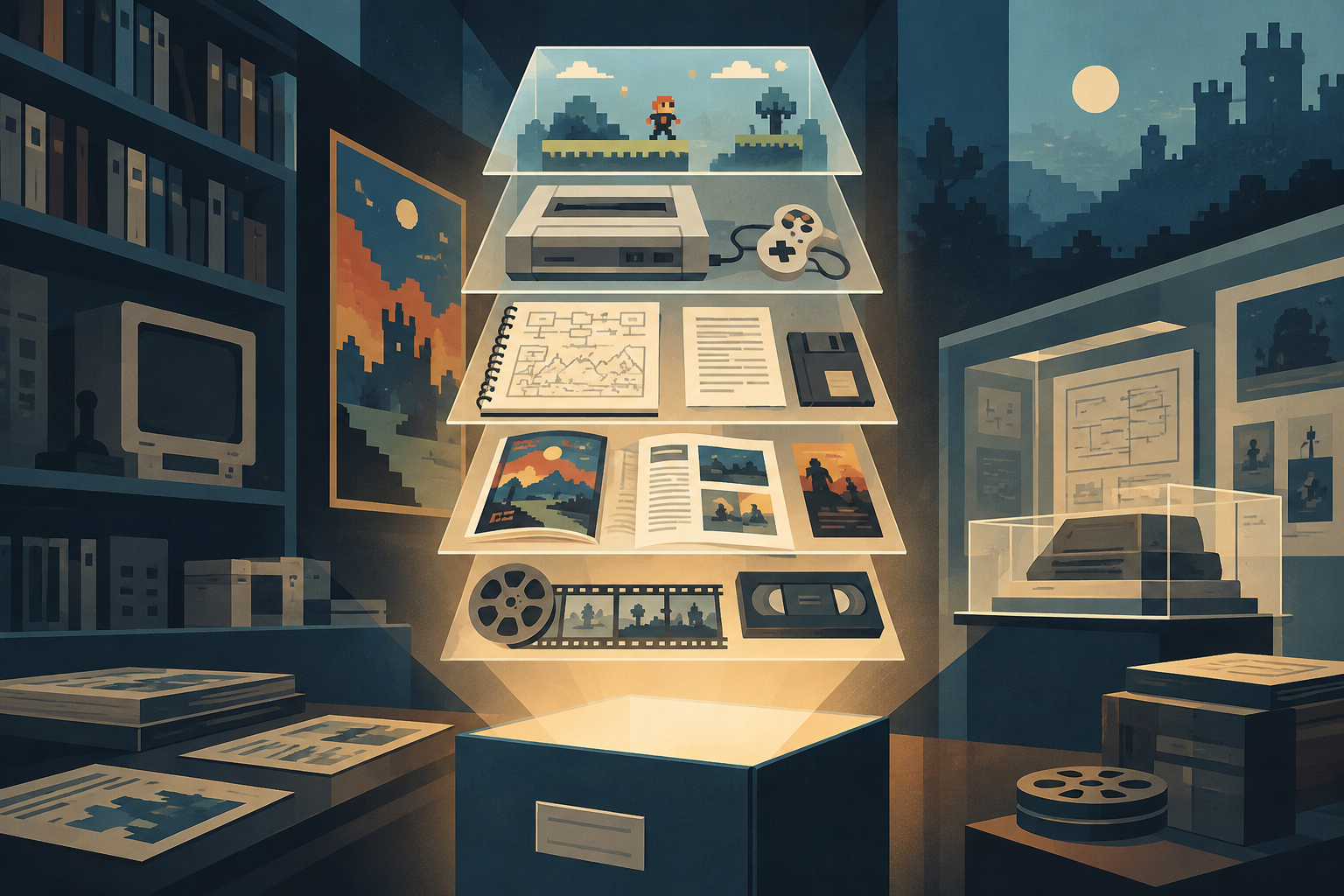
A videogame may seem preserved when a machine remains in a gallery or a digital archive makes it possible to run the software again. Yet keeping the visible object is not necessarily the same as maintaining access to the experience, and saving the program alone cannot explain how it reached its players. Materials gathered by museums and archives, alongside published analysis, point to a history made up of software, hardware, documents, images, publications and forms of access. The useful question, then, is not simply “has the game been saved?” but “which parts of its history remain understandable and consultable?” That distinction makes preservation both a technical and an editorial task: selecting, describing and providing context.
The videogame as a constellation, not an isolated object
The Museo del Videojuego describes a history spanning arcade machines, consoles, handheld devices and computers, and notes the interaction between electronics, software and firmware. This helps avoid an overly narrow definition of the object: a title does not exist independently of the systems that run it or the media and documents around it. The Museo del Recreativo, meanwhile, lists among its aims the preservation and visibility of documentation, machines, software and hardware related to games and arcade technologies. These are specific institutional approaches, not a universal recipe, but both make clear that videogame heritage can be distributed across physical and digital elements.
This broader view matters because different components answer different questions. Software can be studied for its rules and structure; hardware places a game within a material platform; documentation may explain how it was presented or circulated; images and publications record how it was shown and discussed. No single category tells the whole story. And an archive’s collecting several kinds of material does not guarantee that they are complete, accessible or capable of functioning again. It is useful to distinguish between preserving an object, describing it and providing means to consult it.
From storage to accessible experience
Ana Ordás’s article on videogames for libraries, archives and museums stresses the role archives play in the long-term preservation of games, and presents NUBLA as a project related to the Museo Thyssen-Bornemisza in which works of art are explored through puzzles. This example points to another dimension: institutions can preserve videogames, but can also use them as forms of cultural communication and experimentation. Archiving a work is not the same as designing an experience that brings a public closer to a museum, even if the two practices can coexist.
The distinction also helps clarify what “access” means. A catalogue record can make an item discoverable; digitisation can bring a document closer; a playable experience additionally requires the program and its technical environment to be usable. The evidence available here does not describe universal technical solutions or support the claim that one method resolves every case. It does, however, make the problem visible: long-term preservation requires attention both to what is kept and to the conditions under which it can be consulted, displayed or studied.
A collection also constructs a narrative
A museum is not a neutral window onto the past. Rita Aloy Ricart’s analysis of museums and videogames notes that cultural institutions are increasingly involved in preserving interactive leisure, and that decisions about what to keep and exhibit are filtered through ideas about the medium, its experiences and the circumstances of those doing the preserving. This observation raises the question of what counts as representative. A collection centred on arcade machines tells a different story from one prioritising software, magazines, promotional material or play experiences.
Selection is not a flaw that can simply be eliminated: every archive has limits and needs criteria. The risk arises when those criteria remain invisible and part of a collection is presented as if it fully summarised the medium’s history. The Museo del Videojuego, for instance, describes a database of game and console records and also collects magazines, images and videos; its library presents guides, advertising, publications and audiovisual material. That range shows how the story can extend beyond the playable product, although the available excerpts are not enough to assess the catalogue’s overall coverage or representativeness.
Why obsolescence is not the only problem
A Canino article on museums, archives and preservation cites work that had already warned of the medium’s cultural evanescence: it mentions a 2008 study by Paul Gooding and Melissa Terras, and publications from 2009 including Racing the Beam and Save the Videogame! It also describes the absence of a simple consensus on preservation strategies and the influence of each initiative’s understanding of videogames and its particular circumstances. Technical obsolescence is an important difficulty, but not the only one: the availability of materials, the context accompanying an item and the possibility of access also matter.
The same article points to future challenges associated with digitisation, updates and games as a service. These observations should be read as issues raised by the source, not as definitive predictions. For works dependent on changing services, the question “which version is being preserved?” can become especially significant; still, the supplied evidence does not support generalising about every title or detailing how each legal or technical problem should be resolved. Stating the limits of what we know is part of responsible preservation.
Preservation also means documenting limits
The initiatives described have distinct aims and practices. The Museo del Recreativo says it works to preserve, restore, conserve and make visible material related to games; the Museo del Videojuego presents itself as a project for consultation and collecting; and Microsiervos summarises the Embracer Games Archive initiative in Karlstad, noting a collection of more than 75,000 objects, including games, consoles and accessories. These figures describe what each source says about the projects; on their own, they are not enough to compare their scope, methods, public access or outcomes.
Such caution does not diminish the initiatives. It helps formulate better questions for any collection: which categories does it include, how are they documented, what can be consulted and what remains uncovered? Recording provenance, context and access limits allows future generations to distinguish between a documentary gap and a historical absence. Preservation is stronger when it not only keeps material, but explains what it has gathered and what it cannot guarantee.
A history that needs several layers
Preserving videogames is not a choice between saving machines and copying files, nor a task limited to technical specialists. The examples considered here show a field linking objects, programs, publications, institutions, access and historical narrative. Keeping these layers in conversation avoids reducing a videogame to a piece of hardware or a contextless executable file.
What can be verified in these sources is limited: they describe institutional aims, collections and projects, and report published debates about archival challenges. They do not determine the best strategy for every work or certify the preservation status of entire collections. They do support a practical conclusion: a more understandable history requires preserving varied materials, describing selection decisions and making archival limits explicit. The game that remains is not only the one that can be run again; it is also the one that can be situated, studied and discussed through the evidence that has survived.
- Decade
- 2000s
- Region
- Global
- Level
- Enthusiast
- Entities
- Museum, Museo del Videojuego
Sources and references
- Objetivo del Museo del Videojuego | Museo del Videojuegowww.museodelvideojuego.com · 2026-09-24
- Videojuegos para bibliotecas, archivos y museos – Ana Ordásanaordas.com · 2026-09-24
- (PDF) Museos y videojuegos. La renovación de los espacios culturales hegemónicos.www.researchgate.net · 2026-09-24
- "Everything not saved will be lost": de museos, archivos y preservación de videojuegos - Caninowww.caninomag.es · 2026-09-24
- Fondo de Preservación | Museo del Recreativomuseodelrecreativo.es · 2026-09-24
- La conservación de la historia de los videojuegos en el Embracer Games Archivewww.microsiervos.com · 2026-09-24
- Descargas | Museo del Videojuegowww.museodelvideojuego.com · 2026-09-24