Digitization is not a neutral operation
A museum’s digital transformation often becomes visible on a screen: a photograph, a catalogue record or a virtual visit. But reducing it to that image hides much of the work involved. Digitization means creating a digital representation of an object, document, image or even a concept; it also requires organizing that representation so it can be found, interpreted and kept available. EVE Museos + Innovación describes the process as gradual and links its development to the progressive adoption of computing and the Internet by cultural organizations. The source does not provide a detailed chronology for each institution, so it cannot support assigning a single starting date to the transformation.
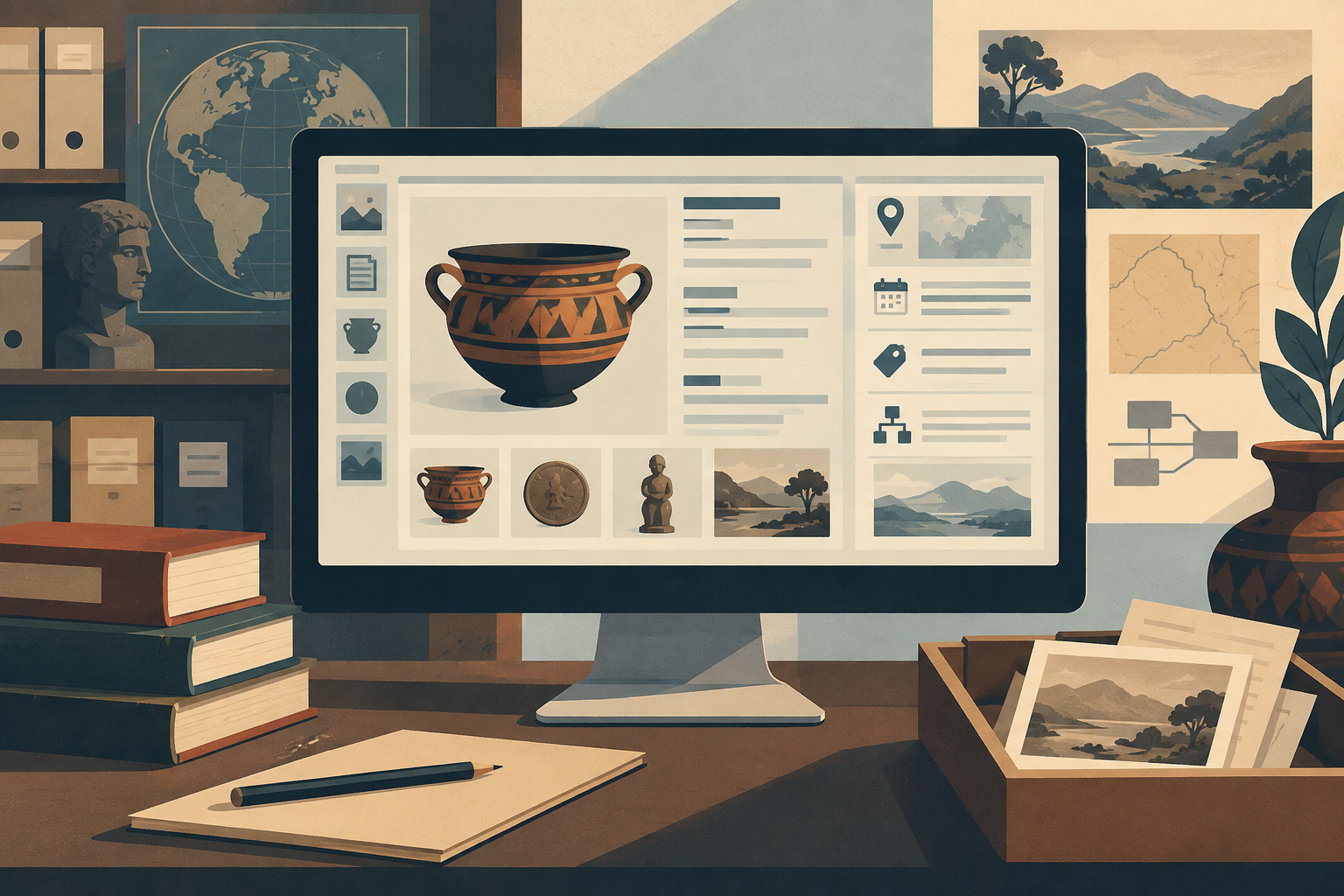
From the outset, it is useful to distinguish three things: the object held by the museum, its digital representation and the documentation that allows us to understand both. A photograph can show visible features, but it does not by itself contain the full history of an item, its conservation conditions or the decisions through which it was described. Diario de Pozuelo’s article on the digital era emphasizes the value of data about an artwork’s history, conservation and context. It is a general-interest discussion rather than a comprehensive institutional study, but it raises a central editorial question: quick access does not automatically mean complete understanding.
From internal management to public access
Digital technology can play a role in several museum tasks. EVE distinguishes between computer tools for management and inventory, digital communication channels and a broader integration of digital resources into collecting, conservation, research, exhibition and communication. These are not necessarily uniform stages or an identical sequence for every museum. The value of the classification is that it shows that publishing images on a website is only one possible part of the change.
Archival documentation helps explain why the distinction matters. The Navarra instructions cited in the evidence describe documents relating to objects as part of their context and include references to DOMUS and the Digital Network of Museum Collections in Spain. The material does not allow us to explain in detail how each system works or assess its results. It does, however, support the point that cataloguing is not simply putting an image online: documents, series and relationships must be organized and preserved alongside knowledge about the objects.
SEDIC’s text, in turn, stresses assigning unique identifiers and the need for contextual metadata to locate digital images later. Its practical point is clear: a digital copy without sufficient information may be difficult to identify, distinguish or retrieve. A record is not decoration added after scanning; it is part of what makes the copy useful.
An image helps, but does not replace
Online representation makes it possible for someone to consult information without travelling to a gallery. The sources on digital narratives and museum transformation mention remote access, dissemination and the possibility of combining text, images, audiovisual material and interaction. These possibilities can enrich a visit or provide an initial encounter with collections the public cannot see in person. But possibility should not be confused with a universal guarantee of access, nor should we assume that every digital resource improves interpretation by itself.
The distinction between an object and its representation also sets limits. An image shows only what has been photographed and published; a record reflects decisions about selection, description and organization. If a record does not explain where information comes from, what is known and what remains uncertain, a presentation may appear more complete than it is. This is a reasonable caution arising from the sources’ emphasis on context and metadata, not a claim that all museums omit such information.
The academic study by Bellido Gant and Ruiz Torres frames the screen as a point of access and reminds readers that technologies are not free of problems. The available excerpt does not support attributing a more detailed specific critique to the authors. It does encourage us to avoid a triumphalist account: technology opens possibilities, but it also changes how audiences approach content and therefore calls for choices about mediation.
Preserving archives also takes work
Digitization can support conservation by creating consultable copies and, in certain circumstances, reducing the need to handle some originals. Diario de Pozuelo’s source presents this possibility in general terms. It gives no data on specific projects and cannot establish that a digital copy replaces conservation measures for the object. The cautious formulation is that a copy can be a complementary tool, not that it solves physical deterioration.
The digital records themselves also need organization and continuity. EVE’s text on museum archives mentions inventories, descriptions, finding and dissemination tools, public access and basic measures for document conservation. SEDIC stresses keeping contextual information and planning how to locate materials later. Taken together, these sources point to work less visible than a virtual exhibition: maintaining names, descriptions, identifiers and relationships so information remains understandable and retrievable.
The supplied sources do not describe full technical standards, backup policies, preservation formats or budgets. We therefore cannot derive an operational recipe for maintaining a digital collection over the long term. They do support a narrower conclusion: future availability also depends on clear documentation, organization and maintenance, not simply on having created digital files.
Telling stories without erasing uncertainty
Digital narratives can bring together text, graphics and audiovisual materials to explain an artwork or place. EVE Museografía presents these tools as ways to support interpretation and dissemination, and mentions interactive technologies, augmented reality, projections and mapping. Muhimu’s text also refers to 3D scanning and photogrammetry in relation to monuments, but the evidence supplied is not enough to verify particular examples or assess their accuracy. These techniques are therefore treated here as possibilities described by the sources, not proof that every museum uses them or that every model is complete.
A good digital narrative can make clear what is known, where information comes from and which aspects are undocumented. This is an editorial proposal arising from the sources’ emphasis on context, documentation and metadata; it is not a standard we can attribute to every project cited. Community participation and the addition of testimony also appear in EVE’s 2025 text. The existence of this approach does not guarantee that every initiative is participatory or that contributed material has been verified in the same way.
What we can say—and what remains unproven
The sources bring together general-interest articles, administrative documentation, an academic text and professional material about archives and museography. They clearly support several points: digital transformation is broader than publishing a website; digital representation can improve access; contextual information matters; and document organization affects later discovery and understanding. They also show that digital practices can shape communication, research and exhibition experiences.
By contrast, the supplied evidence cannot measure how many museums adopted each tool, establish an exhaustive chronology between 1970 and 2009, compare institutional outcomes or determine which systems perform best. Nor does it document specific visitor experiences. Acknowledging these limits does not weaken the history: it prevents a general trend from becoming an invented sequence or a technological promise from being mistaken for a proven result.
A digital museum with a memory
The screen broadens the point of entry, but it does not contain the whole museum. For a digital collection to retain cultural value, it needs legible images, identifiable descriptions and documentation that connects each record to its context. Tools can support access, communication and interpretation; their usefulness depends on how they are integrated into the work of conserving, researching and explaining.
Digital transformation should be judged less by the polish of its interface than by the quality of the relationships it keeps visible: between object and record, image and provenance, access and explanation. The strongest principle these sources support is simple: digitization can preserve and share, but preserving context requires continuing documentary work. The screen is an entrance; memory also depends on what accompanies it.
- Decade
- 2000s
- Region
- Spain
- Level
- Introduction
- Entities
- Museum
Sources and references
- El papel de los museos en la era digital: ¿estamos preservando la historia o perdiendo contexto?www.diariodepozuelo.es · 2026-09-23
- Conservación del Patrimonio Cultural y Narrativas Digitales - EVE Museos + Innovaciónevemuseografia.com · 2026-09-23
- Breve Historia de la Transformación Digital en Museos - EVE Museos + Innovaciónevemuseografia.com · 2026-09-23
- Clip de SEDIC, Revista de la Sociedad Española de Documentación eedicionsedic.es · 2026-09-23
- instrucciones para la gestión y organización de archivos ...www.navarra.es · 2026-09-23
- MUSEOS DE NUEVA GENERACIÓN: LA PANTALLA ...www.ugr.es · 2026-09-23
- Archivos de Museo: Funcionamiento - EVE Museos + Innovaciónevemuseografia.com · 2026-09-23