A small object with a large history
A toy does not automatically become a historical document when it enters a museum. To speak about the past, it needs to retain, as far as possible, its links to a maker or buyer, its intended recipient, its circulation, its setting of use and the reason a person or institution kept it. This is what distinguishes an isolated item from an object of material culture that can raise questions about childhood, work, consumption, education and memory.
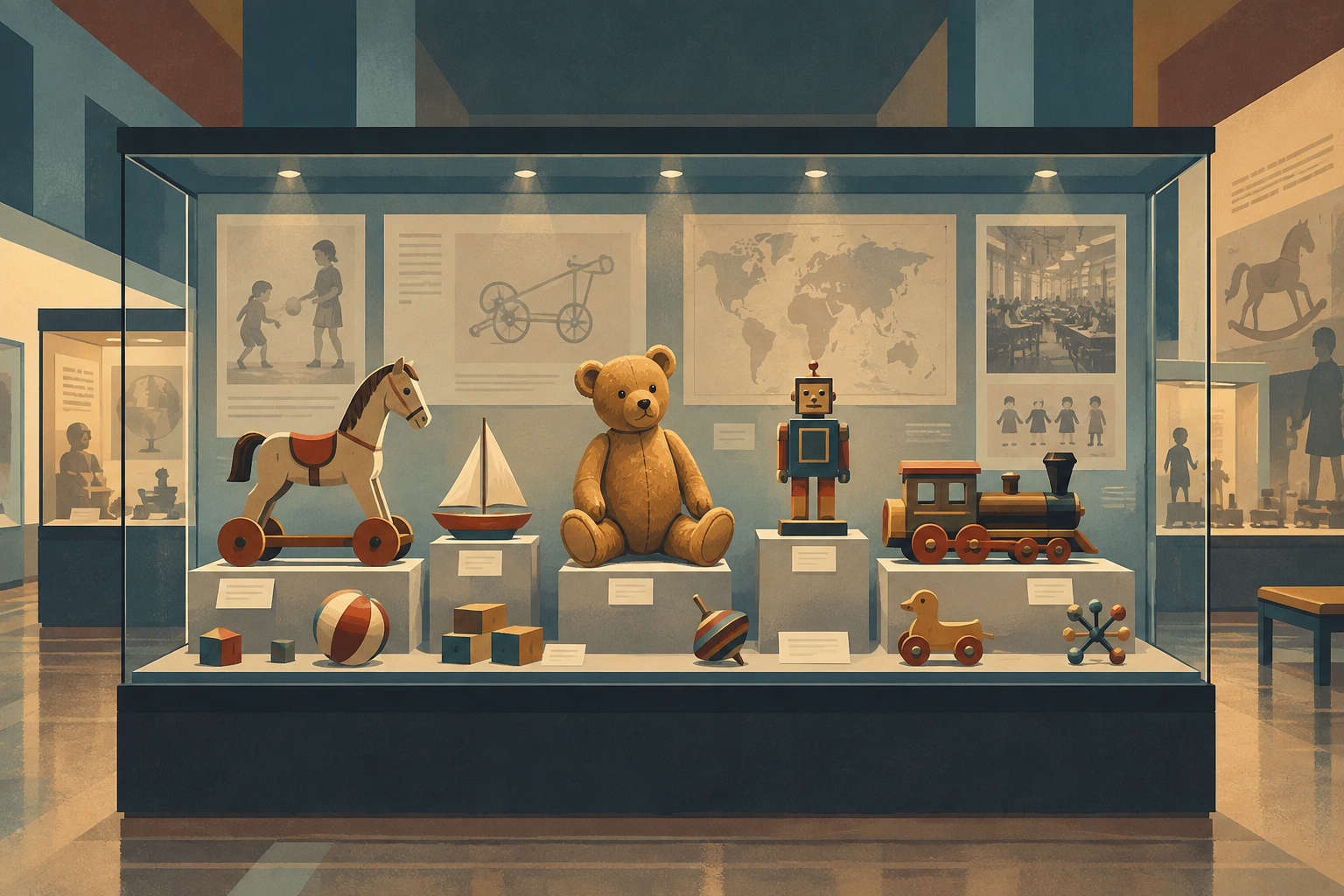
Madrid’s exhibition Del juguete al cielo. Un siglo de historia, 1880-1980 states this approach clearly: it relates toys to socioeconomic, technical, cultural and political changes, sometimes placing them beside photographs of the real objects or means of transport they recreated. The method matters as much as the items. It does not treat a toy as an innocent miniature of adult life; it lets visitors examine which parts of that world were transferred into play.
From play to material culture
The Museo del Traje offers a key premise: toys take part in learning skills and values, while also reflecting the society and historical moment that made them. That proposition needs care. A toy cannot by itself describe how all children lived, nor can it mechanically determine what they learned. It is, however, material evidence for studying expectations, visual languages, available materials and cultural models circulating in a particular place and time.
Collections also preserve domestic-scale objects often absent from conventional historical narratives. The Galería de las Colecciones Reales notes that photographs in the Archivo General de Palacio show the rooms of Alfonso XIII and Victoria Eugenia’s children filled with toys. In this case, the images provide unusually precise context: they place dolls, tea sets and other items in a specific environment. They also show that these toys belonged to a particular family, rather than to an abstract childhood.
Provenance changes what can be said
An object’s trajectory shapes its documentary value. The Galería explains that, after the establishment of the Republic, some toys were retained for their museum merit, while others were offered to Madrid’s City Council at a Three Kings Day donation event in 1933. The toys therefore hold several temporal layers: original acquisition, use in palace rooms and a later decision to preserve them publicly.
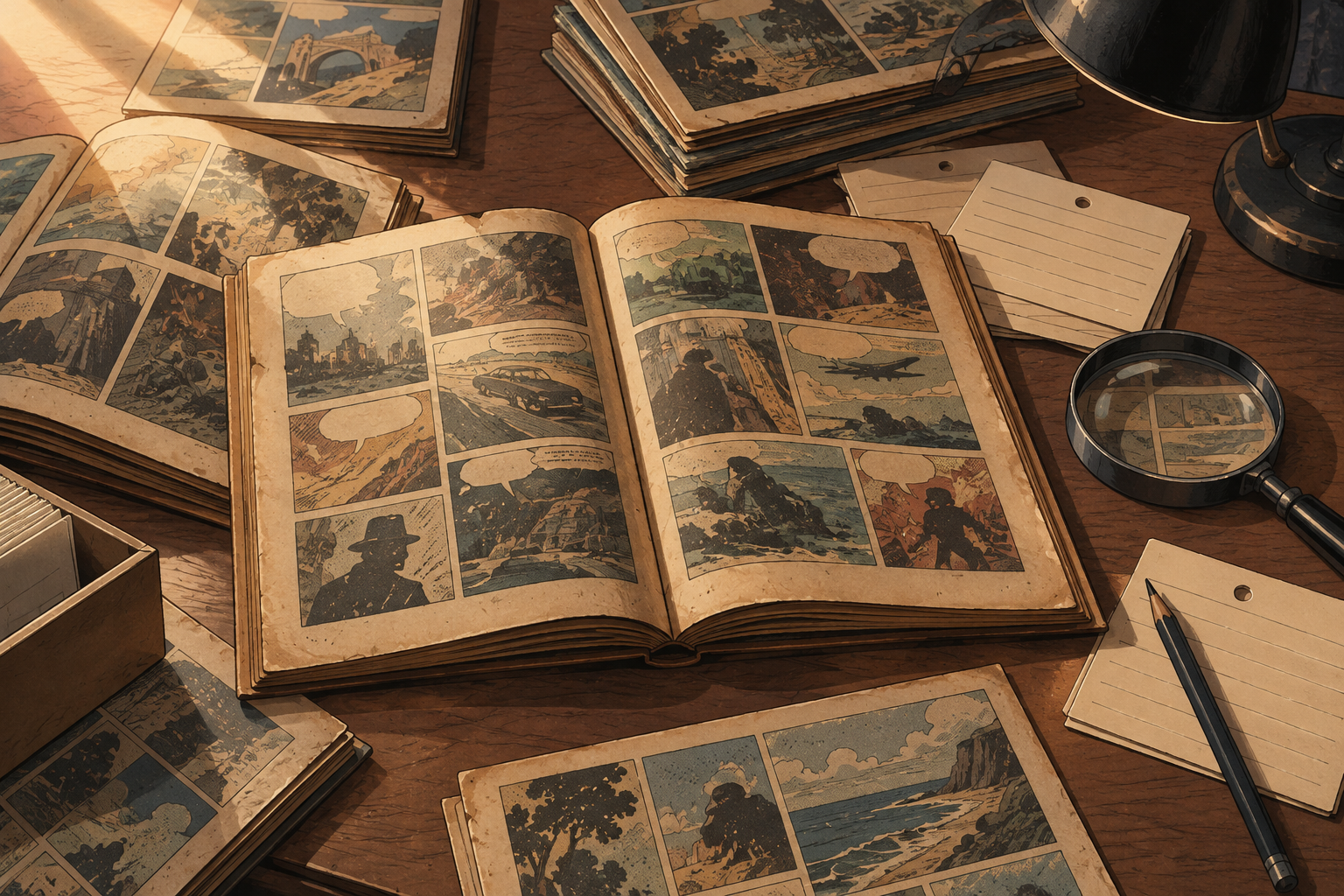
This is why inventories and archives are not secondary work. The study of the Museu del Joguet de Catalunya describes holdings of tens of thousands of toys, cards, comics, illustrated stories, nativity figurines, miniature theatres and music boxes, as well as a Documentation and Archive area. Objects alone are insufficient: documentation can reconstruct links between collections, donors, exhibitions, origins and display practices.
Materials, industry and change
Toys can also trace changes in production, though a material transition should not become a total explanation of history. Condeduque’s exhibition states that by the late 1950s plastic, easier and cheaper to produce, displaced wood and tinplate, while electrical components began to expand toys’ functions. This is a useful prompt for looking closely at items: materials, joins, finishes and mechanisms may point to particular industrial and commercial conditions.
The Museo Valenciano del Juguete in Ibi connects its holdings with the work of local toy companies and workers. Much of its collection derives from the donation of materials accumulated by the Cooperativa Payá and consists mainly of toys made in Ibi and Germany. That provenance shows how a collection can narrate a local industry, exchange networks and the choices of people who preserved its material remains.
Displaying is not freezing
Museum display inevitably removes a toy from the activity for which it was designed. The academic article on the Museu del Joguet de Catalunya draws attention to the ontological change produced by musealisation: a playable object becomes an observed object. A case protects, orders and enables comparison; it also restricts touch, motion and improvisation, all central to much play.
That limitation does not invalidate museums. It requires them to state what is known and what is not. Photographs, catalogues, boxes, testimonies, advertisements and factory records can restore part of a lost context. Where they are absent, honest labels should avoid assigning universal experiences to an object or presenting interpretation as certainty.
Collecting to investigate, not only to remember
Toy preservation often relies on family and private collections. La Vanguardia reported that toy collecting grew from the 1980s onward and helped recover objects that deepen knowledge of childhood in the home. This recovery matters, but nostalgia should not be its only frame. A museum can turn a personal memory into a shared question if it preserves provenance and does not erase unequal access, absences or unknown uses.
The Museo Pedagógico Colombiano describes toys as objects reflecting thought, culture and context, and connects its collection with school memory, educational practice and research. This broadens the field: toys can be studied alongside notebooks, furniture, images and archives, rather than as self-contained relics.
Conclusion
A museum toy is not childhood halted behind glass. It is a material fragment whose meaning depends on its accompanying documentation and on the questions asked of it. Preserving it matters because it permits the study of everyday realms that are often poorly recorded: learning, affection, manufacture, trade and social aspiration. Its historical force grows when the museum also makes its limits visible: what the item proves, what its context suggests and what can no longer be recovered with certainty.
- Decade
- Before 1950
- Region
- Spain
- Level
- Enthusiast
- Entities
- No linked entities
Sources and references
- Anti-juguetes o la «memoria lúdica» tras un cristal: Una ...dialnet.unirioja.es · 2026-09-19
- «Del juguete al cielo» | Condeduque Madridwww.condeduquemadrid.es · 2026-09-19
- Juguetes Reales - La Galería de las Colecciones Realeswww.galeriadelascoleccionesreales.es · 2026-09-19
- Producción Artesanal – MUSEO PEDAGÓGICO COLOMBIANOmuseopedagogico.pedagogica.edu.co · 2026-09-19
- Una colección de juguetes para contar la historia del juego infantil durante el siglo XXwww.lavanguardia.com · 2026-09-19
- Pasado, Presente y Futuro - Museo del Juguetewww.museojuguete.com · 2026-09-19
- Juguetes - Museo del Traje | Ministerio de Culturawww.cultura.gob.es · 2026-09-19