A small object with a wide history
A toy can appear to be a minor domestic object: something meant for brief use, wear and, often, oblivion. Yet institutions that preserve toys treat them as sources for reconstructing social worlds. Not because every item can explain an era by itself, but because it gathers material and emotional clues: what it is made of, who might have acquired it, what kinds of play it suggests, how it circulated, and what adult expectations it projected onto childhood.
Spain’s Royal Collections Gallery puts the point clearly: a toy is linked to a history of purchase, gift-giving, inheritance or shared use. That biography is not merely sentimental decoration. It is the context that prevents the object from being reduced to a pretty miniature or a collector’s relic. Once it enters a museum, the question changes: it is no longer enough to ask what it was; it matters to ask what relationships it made possible and what can actually be documented about them.
From material to context
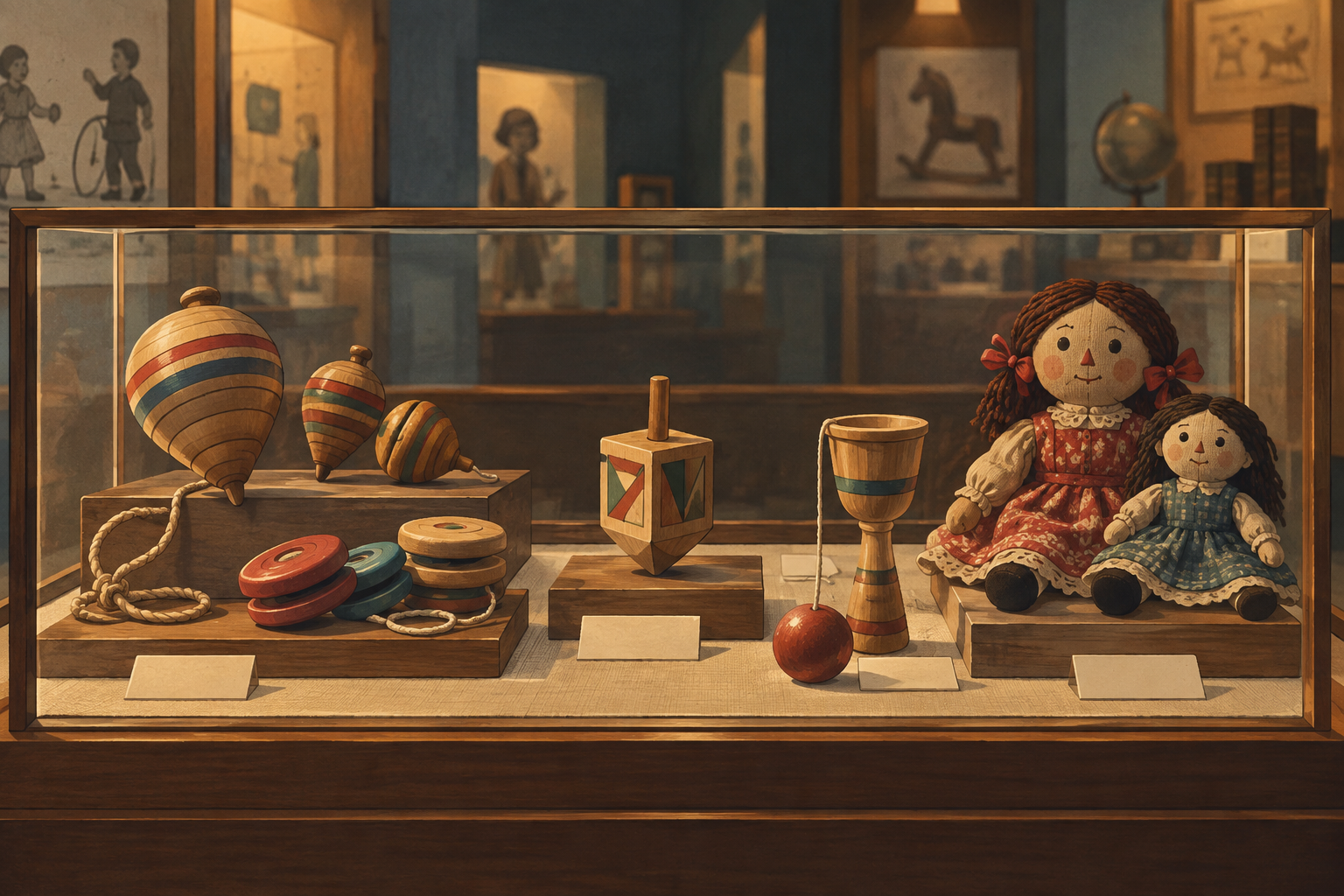
The Colombian Pedagogical Museum describes its traditional-toy collection through items such as the coca, pirinola, spinning top and yo-yo. It notes that many popular toys were handmade by craftspeople and preserved cultural traditions through colours and forms associated with a country or region. It also identifies common materials—wood, textiles and cloth—and mentions toys made within everyday home life.
This material information supports a careful historical reading. Wood or cloth do not, by themselves, prove an exact date, a social class or a universal practice. They do, however, prompt questions about the availability of materials, craft knowledge, repair and domestic making. A cloth doll may retain traces of use, mending or decisions made by its maker. Such marks should not be turned automatically into a finished story, but they justify cataloguing, comparison and placement alongside provenance records where those exist.
Spain’s Ministry of Culture adds another dimension: toys help children acquire skills and internalise cultural values, while also reflecting the society and historical moment that produced them. This should be read without assuming that play is identical with obedience. Toys offer frameworks, models and roles; players also alter, combine and use them in unforeseen ways. Museum interpretation becomes more precise when it separates an object’s design, adult discourse and documented use.
A mirror, not a copy
The Madrid exhibition From Toy to Sky: A Century of History, 1880–1980 relates Spanish toys to socioeconomic, technical, cultural and political settings. Its method is telling: at times it places a toy alongside photographs of the real object or means of transport. The purpose is not to claim that every miniature faithfully copies the world, but to show that play forms conversed with transport, inventions, fashions and scenes of daily life.
The exhibition also states that plastic displaced wood and tinplate by the end of the 1950s, while electrical components began to extend toys’ capabilities. This material change is a useful route into history, but not a linear story of progress. Each material involves different manufacturing methods, finishes, costs, durability and conservation needs. A museum can make that transition visible without treating earlier materials as simply obsolete or later ones as automatically superior.
Context also prevents frictionless nostalgia. A toy can prompt pleasant memories and still express the social conventions of its time. Photographs of rooms used by the children of Alfonso XIII and Victoria Eugenia, preserved in the General Archive of the Palace, show dolls and tea sets; the Gallery notes that these objects encouraged imagination and preparation for adult life. The object therefore opens a discussion about childhood and social representation, not merely luxury or rarity.
Preservation does not freeze meaning
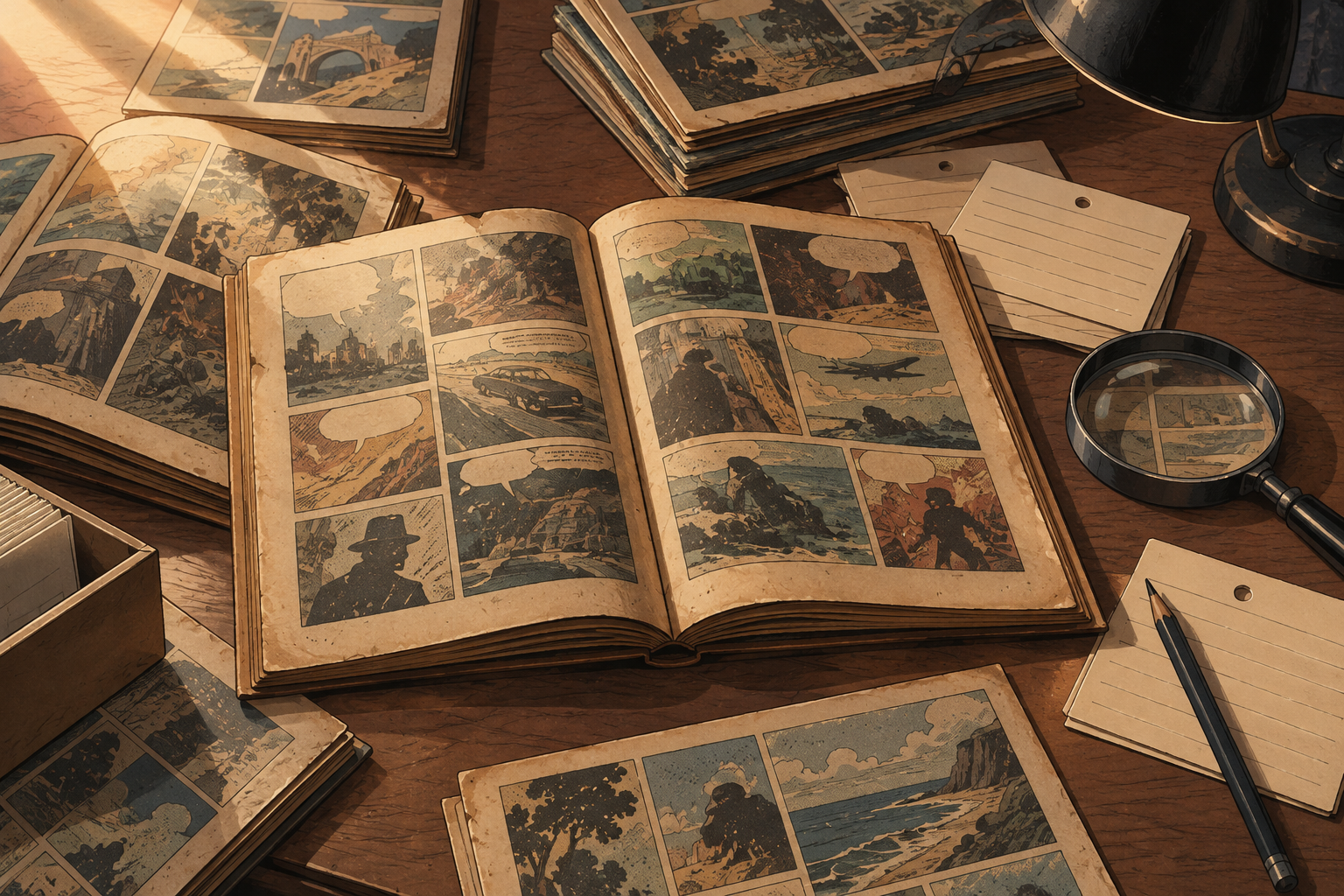
Musealising a toy means protecting, documenting and displaying it; it also means selecting it. Academic research on the Museu del Joguet de Catalunya describes holdings of toys, trading cards, comics, illustrated stories, nativity figures, miniature theatres and music boxes, all connected with the material culture of childhood and popular culture. That breadth matters: toys did not exist in isolation. They shared a historical environment with printed matter, images, music, reading practices and domestic or religious objects.
A display case nevertheless changes an object’s condition. What was handled, rolled, dressed or exchanged becomes something watched under conservation rules. The cited study refers to an ontological mutation in musealised toys: the phrase usefully reminds us that the item remains materially the same but takes on another social function. It is valued not only for being played with, but for its ability to represent, inform and activate memory.
This change requires transparency. A responsible label should distinguish what is known—material, provenance, maker or date when established—from what is interpreted. It should also acknowledge gaps. For toys without a box, brand or ownership history, documentary silence is part of their condition. Filling that silence with generic anecdotes may make an exhibition easier to consume, but less reliable.
Collections, communities and heritage
The Valencian Toy Museum explains that its holdings are based on a donation to the town of Ibi of material accumulated during the life of the original Payá company, including toys from Ibi and Germany as well as smaller numbers from elsewhere in Spain and the world. Its project presents itself as a place to collect, preserve, research, educate and disseminate heritage, while honouring local toy workers and business owners.
This case shows that a collection can tell an industrial and labour history, not merely display a product catalogue. It also reminds us that collective provenance matters: a donation, factory archive or family collection shapes what has survived. What is preserved never equals everything that was made or played with.
The Colombian Pedagogical Museum places its collection within a commitment to school memory, educational material culture and the study of childhood. That framing broadens the field. Researching toys is not just a matter of arranging types. It can connect objects with pedagogy, intergenerational transmission, crafts and local practices. In that sense, a toy works as an archive, though an incomplete archive that requires comparison and verification.
The limits of nostalgic reading
Nostalgia is often the most immediate route into these objects. There is nothing improper about it: recognising a form, material or scene can encourage a visit and a conversation between generations. The problem begins when memory replaces evidence. A toy resembling one’s own does not prove that all families owned it, that it was played with in the same way everywhere, or that it represents a shared childhood.
Nor should broad conclusions be drawn from a single collection. The Royal Collections concern one family and specific acquisition networks; Ibi’s holdings largely relate to a local industrial trajectory; the Colombian collection illuminates categories of traditional and popular toys. Taken together, these sources enable comparisons; they should not erase their differences.
Conclusion
When a toy enters a museum, it becomes more than a personal reminder. It becomes evidence that must be cared for, described and contextualised. Its value does not rest only on age, rarity or price, but on the questions it can sustain about materials, labour, education, consumption, imagination and memory.
The best museum practice neither locks a toy in a case as a silent object nor uses it as a shortcut to idealise the past. It presents the known biography, the documentary absences and the object’s links to social life. In doing so, play is not frozen: it becomes a way to examine critically how societies imagined—and continue to imagine—childhood.
- Decade
- Before 1950
- Region
- Global
- Level
- Enthusiast
- Entities
- Museum, Museo Valenciano del Juguete
Sources and references
- Pieza del mes de abril de 2024: Los juguetes en la historia de la infancia. La colección de juegos y juguetes en el Museo Pedagógico Colombiano. – MUSEO PEDAGÓGICO COLOMBIANOmuseopedagogico.pedagogica.edu.co · 2026-09-22
- Anti-juguetes o la «memoria lúdica» tras un cristal: Una ...dialnet.unirioja.es · 2026-09-22
- Juguetes Reales - La Galería de las Colecciones Realeswww.galeriadelascoleccionesreales.es · 2026-09-22
- «Del juguete al cielo» | Condeduque Madridwww.condeduquemadrid.es · 2026-09-22
- Pasado, Presente y Futuro - Museo del Juguetewww.museojuguete.com · 2026-09-22
- Juguetes - Museo del Traje | Ministerio de Culturawww.cultura.gob.es · 2026-09-22