A New Door to Collections
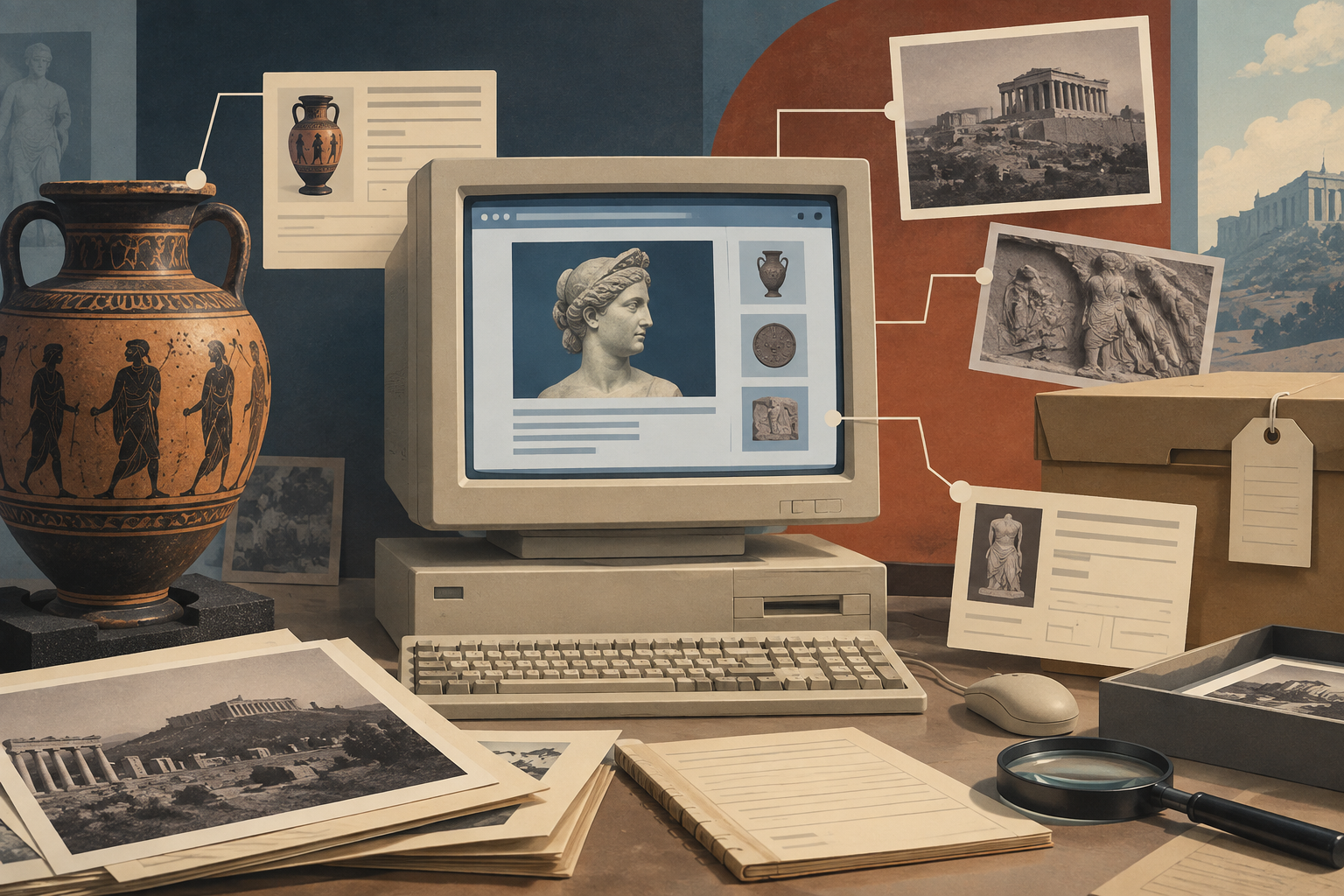
Talking about the “old Internet” is not only about slow connections or rudimentary page design. It also means looking at how cultural institutions began moving information onto a network whose reach was still taking shape. A history of online museums notes that the Library of Congress offered texts and images from some exhibitions through FTP in 1992, and that the Berkeley Art Museum and Pacific Film Archive at the University of California had a museum on the Internet in 1994. These two specific references help place a change: consulting a collection no longer depended entirely on a physical visit.
These milestones should not be turned into an automatic story of replacement. Making an image, record, or text available online did not make the physical museum irrelevant. Rather, it created another layer of access. A screen could bring an artwork, photograph, or document closer to someone unable to reach the building; by itself, it could not convey every relationship that makes a collection intelligible.
From Electronic Brochure to Research Resource
Museum websites evolved from promotional information toward content with more collection images, contextual information, and educational materials. That shift matters because it moves the web beyond institutional publicity and toward consultation. Digitisation, understood as an organised collection of digital resources accessible through computing tools and services, can support preservation, access, research, and classification.
At that point, the Internet offered a recognisable promise: reducing geographic and temporal barriers. A visitor could follow personal interests and approach a body of material with a freedom that a gallery route does not always provide. This is a genuine gain in access, not merely a technological anecdote. It also changes reading habits: search, links, and catalogue records turn the user into someone navigating among fragments and categories.
The Archive Is Not an Accessory
The most durable lesson is not simply that images can be published, but that the documentation surrounding them matters. Spain’s Ministry of Culture explains that museum archives gather files, photographs, letters, and other records that help construct the history and significance of a collection. The Historical Archive of the National Archaeological Museum likewise describes documentation as a reflection of the people who shaped the museum, the history of its collections, and its intellectual and cultural activities.
For a collection visible online, this information is not decorative. An isolated image can show appearance; documentation helps explain why an object is there, what other materials it relates to, and what limits apply to our knowledge of it. Stable identification of records and the data needed to find them matter as well: without them, digital abundance can become material that is difficult to verify or reuse.
Wider Access, Vulnerable Context
Digitisation can protect collections by enabling consultation copies and reducing handling of fragile material. It can also enable the reuse of digital objects for research. Yet the sources make a basic caution clear: technology does not itself understand the historical context of the data it processes, and specialists are essential to supervise and contextualise information.
The danger is not that digital material must lack meaning, but that choices about what is shown and how it is described can become invisible. An item displayed outside its original setting can lose connections to provenance, related records, or the institutional history that brought it into a collection. The convenience of remote consultation can coexist with a more fragmented reading.
Preserving Before Loss
WIPO’s preservation toolkit stresses the value of proactive, preventive action, including exact copies before deterioration or catastrophic loss. It also notes that related objects and materials may be dispersed across the holdings of different institutions. This is useful when thinking about the Internet: networks can connect descriptions and copies, but that connection requires archival work, agreements, and clear criteria.
Keeping files is not enough. Institutions need to know what they are, where they come from, how they relate, and what transformations they have undergone. Digital preservation therefore has an intellectual dimension: maintaining the ability to interpret.
An Open Legacy
The first online museums made visible that the Internet could be a space for cultural access, not just fast communication. Their legacy is not measured only by the age of a webpage or the novelty of a protocol. It lies in a question that still guides museums, archives, and libraries: how can consultation expand without separating objects from the histories that make them meaningful?
The evidence supports a cautious answer. Digital tools can assist preservation, research, classification, and dissemination; copies can reduce risk; and access can become broader. None of those benefits removes the need for documentation, specialists, and context. To look accurately at the old Internet, it may be best to remember that the network opened a door to the museum, not an exit from the responsibility to explain what is seen.
- Decade
- 1990s
- Region
- Global
- Level
- Enthusiast
- Entities
- Museum
Sources and references
- ARCHIVOS DE LOS MUSEOS ESTATALES - | Ministerio de Culturawww.cultura.gob.es · 2026-09-20
- Digitalizar el patrimonio cultural: preservar la historia antes de perderla | TecSciencetecscience.tec.mx · 2026-09-20
- Archivo histórico - | Ministerio de Culturawww.man.es · 2026-09-20
- Historia y evolución de los museos online – Cultura Conectadaculturaconectada.com · 2026-09-20
- Guía práctica sobre conservaciónwww.wipo.int · 2026-09-20